
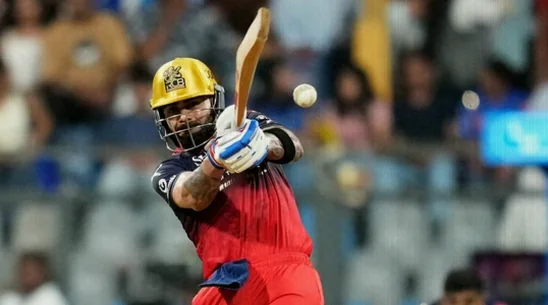
Royal Challengers Bengaluru’s team selection for their IPL 2026 meeting with Lucknow Super Giants answered a major pre-match talking point even before the first delivery: Virat Kohli was absent from the starting XI, yet included among the Impact Sub options. The decision immediately suggested a careful fitness plan rather than any hard confirmation that the star batter was ruled out.
The reasoning behind that call had been taking shape since RCB’s previous outing against Mumbai Indians. Kohli had come out to bat in that match and produced a half-century, but he did not take part in the fielding phase during Mumbai’s chase after an ankle concern surfaced. With that context already on the record, Bengaluru’s selection approach for LSG looked less surprising—RCB appeared to prefer a scenario where they could still make use of Kohli’s batting value without exposing him to the full physical workload of defending boundaries and moving continuously over a long innings.
How the Impact Sub rule reshapes Kohli’s role
That is where the Impact Player framework becomes central to the storyline. If Kohli begins among the Impact Sub choices and is introduced only once RCB are batting, Bengaluru can benefit from his presence at the crease while reducing the need for him to spend overs in the field. In practical terms, this is not being framed as a complete drop, a full rest, or an injury-enforced absence; it reads more like a tactical method to manage his ankle while keeping a key batter available at the moment RCB’s game plan demands it most.
The logic is particularly clear for a franchise that relies heavily on Kohli’s ability to set the tone early. Keeping him protected from extended fielding duties can lower the chances of aggravating an ankle niggle, while still allowing RCB to deploy one of their most influential batsmen during the innings phase where control and decision-making matter the most.
Why it suits RCB’s season and match template
The decision also aligns with the larger structure of RCB’s batting. Kohli continues to sit at the heart of their approach, especially at the Chinnaswamy, where the top-order’s tempo can shape the direction of the entire chase or target. Even with meaningful inputs from batters such as Phil Salt, Rajat Patidar, Jitesh Sharma, and Tim David, Kohli’s contribution is often defined by the steadiness he provides—whether facing pace or spin—and the way he can keep the innings anchored during pressure spells.
However, an ankle issue can behave differently depending on the role. While batting allows a player to control movement and limit sudden changes in direction, fielding demands quick pivots, constant sprinting and stopping, boundary coverage, and the kind of repeated load that can turn a minor niggle into something more serious. Against that background, RCB’s selection appears to be a pragmatic middle path: keep Kohli’s batting role intact while managing the risk that comes with a full fielding stint.
That makes this one of the more intriguing uses of the Impact Sub regulation in the tournament. Rather than treating the rule only as a pure tactical switch between batting and bowling phases, RCB seem to be applying it as a fitness-management mechanism. The team sheet effectively communicates the expectation that Kohli will play a part—but Bengaluru would rather that involvement starts with the bat than with the physical demands of fielding.
RCB playing XI and Impact Sub options vs LSG
Royal Challengers Bengaluru Playing XI: Philip Salt, Devdutt Padikkal, Rajat Patidar (c), Jitesh Sharma (wk), Tim David, Romario Shepherd, Krunal Pandya, Bhuvneshwar Kumar, Suyash Sharma, Rasikh Salam, Josh Hazlewood
Impact Subs: Virat Kohli, Venkatesh Iyer, Mangesh Yadav, Jordan Cox, Kanishk Chouhan
