
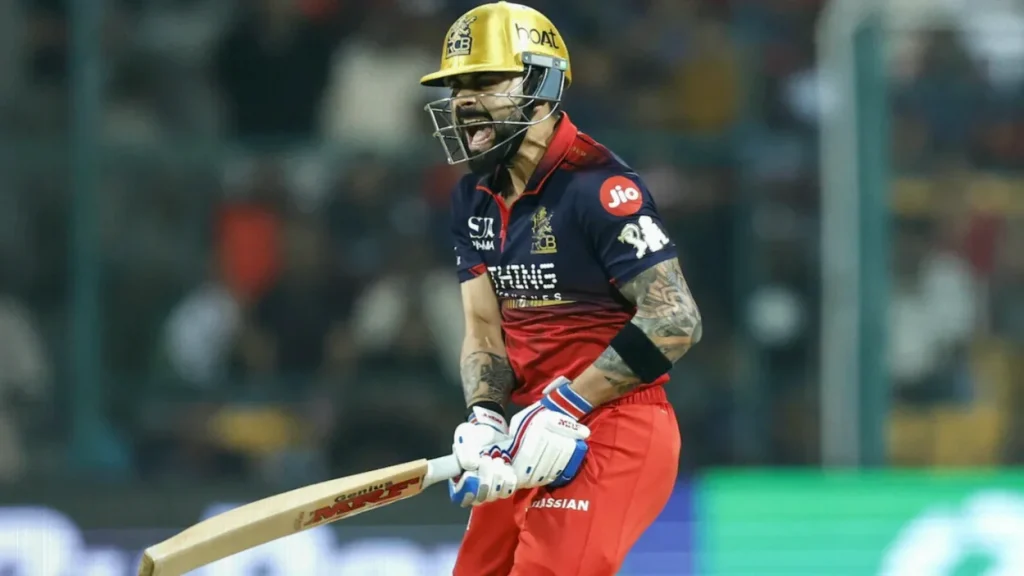
Virat Kohli admitted he is still carrying some physical limitations, but said he feels “much, much better” after returning as an Impact Player and delivering a match-winning batting effort in Royal Challengers Bengaluru’s five-wicket victory over Lucknow Super Giants at the Chinnaswamy Stadium on Wednesday. Kohli struck 49 from 34 balls to guide RCB through the chase of 147, while also finishing the innings as the Orange Cap winner at the end of his knock.
From impact substitute to Orange Cap: Kohli’s comeback
- This was the first occasion in Kohli’s IPL career where RCB used him as an Impact Player.
- RCB had not included him in their starting XI when they chose to bowl first.
- Kohli had also been unavailable for the previous RCB match against Mumbai Indians on Sunday, having been off the field for that game.
- He explained that he had felt soreness in his knee during the Mumbai Indians fixture and said he had not been in peak condition in the days leading into the Lucknow Super Giants match either.
- Speaking after his innings, Kohli said, “I’m still not 100%,” adding that his knee felt a bit sore in the last match and that he had been unwell for four or five days before Wednesday.
- Despite the lingering discomfort, he received the Orange Cap and confirmed he is working his way back to full sharpness.
His 49-run knock moved him to the summit of the IPL 2026 run charts with 228 runs, reinforcing how pivotal his return was to RCB’s successful chase.
Chase dynamics: powerplay intent on a slow surface
RCB’s chase began in quick fashion as Kohli reached 34 off 14 balls, providing momentum early. He then moderated his tempo as the pitch played slower, and he described the overall plan as one built around making the most of the powerplay on a track that did not offer the usual pace.
Kohli said he was satisfied with his intensity at the start and wished he could have carried it further to finish the chase off. He pointed out that the wicket slowed down considerably, and explained that he wanted to keep his approach steady even as conditions evolved, though the job was not wrapped up as cleanly as it could have been.
He also linked the slow nature of the Chinnaswamy pitch to Bengaluru’s hot and dry weather. Kohli noted that there was not enough grass on the surface, and said the intense heat and dryness over the previous few days suggested the wicket would behave like a dry, slow batting deck rather than the tacky type often seen at the ground.
That backdrop shaped RCB’s thinking: Kohli said the intention was to push the game away from the opposition and seize control in the first five or six overs. In his view, this is why powerplay batting mattered, and he expressed satisfaction that he was able to put the team ahead early.
Captaincy succession, batting benchmarks and RCB’s attacking depth
Rajat Patidar, who has taken over the leadership role at RCB, continued his explosive run in the tournament. He smashed three sixes in a 13-ball 27. Kohli also highlighted how Patidar and Rajasthan Royals’ Vaibhav Sooryavanshi are currently the only two batters in IPL 2026 to have amassed 200-plus runs at strike rates above 200.
When asked about RCB’s internal targets for Patidar, Kohli responded with a light remark about how communication inside the side works. He said RCB has batting KPIs, and that the instruction for Patidar is to assess the situation, but Kohli believes Patidar often ends up focusing on the bowlers’ “heart rate” instead—meaning how ready they are and what they are likely to do next. Kohli framed it as an element of clarity that helps decision-making.
Kohli further suggested that the balance and depth of RCB’s batting lineup enables a fearless style. He explained that team planning allows players to adopt specific roles, including his own early-innings responsibility alongside Phil Salt, with momentum and responsibility passing smoothly between batters. He also mentioned the impact of Romario Shepherd and Tim David as finishing options, while stressing that Krunal Pandya had not yet batted in any of the matches up to that point (with one innings in five games), underlining the resources available to RCB even beyond the current batting combinations.
In Kohli’s assessment, having the ability to bring in high-impact batters even after a number of wickets have fallen can be intimidating for opponents. He pointed to the threat of players who can score 50 runs in four overs, a factor that gives the rest of the lineup more freedom to play their shots.
Modern T20 demands: where “smarts of the game” still matter
As T20 cricket has evolved and scoring rates in the IPL have surged, Kohli argued that there remains room for the “smarts of the game.” He believes this intelligence becomes even more crucial in the latter stages of the tournament, when teams face tighter result scenarios and pressure around playoff qualification.
When asked how far the typical par score has shifted, Kohli said not every match will reach totals in the 230–240 range. He added that while teams understand the modern game’s demands well, they must still pay close attention to the match situation and how pressure affects players and decision-making.
He said the tournament is still in its early phase, but as the competition enters the second half, games are likely to become tighter and pressure will increase. Kohli explained that when the freedom to express yourself reduces, the pressure rises—making it essential to apply the tactical side of cricket as well, including adapting to the conditions and situation. For Kohli, the teams that do that best will go the farthest.
He concluded by reiterating that the game has changed and that he is doing his best to adapt. Kohli said he felt he had not been at his best in his early outings and in the previous two matches, but stressed that he is always pushing to raise his standard.
