
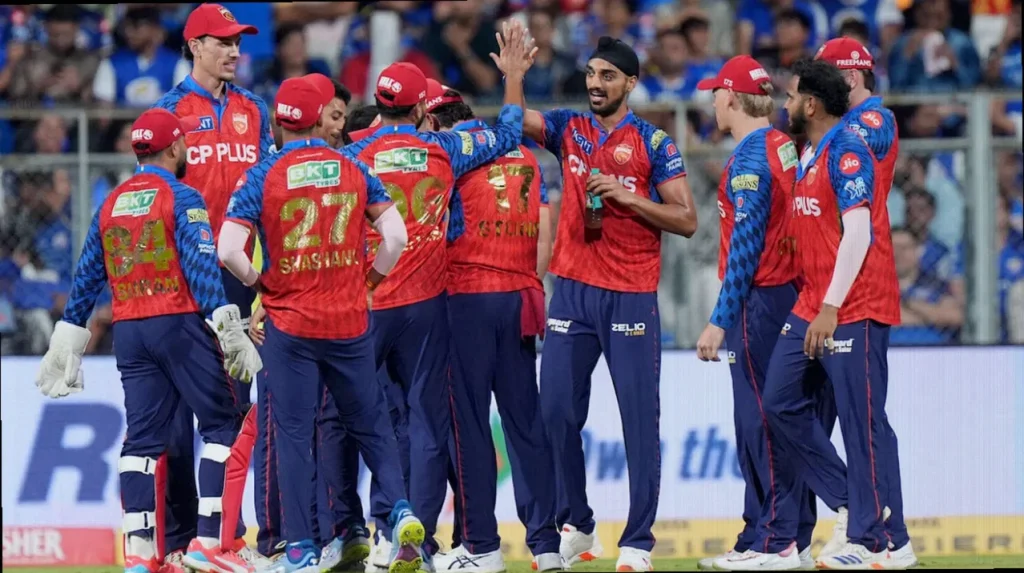
“Sticking to the basics” is the kind of phrase players reach for when a plan finally clicks. Arshdeep Singh leaned on that idea in Mumbai on Thursday night, following up a difficult stretch with a match haul of three wickets against Mumbai Indians.
Arshdeep’s rough patch before the MI turnaround
- Arrived for the MI game with only 2 wickets from 4 IPL matches in IPL 2026.
- Had an economy rate of 10.64 in those appearances.
- Had gone 10 consecutive IPL games without a powerplay wicket, dating back to last season.
- Since IPL 2024, had bowled 118 deliveries outside off stump (most) and conceded 58 wides (most).
- In the four matches leading into MI, had already sent down 16 wides.
Those numbers reflected a spell where the process looked right on paper, but the details were not consistently landing. Arshdeep had been aiming to avoid the arc, and there were moments where that intention was obvious—yet execution still left him short of where he wanted to be.
Against Sunrisers Hyderabad, the issues turned sharp and quick. After conceding two boundaries in his second over, he followed with four wides, and the over ultimately cost 24 runs. In the Gujarat Titans contest, four of his seven wides arrived in the final over, highlighting how late overs had become a pressure point.
He pointed to the same frustration after Punjab Kings’ match against MI, admitting the ball simply wasn’t coming out of his hand the way he expected. That lack of feel, rather than a change in intent, became the theme he later worked to correct.
Ricky Ponting’s message and the mental reset
Speaking at the post-match presentation, Arshdeep explained how a conversation with PBKS head coach Ricky Ponting helped him recalibrate. He said he told Ponting he wasn’t feeling right, that the ball wasn’t leaving his hand properly, and that they discussed ways to stay mentally fresh.
Arshdeep added that he had been expecting too much from himself, which stopped him from going with the flow. Ponting’s guidance, as Arshdeep described it, was to remember that after winning a World Cup the adrenaline doesn’t stay at peak levels forever—so the answer was to return to the basics, enjoy the game, and have fun.
And on Thursday night in Mumbai, he looked like a bowler who had done exactly that—falling back on the skills that have made him a threat in T20s, particularly conventional swing and well-timed yorkers.
In the opening over versus MI, Arshdeep struck immediately. He repeatedly found a probing length outside off stump, and the ball shaped away late to trouble Ryan Rickelton. Even when contact came, it looked tentative: five dot balls set the tone and suggested rhythm was back, something Arshdeep said had been missing earlier in the season.
In the third over, the breakthrough arrived through a variation. A scrambled-seam delivery drifted towards leg, and Rickelton—likely pushed by the changing feel—committed to the shot and ended up finding deep backward square. It was not the most textbook dismissal, but the impact was clear: Arshdeep had finally got a powerplay wicket, and it was also his 100th wicket in the IPL.
Arshdeep called the scrambled-seam ball something he had been trying to build. He noted that Mohammed Siraj had reaped plenty of wickets with that type of delivery, adding that it was still a work in progress even if the seam was coming out nicely. He said he wanted to change it slightly to set up the batter differently, and accepted the reality that in T20 cricket a bowler should take wickets when they come and enjoy the result.
From there, he returned to what MI’s batters were seeing as a familiar pattern: a swinging outswinger with fielders set in short cover and extra cover. The plan drew Suryakumar Yadav into an early false move, and the edge was taken at short third. With that, Arshdeep’s celebration—hands spread wide—made its return. A hat-trick never materialised, but the next delivery had the same intent: an inswinger that Naman Dhir worked to midwicket.
At the death, Arshdeep leaned into another signature. He started around the wicket to Quinton de Kock and sent down two full tosses, but a mid-pitch discussion with Marco Jansen—who had bowled two tailing yorkers in the previous over—seemed to reset the approach. Arshdeep then went over the wicket and delivered the sequence: a tailing yorker, followed by a wide yorker, and then a 136kph yorker that curved in to knock Sherfane Rutherford’s stumps apart.
The improvement was not only about an in-game correction or a sudden mental lift. Before the match, Arshdeep had spent time on spot bowling, working for 45 minutes on repeatedly pitching the ball on a good length and moving it across the batter. He also placed his shoes as markers in front of off stump and leg stump, using them as visual cues to sharpen his angles.
He said the effort restored confidence that had been absent. Even the day before, he came in for training and completed a spot-bowling session where he felt the ball leaving his hand “really nicely.” He then pointed to what followed—seaming, swinging, and control—saying the result was visible on match day.
There was another layer of symmetry tied to the venue. Three years earlier at the same ground, Arshdeep had taken a four-for against MI to reach his 50th IPL wicket. This time, reaching the 100-wicket milestone felt like a mirror moment, powered by returning to the same skills that define him.
For a player active on social media, “basic” doesn’t quite mean the same thing it does for everyone else. Arshdeep said he loves the support from the Mumbai crowd and credits his social media for helping him connect with fans. He described his passion for making reels and posting online, and said a lot of people know him for that content—adding that more reels are on the way.
