
Kolkata Knight Riders’ IPL 2026 campaign has been defined as much by puzzling choices as by on-field performances, with the team’s recent slide raising questions about how decisions are being made behind the scenes. A particularly prominent talking point has been the way Varun Chakravarthy has been handled. The “mystery spinner” was initially pushed into action during the powerplay, yet control issues quickly surfaced, and runs leaked at a time when KKR needed tight, disciplined overs. That early lack of rhythm appears to have shaken his confidence, and his influence later in the tournament has arrived later than expected.
KKR’s selection picture has also sparked debate, especially around the timing of Tim Seifert’s involvement. His delayed entry into the playing XI has left many wondering whether the team is fully committing to its available options. Meanwhile, Rachin Ravindra’s continued absence has become another point of concern, with several domestic performers still waiting for a clearer pathway into the squad’s core rotation. Even with a high-profile support structure in place—featuring figures such as Shane Watson, Tim Southee and Dwayne Bravo—the franchise has struggled to establish a consistent plan that translates into results.
Another area under scrutiny has been Ajinkya Rahane’s toss-related calls. His decision to bat against Gujarat in conditions described as tricky backfired early, with the match narrative turning against KKR almost immediately. That early misstep set the tone for yet another defeat, intensifying the feeling that the team’s margins for error are shrinking at the wrong time.
For Kolkata, the season so far reads like a recurring nightmare. Under Rahane’s leadership, the franchise has not managed a single win from six matches, and losses have continued to feature even when the team has shown signs of promise. Their only point came through a washout against Punjab Kings, a result that offered little emotional lift and did not change the overall direction of the campaign.
Injuries have only added to the pressure. With key pacers unavailable and reinforcements not yet arriving as expected, KKR has had to operate without the bowling balance it would normally rely on in high-pressure phases. However, beyond the personnel problems, tactical decisions have also drawn criticism. Team selections have looked inconsistent, match management has not always matched the demands of the situations, and changes in the bowling plan have sometimes seemed debatable—factors that together have left KKR short on confidence and clarity at a critical stage of the competition.
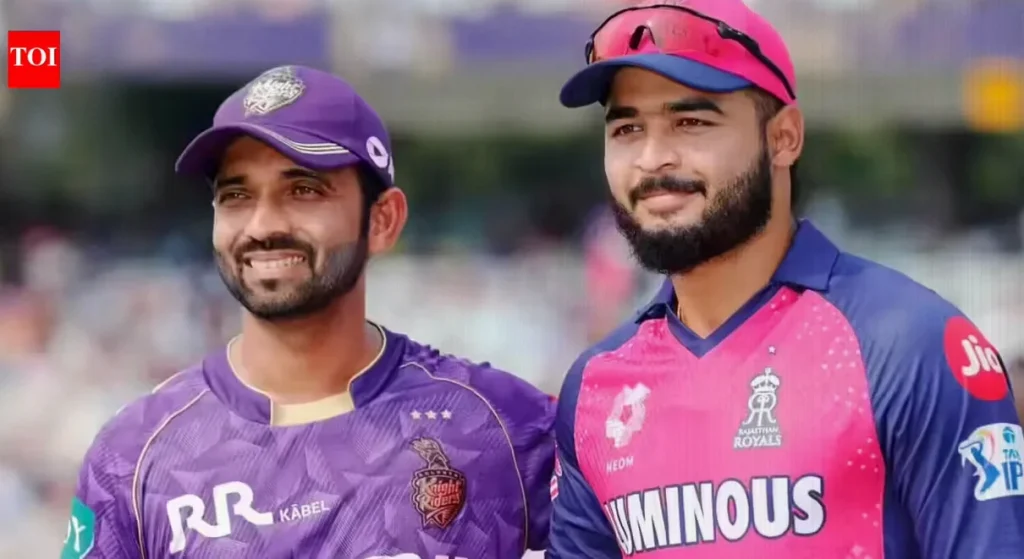
Rajasthan Royals, meanwhile, will head into their next contest with a clear motivation: to reset quickly after a rare stumble of the season. The Royals face a beleaguered KKR in an important afternoon clash on Sunday, and they will be keen to ensure that their first genuine setback does not become a turning point for the worse. Rajasthan had been flying in the opening stretch, delivering four consecutive wins and building momentum that looked almost unstoppable.
That momentum was interrupted when Sunrisers Hyderabad came out on top, exposing small cracks in an otherwise dominant campaign. Still, the defeat has not substantially damaged Rajasthan’s standing, with the team remaining one of the more complete outfits in the tournament. With a strong top order and depth across departments, the Royals will likely treat this fixture as an opportunity to reassert their rhythm and remind rivals why they are considered among the title contenders.
Conditions in the afternoon could influence the contest, but on paper Rajasthan hold the advantage. They are expected to be better prepared against an opposition still searching for consistency and belief, and the match is set up as a chance for the Royals to turn a brief disruption into a smooth return to winning ways.
