
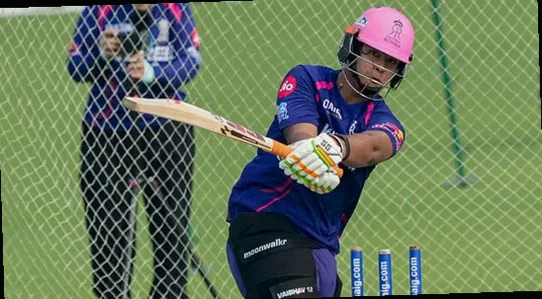
The IPL’s most aggressive boundary maker is set to face a KKR bowling unit that has repeatedly bled runs, particularly after the ball is new. KKR remain without a win from their opening six outings and are rooted at the foot of the standings with just one point. Rajasthan Royals, meanwhile, arrive in third place on eight points from five matches. On paper, the contrast in form and table position is clear—but the more important story is likely to unfold in the opening six overs.
Key takeaways
- KKR are still searching for their first win after six IPL 2026 matches, holding just one point.
- Vaibhav Sooryavanshi has made 200 runs from 76 balls, striking 18 fours and 18 sixes.
- Sooryavanshi has produced 179 runs in the Powerplay, including 33 boundaries—an average of one boundary every two balls in that phase.
- KKR’s boundary concession rate is the second-worst in the league overall (one boundary every 4.19 legal balls).
- In the Powerplay, KKR’s leak is sharper: 60 boundaries in 180 legal balls, or one every three balls.
- Matheesha Pathirana’s availability is uncertain, and that could significantly alter KKR’s death-overs bowling shape.
Sooryavanshi vs KKR’s new-ball problems
In IPL 2026, Vaibhav Sooryavanshi has been a nightmare for bowlers across every format of boundary hitting. Across five matches, he has piled up 200 runs off only 76 deliveries, with 18 fours and 18 maximums. That comes to 36 boundaries in total, translating to a boundary roughly every 2.11 balls among batters who have faced at least 50 deliveries this season.
What makes his impact especially hard to manage is the way it clusters. Out of his 76 balls, 66 have come during the Powerplay, where he has already amassed 179 runs and struck 33 boundaries. Put simply, that means he is landing a boundary every two balls in the first six overs—there is no slow-burn approach here. He arrives looking to attack immediately, turning early overs into a platform rather than a warm-up.
That is also where KKR have looked most vulnerable. They have allowed a boundary every 4.19 legal balls throughout the campaign, a rate that ranks second-worst in the league. The Powerplay numbers are even more alarming: KKR have given away 60 boundaries in 180 legal balls, equating to one boundary every three balls—the worst figure of any side so far.
Even at Eden, the pattern has not shifted dramatically. KKR have continued to be loose with the new ball before they tighten up later in the innings. The matchup therefore becomes a structural collision: the league’s most forceful boundary hitter is targeting exactly the phase where KKR have leaked the most damage.
Can KKR find a route back?
KKR do have one possible way to keep the contest on a leash—if they can withstand Sooryavanshi’s opening surge and then lean on improved control in the middle overs. Their boundary concession rate from overs 7 to 15 improves noticeably. At home, that stabilising effect has been clearer, and if Sunil Narine and Varun Chakaravarthy get settled, KKR can slow the game’s tempo and drag it into a rhythm that suits them.
Still, the danger is obvious. Sooryavanshi’s batting plan is built around striking before that later grip arrives. He has already shown he can dismantle pace, scoring at a boundary every 2.06 balls against seam bowling this season. By contrast, KKR’s pace group has been the gentler part of their attack, conceding boundaries at a rate of one every 3.48 legal balls. If they are short or wide early, the threat is that the game can be tilted toward RR before the spinners even have the chance to apply sustained pressure.
Where Pathirana could change the tone
Matheesha Pathirana is a key talking point here, but only if the situation is handled carefully. He has now rejoined the KKR setup after a delayed return caused by injury, along with clearance and travel complications. For a side that has looked thin in pace resources, his arrival is a boost in itself. KKR’s fast-bowling options were already stretched by Harshit Rana’s absence and by the fact that Akash Deep has been ruled out for the season.
The immediate question, though, is whether Pathirana actually takes the field on Sunday. Reports indicate he is unlikely to be available despite being included in the squad. That uncertainty matters because KKR may have him “in camp” yet still not be able to use him in their XI. And Pathirana’s role is not interchangeable with a standard seamer—he is the bowler KKR brought in to reshape innings, particularly in the back end, with yorkers, uncomfortable angles, and a clear wicket-taking threat.
If he does not play, KKR could once again lean on the same attack that has struggled to hold its shape through the early part of the season. If he does play, the bowling unit immediately looks less ordinary. Even then, the first problem may not disappear: Pathirana is fundamentally a death-overs specialist, while Sooryavanshi’s violence typically arrives well before the later stages.
So this is not only about a young batter in form. It is about a hitter who scores in a very specific way, against a bowling group that has shown vulnerability in that exact window, at a moment when KKR need to rescue their season.
If KKR manage to survive Sooryavanshi’s first burst, the contest opens up and becomes more negotiable. If they do not, Eden could quickly turn into an afternoon spent watching the league’s leading boundary hitter turn the opening six overs into the defining story of the match.
