
Former Pakistan all-rounder Azhar Mahmood has come out in defence of Babar Azam, pushing back against criticism that the Pakistan captain’s T20 strike-rate is too slow. Mahmood argued that it is “unfair” to focus on Babar in isolation, insisting the bigger issue lies in what Pakistan’s batting group is currently capable of producing in the shortest format.
Mahmood challenges the narrative around Babar’s strike-rate
Speaking after a Pakistan Super League encounter, Mahmood—now an assistant and bowling coach with Peshawar Zalmi—questioned the logic of singling out Babar’s numbers without considering the demands being placed on him.
Mahmood said Babar’s problems, at times, stemmed from the role assigned to him rather than a lack of ability. He pointed out that in the World Cup Babar was asked to bat at No. 4, a position he claimed was linked to concerns over his strike-rate.
- Mahmood said Babar was made to bat at No. 4 in the World Cup due to strike-rate expectations.
- He argued that the debate is being framed too narrowly, ignoring the wider limitations of Pakistan’s batting options.
Comparisons, expectations and Pakistan’s lack of “ultra-aggressive” hitters
Mahmood also rejected the idea that direct comparisons will automatically justify criticism. In his view, the evidence used to judge Babar does not reflect the full picture of Pakistan’s T20 standards.
He cited Sahibzada Farhan as an example, saying Farhan was Pakistan’s leading batter in the T20 World Cup and that his strike-rate sits around the mid-130s in T20Is. Mahmood then contrasted that with Babar’s figure, arguing the gap is not as large as critics suggest.
- Mahmood said Sahibzada Farhan was Pakistan’s best batter in the T20 World Cup.
- He claimed Farhan’s T20I strike-rate is around 135.
- He said Babar’s strike-rate is 128, adding that the difference is not significant.
Turning to the broader demand for explosive batting, Mahmood made a more pointed argument: Pakistan, he said, does not currently possess enough batters who can reliably post strike-rates in the 190–200 range that modern T20 pressure often requires.
He insisted that the solution is not to constantly target Babar, but to use him in a way that best fits his strengths—particularly because he can set the tempo for others to accelerate.
- Mahmood said Pakistan does not have many players who sustain a 190–200 strike-rate.
- He urged that Babar should be used properly, as Peshawar Zalmi has done in the PSL.
- He added that Babar builds the platform for team-mates to hit through the innings.
Babar’s big statement for Peshawar Zalmi
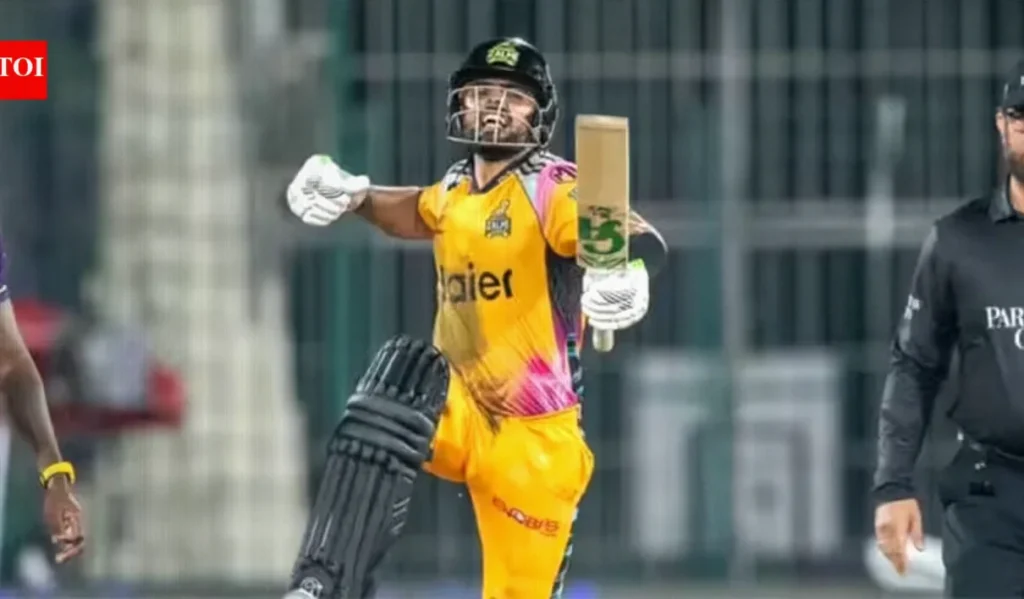
Mahmood’s comments landed as Babar has answered critics with a dominant performance on the field. Leading Peshawar Zalmi, the star batter struck an unbeaten century against Quetta Gladiators, smashing 100 off 52 balls and taking his side to 255/3.
The innings stood out not only for its aggression but also for its precision. Mahmood highlighted the rare discipline in the way Babar paced the knock—facing more than 50 deliveries while registering only a single dot ball during the innings.
- Babar scored 100 not out off 52 deliveries versus Quetta Gladiators.
- Peshawar Zalmi finished on 255/3.
- Mahmood pointed to the control: Babar faced over 50 balls and hit just one dot ball.
It was also a milestone for Babar personally. The century ended a long wait, bringing his first IPL-era-style three-figure score in 783 days. Along the way, he crossed the 12,000-run mark in T20 cricket in only 338 innings, doing it faster than major names such as Chris Gayle and Virat Kohli.
Context: a wider debate over system vs talent in Pakistan
For Mahmood, the debate is ultimately about fit—whether the expectations placed on Pakistan’s top order demand a specific brand of T20 batting that the current talent pool cannot consistently deliver.
His remarks add weight to the larger question being discussed in Pakistan cricket: whether the team’s structure is asking batters to produce a tempo that does not match what Pakistan’s available players are built to do—especially in a format where strike-rate pressure often defines selection and roles.
Mahmood’s IPL background
Mahmood also brought his own franchise experience into the discussion. He played in the IPL between 2012 and 2015 as a British passport holder, representing Punjab Kings—then known as Kings XI Punjab—and Kolkata Knight Riders.
