
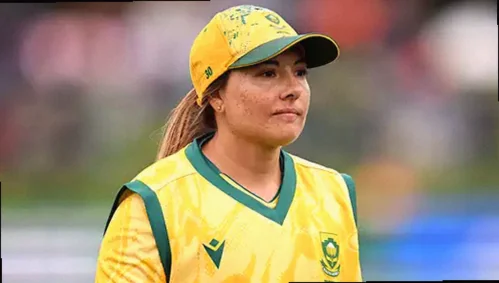
South Africa’s recent success against India in T20 cricket has come with an unexpected undertone: a war of words inside the camp, even as results have gone their way. After winning the opening two matches of a five-game T20I series at Kingsmead on Friday and Sunday, the Proteas have arrived in the run-up to the World Cup in England with momentum and a clearer sense of direction.
Quick facts
- South Africa won the first two T20Is vs India at Kingsmead on Friday and Sunday.
- The series is made up of five T20Is.
- South Africa’s World Cup in England and July is the next major target in the same format.
- Before this series, South Africa lost six of eight white-ball internationals in New Zealand from March 15 to April 4.
- Batting coach Baakier Abrahams, fielding coach Bongani Ndaba, and strength and conditioning expert Zane Webster were removed after the New Zealand campaign.
- Interim replacements are Andrew Puttick, Mduduzi Mbatha, and Tumi Masekela.
- Consulting role in the dugout was given to Keshav Maharaj for the Kingsmead games.
- Keshav Maharaj’s ranking stats mentioned: 18th among Test bowlers, third in ODIs, and joint 49th in T20Is.
- South Africa have won just one of their four previous T20I series versus India, both home and away.
- The next opportunity to clinch the series is at the Wanderers on Wednesday.
The backdrop makes the current storyline even more striking. The Proteas had struggled during their New Zealand tour, where they dropped six of their eight white-ball matches between March 15 and April 4, and the coaching shake-up that followed has only intensified questions about how stable the setup can be as the World Cup approaches.
South Africa made changes after failing to click in New Zealand, removing Baakier Abrahams (batting), Bongani Ndaba (fielding), and Zane Webster (strength and conditioning). For the moment, Andrew Puttick, Mduduzi Mbatha, and Tumi Masekela have taken over on an interim basis, even though the competition schedule doesn’t allow much time to bed in a new structure.
Consulting advice and an awkward compliment
With the new team only two games into the job and possibly not in place for long, the performances have offered a counterpoint to the doubts. Yet the conversation didn’t stay purely cricket-focused. When asked to judge the value of Keshav Maharaj being involved in a consulting role after Sunday’s match, Sune Luus delivered a message that sounded like more than just a neutral endorsement.
Luus said, “Sometimes a coach can be repetitive and think he knows everything,” before adding that South Africa had “absorbed everything” Maharaj had been sharing over the last couple of days. The wording landed sharply—an unfiltered compliment that also carried an edge, especially because Maharaj is widely respected as an elite bowler.
Those remarks have inevitably raised eyebrows inside a group that already had plenty under discussion. Luus was reportedly not misquoted, and the tone didn’t appear to be a casual joke. Even if the comment wasn’t aimed directly at the current coaching staff, it still risks becoming a distraction at the very time South Africa want unity to be the headline.
There is also a practical reason for caution: when teammates are winning, any suggestion of internal “cracks” can quickly turn into a narrative. Should South Africa fail to finish the job at the Wanderers on Wednesday, questions about dressing-room cohesion are likely to surface more loudly. If India manage to pull off a comeback and take the rubber, those doubts will be amplified even further.
Whether those concerns are actually real or simply imagined, the idea itself may already have been planted. And as with most team stories, once suspicion takes hold it becomes difficult to fully erase—particularly because disproving it publicly can do more harm than leaving it alone.
What “grovel” means—and why it still stings
The tension around language isn’t new in South Africa’s cricketing history. Shukri Conrad, asked in Guwahati in November why South Africa batted on until they had built a lead of 548 in the second match of a two-Test series they led 1-0, said the intention was to make the opposition “grovel,” using a phrase he described as “a steal” from someone else.
Conrad’s explanation referenced the fact that “grovel” has long been treated as taboo in cricket, tied to its historical misuse alongside slavery and Tony Greig. Greig had used the tainted term back in May 1976 during England’s series against West Indies, and the cricket world has generally avoided the wording since.
South Africa went on to win that Test by 408 runs the following day, sealing only their second Test series win in India and their first success in the format there in six meetings spread over more than 25 years. However, the ill-advised use of the g-word tarnished the triumph, even if the match result itself was emphatic.
Luus’s comments are unlikely to create the same kind of long-term reputational damage. Still, they may prove destabilising in the short term—especially given how close South Africa are to a notable feat: they have won only one of their four previous T20I series against India, whether playing at home or away. With expectations rising, any unnecessary internal noise becomes harder to manage.
Luus also brings weight to her words. She has played 295 international matches and captained South Africa in 69 of them, meaning her statements naturally carry more influence than they would from someone further down the pecking order.
Sekhukhune steers clear of the controversy
At Tuesday’s press conference in Johannesburg, Tumi Sekhukhune avoided wandering into the darker, more speculative territory. When asked what Maharaj had brought to the setup, she focused tightly on cricket rather than commentary. “It was nice having Keshav giving the girls feedback and bowling tips about the stadium,” Sekhukhune said, adding that “we have a lot of left-arm bowlers” and that the approach “worked really well in Durban.”
Maharaj, a Durban resident, was officially part of the squad only for the Kingsmead games. When media asked whether he would return for the remaining matches, the media manager replied: “Because it went so well he might just pop in for the last three as well.”
In the end, it was a missed moment—because one question that remained unanswered was whether any additional expertise would be brought in to protect the team from reputational damage. South Africa, after all, are now playing against a side that has shown a tendency to trip over its own words at times.
