
Winning a World Cup is the biggest dream for any nation and every player who gets the chance to chase it. Lifting the trophy—an iconic globe raised on three silver columns—demands more than individual brilliance; it requires a plan, balance, and a collective effort from the dressing room. India’s 2011 triumph delivered on that promise and rewrote the record books.
India secured the World Cup for a second time in 2011, ending a 28-year wait since their first title run in 1983. The MS Dhoni-led side also etched another first into the tournament’s history by becoming the opening winners to lift the trophy on home soil. The celebrations that followed spread across the country, but the road to glory also included some hard calls—especially around selections.
Quick facts
- India won the World Cup in 2011 for the second time, after their 1983 title.
- The win ended a 28-year gap and made India the first team to win on home soil.
- Rohit Sharma was left out of the 2011 World Cup squad despite strong ODI form.
- BCCI chairman of selectors at the time, Kris Srikkanth, said the call was driven by team balance and role requirements.
- Srikkanth compared the selection thinking to India’s 1983 approach.
- Yuvraj Singh finished as Player of the Tournament with 362 runs and 15 wickets in nine matches.
- Rohit’s ODI debut was against Ireland; before 2011 he had scored 1,200+ runs in about 57 matches, including seven half-centuries.
- Rohit’s notable early impact included a 235-run haul in the 2007–08 Commonwealth Bank Series in Australia.
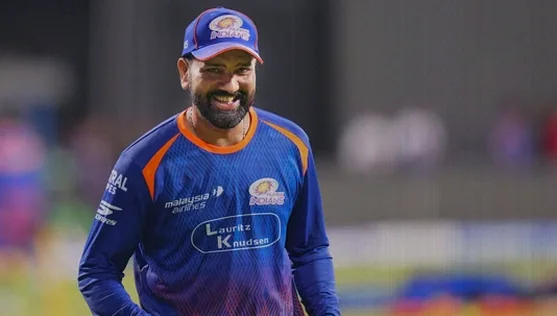
One of the most discussed omissions was Rohit Sharma. Even as his ODI performances were rising, he did not get the nod to represent India at that World Cup. The setback, however, did not stop him from later developing into one of the most productive white-ball batters India has produced.
Importantly, the exclusion was not framed as a judgement on whether Rohit could perform at the highest level. Kris Srikkanth, the chairman of selectors during that period, said the decision came down to the team’s needs—particularly the kind of squad profile required to compete in the tournament. In his explanation, the management’s thinking mirrored the blueprint from the 1983 title, prioritising players with multi-skilled roles rather than purely specialist options.
Srikkanth also admitted that the choice still bothers him. He said he had even told Rohit in the past that he was sorry, describing the reasoning as being centred on selecting “half all-rounders” to fit the team’s balance. He added that the mindset was similar to the one used in the 1983 World Cup, and that the consequences of that approach remained a lingering regret.
How the team balance shaped 2011
The selection philosophy, as Srikkanth described it, was built around two key ideas: strengthen batting depth and still keep the option of bowlers who could contribute when the match demanded it. That general approach, he argued, resembled the strategic thinking later seen in India’s 2026 T20 World Cup success—where flexibility and role clarity mattered as much as raw batting.
With that in mind, the 2011 campaign proved that the plan could deliver. India’s all-rounders played major parts throughout the tournament, and Yuvraj Singh became the defining all-format force in the middle. Across nine matches, he scored 362 runs and took 15 wickets, collecting the Player of the Tournament award. His performances stood out even as he was dealing with cancer that had not yet been diagnosed at the time, and those contributions helped India finish off tight situations.
The squad also had a wide range of batting names who could be called upon to bowl when required, including Suresh Raina, Virender Sehwag, Sachin Tendulkar and Yousuf Pathan. That versatility was central to the selection logic being discussed, because it reflected the specific “team dynamics” the selectors wanted. In Srikkanth’s words, Sehwag, Sachin and Raina could have bowled overs in certain matches, while Yusuf Pathan was also viewed as a half all-rounder—meaning the final composition ultimately left Rohit out despite his overall quality.
Srikkanth summed up the dilemma with regret, saying Rohit was good enough to have played in the 2011 World Cup, but that the “half all-rounder” concept ultimately didn’t make space for him. The omission, in that framing, was less about ability and more about fitting into a narrowly defined role balance.
Rohit, who at that stage had not yet won an ODI World Cup, made his ODI debut against Ireland. Before the 2011 World Cup snub, he had already accumulated more than 1,200 runs across roughly 57 ODI matches, including seven half-centuries. One of his earlier standout phases came during the 2007–08 Commonwealth Bank Series in Australia, where he scored 235 runs—evidence, supporters would argue, of the form that made the later omission such a talking point.
