
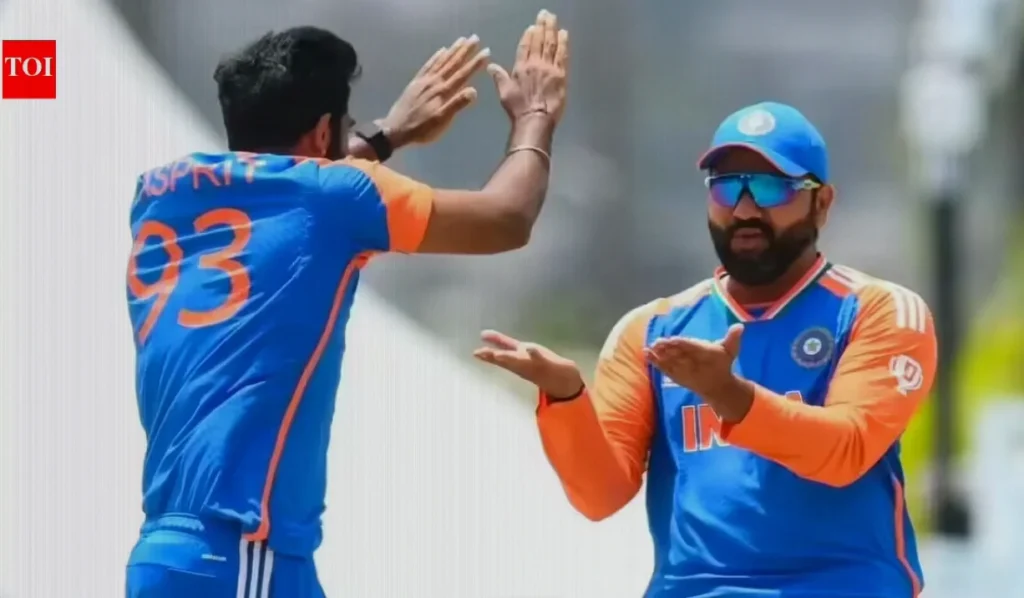
Former India chief selector Kris Srikkanth has revisited one of the most talked-about snubs in the country’s cricketing past, admitting he still feels regret over Rohit Sharma’s omission from India’s 2011 World Cup squad.
Srikkanth said he even conveyed his apology to Rohit recently. “I feel bad for him even today. I told Rohit last year, I am sorry. It’s not by purpose, but it’s just that we wanted to take those half all-rounders,” he explained. He added that the thinking was aligned with India’s approach from the 1983 World Cup, where balance and versatility were central to the selection mix.
India went on to win the 2011 World Cup under MS Dhoni, finally ending a 28-year wait after the memorable success in 1983. While that triumph is remembered as one of the biggest moments in Indian sport, it also came with difficult squad choices. Rohit was among the prominent names left out, despite showing encouraging form in ODIs leading into the tournament.
Justifying the decision, Srikkanth stressed that the exclusion was not a reflection of Rohit’s talent. Instead, it was driven by the need to shape a squad around team balance. The selectors leaned towards players who could offer more than one skill set—impact with the bat and meaningful overs with the ball—following the same template that had worked in 1983.
Srikkanth pointed to how that strategy ultimately delivered. One of the most significant reasons India lifted the trophy was the tournament-defining contribution of Yuvraj Singh. Yuvraj finished as Player of the Tournament, amassing 362 runs and taking 15 wickets, turning his all-round ability into a deciding factor across crucial phases of the campaign.
He further elaborated on how the “half all-rounder” requirement influenced the final call. “And at the end of the day, who was the Player of the Tournament? Yuvraj Singh, with the ball and bat. In some matches, Sehwag, Sachin and Suresh Raina would have bowled a few overs. Even Yusuf Pathan is a half all-rounder,” Srikkanth said. “So in all these things, unfortunately, this half all-rounder concept, Rohit Sharma, the poor fellow, could not find a place. He was actually good enough to play in the 2011 World Cup, but poor boy missed out.”
At the time of his exclusion, Rohit had already established himself in the ODI format, having crossed 1,200 runs. Although he missed out on the World Cup opportunity in 2011, his career later took a major turn—he went on to become one of India’s most trusted and accomplished white-ball batters.
