
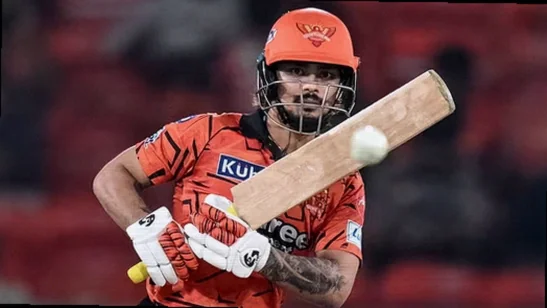
The Indian Premier League 2026 is now moving into the crucial middle stretch of the group phase, and the conversation across franchises has begun to shift from pure tactics to leadership and momentum. With qualification scenarios tightening, teams are also adjusting their plans as they manage injuries, welcome back key players, and shuffle roles to maintain balance. Against that backdrop, Sunrisers Hyderabad have a major decision looming on their calendar, with captain Pat Cummins returning to contention for their April 25 meeting with the Rajasthan Royals.
Cummins is back in contention after an extended absence caused by a lumbar stress injury. The problem kept him out of most of Australia’s 2025/26 Ashes commitments and ruled him unavailable for the Australia campaign in the T20 World Cup 2026. For SRH, however, his return doesn’t automatically settle the captaincy question—because the franchise has found a rhythm under stand-in skipper Ishan Kishan, and the results have given that leadership a strong platform.
That debate has drawn fresh attention from former India spinner Harbhajan Singh, who is known for speaking with clarity and conviction about leadership and team identity. Harbhajan backed Kishan to remain at the helm even if Cummins walks back into the side. He pointed to SRH’s recent performances as evidence that the group has gelled around its current captain, rather than waiting for a big-name return to reset everything.
“Ishan Kishan should continue as Sunrisers Hyderabad captain even if Pat Cummins returns. It is a debatable call, but if the team has backed a young leader, they should stick with him. Cummins helped Hyderabad reach the final in 2024, no doubt. But the side is doing well under Kishan’s leadership. The bowlers and other players have built good coordination with him. Keeping Ishan as captain will benefit Sunrisers Hyderabad,” Harbhajan said during his appearance on JioHotstar’s ‘Champions Waali Commentary’.
Harbhajan’s comments highlight a key principle that often matters most in T20 leagues: once a team finds a structure that works—roles, responsibilities, and on-field decision-making—changing it too quickly can disrupt confidence. Kishan has made a strong start to his captaincy spell, with SRH currently placed third in the standings after seven matches. Remarkably, in each of those seven games, SRH lost the toss and were asked to bat first, yet they have still displayed composure and control rather than falling into chase-pressure or powerplay panic.
So far, the Kishan-led side has successfully defended totals on four occasions, showing that the team’s planning is not limited to scoring—it extends to managing phases when the pitch is challenging and the match tightens. In an era where T20 cricket is often dominated by batters and flat surfaces can make totals look chaseable, defending requires precision in execution, field settings, bowling variations, and matchups. SRH’s most recent outing against Delhi at the Rajiv Gandhi International Stadium reflected that approach clearly. Abhishek Sharma delivered a dominant knock to help SRH post 242, putting the pressure back on the opposition from the start. Then, under Eshan Malinga’s leadership, the bowling unit executed decisively as Delhi fell short by 47 runs, with only one wicket left in hand.
Cummins, of course, brings a different kind of value—elite international experience, leadership under pressure, and a proven ability to steer teams through high-stakes tournaments. His track record with SRH is also substantial, especially after the franchise finished last in IPL 2023 and then bounced back to become runners-up in 2024. Even so, the immediate question is whether SRH should lean on reputation alone, or whether they should reward what is currently working on the field.
With Kishan leading a young group that has already demonstrated the ability to defend totals, handle setbacks from losing tosses, and convert strong totals into wins, the case for continuity looks compelling at this stage of the season. As Harbhajan suggested, the bigger challenge for SRH now is not simply choosing between a proven leader and a younger captain—but deciding whether to disturb a winning combination just as the IPL reaches its most demanding phase.
