
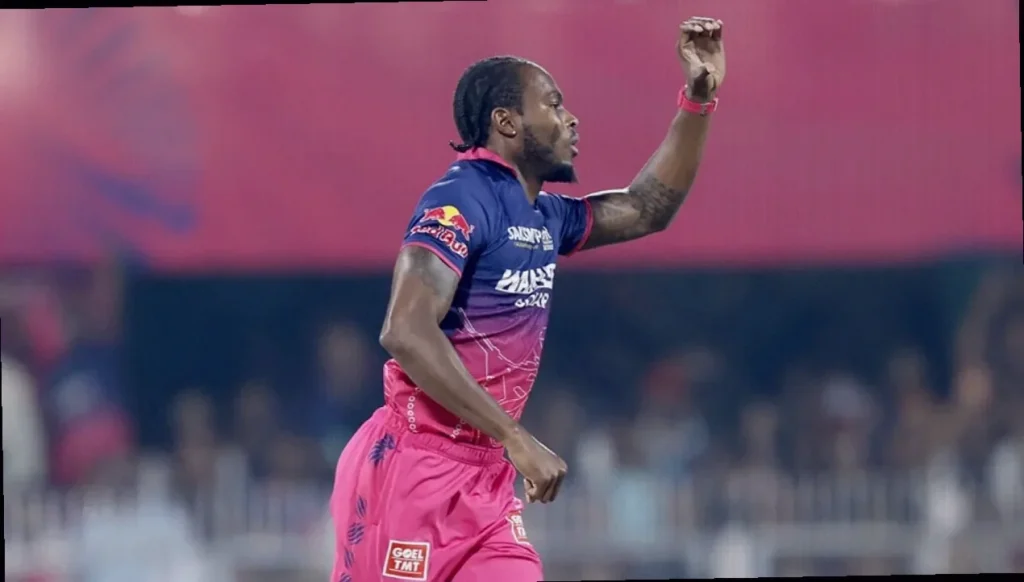
Jofra Archer still feels like the same old problem for batters—only now he comes with an injury ledger and a sharper edge. When the decade turned, he was sinking to the turf at Lord’s after delivering the defining moment of a World Cup-winning campaign, thanks to his Super Over in the final. Not long after, he wore the Rajasthan Royals jersey in the 2020 IPL, where he carved out ten wickets in the powerplay at an economy rate of 4.34—an all-time record for anyone who bowled at least 15 overs in a season. Even with the years adding mileage to his frame, the “vintage” Archer look still turns up at the crease.
From World Cup hero to a fitness-hit IPL journey
The version of Archer fans remember from the early days is hard to fully replicate. Calling him “vintage” can be a compliment and a warning at the same time: it suggests his peak is something he can reach only occasionally. Back then, he was the carefree 25-year-old; now he is six years older, with his progress repeatedly affected by elbow problems, a back injury, and a spliced finger.
His IPL and international calendar also took a hit. He missed the 2021 and 2022 seasons entirely, staying away from both franchise cricket and international duty. Archer returned in 2023, playing five matches for Mumbai Indians and finishing with an economy rate of 9.50. After another gap year, he came back to Rajasthan Royals, but the numbers were tougher in 2025 as he conceded at 9.47.
Why Archer still looks “classic” even when it costs runs
Even in stretches when he has been expensive—then and now—Archer often looks like he’s operating with old-school instincts. The throwback isn’t only about pace; it’s about style. His action is smooth and direct: he glides into his delivery stride with an elegant, front-on line, then releases the ball as if it’s an afterthought—slightly earlier than a batter expects.
In this IPL, batters have hardly had time to settle into those anticipations. In three of his previous four matches, Archer has struck with his first ball. That streak has lifted him into joint-first place alongside Mohammed Shami on the IPL list of most first-wicket deliveries, with five.
That first-ball message to Phil Salt
Archer’s opening delivery to Royal Challengers Bengaluru batter Phil Salt stood out. It started back of a length, then jumped up quickly toward Salt’s chest. At the same time, Salt was moving out of the line, second-guessing a pull, and losing sight of the ball.
The “vintage” ingredient in Archer’s early success has been tied to how high he releases the ball. He can drive that release point fuller than most other fast bowlers while still making it rise into the batter’s space. Even a proven performer like Salt can end up doubting the trajectory the moment the ball leaves Archer’s hand.
What changed: pace, powerplay impact, and Archer’s numbers
Archer’s transition from awkward to dangerous hinges on one key factor—he’s bowling with renewed pace. In the powerplay this year, 60% of his deliveries have been hit above 140 kph. That speed helps him spear the ball in a manner reminiscent of his earlier self, extracting extra bounce from surfaces that might otherwise look harmless. Batters have responded with a false shot on 34% of occasions in the opening phase—meaning you can’t afford to misread him. Put simply, if Archer is firing with the new ball, you’re likely to make at least two mistakes an over.
- Joint-most powerplay wickets this season: Archer has taken seven wickets, level with Rabada.
- Economy comparison in the powerplay: Archer—7.85; Rabada—9.92.
- Average comparison in the powerplay: Archer—15.71; Rabada—19.85.
Those figures have put him in the lead as a new-ball bowler in the IPL for the first time in half a decade. Yet the story is more complicated than a single stat line. Six years removed from his dominant period, the tournament has become more ruthless—both for batters and for those interpreting data. Archer still looks close to his best, but he is giving away almost 2.5 more runs per powerplay than he did in 2020. The improvement in opposition planning has changed the cost of his threats.
Left-handers then vs now
In 2020, Archer’s split against left-hand batters was striking. He produced an economy of 4.16 and an average of 8.5 versus left-handers, compared to 4.42 and 13.16 versus right-handers. His method was clear: he would push the ball over the stumps, land it back of a length, and angle it away—inviting batters to take the risk. He was especially hard to deal with against David Warner across formats, taking his wicket six times in seven innings in 2020 while conceding 32 runs in 45 balls.
This IPL, the balance has shifted. Archer’s economy against left-handers is 9.4, with a control percentage of 78%. Against right-handers, those marks fall to 6.9 and 54%, respectively. His reduced effectiveness versus left-handers—combined with the broader scoring rise in the league—has nudged his powerplay outputs upward.
Even vintage bowlers have to watch match-ups
Archer also has to account for the upside of being “vintage” in a way batters can plan around. A week and a half ago against Sunrisers Hyderabad at their home ground, Abhishek Sharma had a favourable matchup: he made 62 runs off 34 balls and was never dismissed. Despite that, Archer still removed him first ball. It was a short delivery that rose high, angled away from Abhishek, and ended with a catch to backward point.
On Saturday, Archer is set to meet SRH again, this time facing three major left-handed hitters at his own home venue—Abhishek, Travis Head (47 off 28 balls, with 2 wickets), and Ishan Kishan (72 off 52, with no dismissals). The numbers point to those pairings not being ideal for Archer’s recent powerplay rhythm. Still, Archer’s history with the new ball suggests he can quickly reset the narrative—and make those match-ups feel like something batters can’t afford to target.
Stats inputs provided by Namooh Shah and Gaurav Sundararaman. Figures current as of April 24, 2026, up to before the start of RCB vs GT.
