
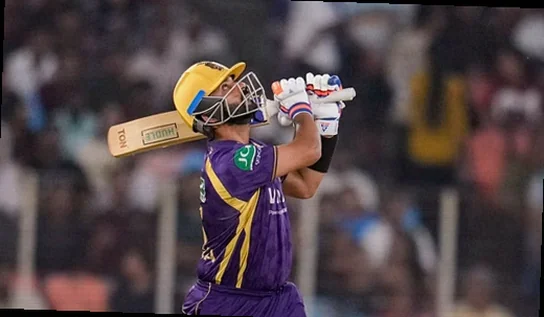
Ajinkya Rahane is facing growing scrutiny on two fronts—his captaincy and his batting—while Kolkata Knight Riders continue to languish near the bottom of the standings. In high-pressure franchise tournaments like the Indian Premier League, the skipper often becomes the first lightning rod for criticism, and Rahane’s recent batting returns have only intensified the scrutiny. With the team struggling to find consistency, every knock from the top order is being weighed more heavily than usual.
KKR have managed only one win in seven matches, slipping to 10th place—an outcome that is a long way from what supporters would associate with a franchise that has lifted the IPL trophy three times. Rahane’s own output mirrors the wider difficulties KKR have been experiencing. In seven innings, he has accumulated 152 runs at an average of 25.33, and he has not been able to convert promising starts into longer, match-defining contributions. His strike rate of 144.76 may look decent on paper, but it has not consistently delivered the kind of impact expected from a powerplay opener. When the top order fails to press the advantage early, KKR frequently end up chasing the game rather than setting the tone—making it harder to build the kind of innings that can control proceedings from the outset.
As criticism grows, former KKR head coach Chandrakant Pandit has stepped in with a more balanced defence of Rahane’s approach, arguing that there is a clear logic behind how he fits into KKR’s batting structure at the top. Pandit pointed out that Rahane’s recent record suggests he has been productive when he has been given opportunities, and he added that the responsibilities of batting at the beginning of an innings can differ significantly from other roles."Ajinkya has done well over the last couple of seasons whenever he has had the opportunity to bat. Even in domestic cricket, including T20s, he has shown solid form. But batting at number one comes with a distinct kind of responsibility. After the powerplay overs are over—once the first six overs are completed—his job is often to steady the innings and move it forward in a controlled way. That could explain why he isn’t always swinging for the fences right from the start. He is a very calculating player," Pandit said.
Pandit also addressed the psychological dimension, suggesting that the weight of expectations could be affecting Rahane, particularly as KKR endure a tough stretch. He stressed that inconsistency is part of the journey for most players and should be understood in the context of form swings rather than treated as a permanent failing."It also feels like there may be some pressure on him, especially when the team isn’t going well. As a senior player, that responsibility naturally lands on him, and he might be putting in extra effort with the mindset that they need to win. But every cricketer handles these situations differently, and fluctuations in performance are normal. Some players shine in one season and struggle in the next—consistency varies from person to person," he added.
“Rahane belongs in category of Gill, Gaikwad”
In a further comparison, Pandit drew parallels between Rahane and players such as Shubman Gill and Ruturaj Gaikwad, highlighting the importance of a composed, adaptable approach. His argument was that Rahane’s style aligns with a class of batters who can adjust their game across phases—complementing the more aggressive hitters who are tasked with taking the innings forward."When you look at players like Shubman Gill and Ruturaj Gaikwad, they also share that adaptable, composed character that shows up across formats. Rahane fits into that category of batters who lean on a thoughtful, measured approach. He understands his role and responsibility. The way he has been batting suggests he is carrying out what is generally expected from a top-order batter after the powerplay. Of course, other players in the side have different assignments—particularly the power hitters. KKR often lean on players like Rovman Powell to accelerate the scoring and drive the game forward aggressively. Ultimately, it’s about balance within the team, and Rahane’s approach aligns with that bigger plan," Pandit concluded.
