
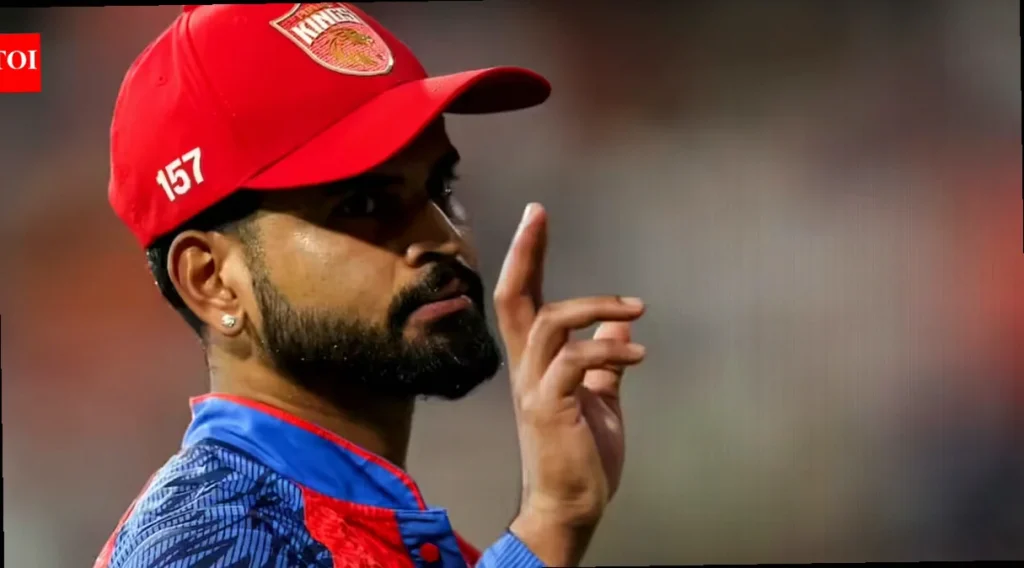
Shreyas Iyer has become one of cricket’s most eye-catching leaders and batters, with his IPL influence once again feeding the debate over whether he should earn a place back in India’s T20I plans. The argument goes beyond single-season fireworks: since taking on captaincy responsibilities, Iyer has balanced the often conflicting demands of anchoring an innings while also accelerating when required—an approach that has repeatedly translated into team success. From steering Delhi Capitals to their first-ever final in his captaincy year to guiding Kolkata Knight Riders to a third title after more than a decade, his profile has continued to strengthen. With Punjab Kings in IPL 2025, he then delivered his most destructive run-scoring stretch of all, raising the intensity of the “leadership comeback” conversation ahead of the next T20 cycle.
Key takeaways
- In IPL 2020, Shreyas Iyer captained Delhi Capitals to their maiden IPL final and finished with 519 runs in 17 innings at a strike rate of 123.27.
- In IPL 2024, as captain of Kolkata Knight Riders, he helped the side win a third title after 12 years and contributed 351 runs in 15 matches.
- In IPL 2025, Iyer was picked by Punjab Kings and the franchise reached the final for the first time in 11 years; he scored 604 runs in 17 games at 175.07.
- In Qualifier 2 last year versus Mumbai Indians, he dominated the chase and struck Jasprit Bumrah for a six.
- Suryakumar Yadav’s leadership has been strong overall, but his recent batting output has dipped, including 121 runs in 6 IPL matches so far in the ongoing season.
Iyer’s captaincy impact across multiple IPL seasons
Iyer’s recent rise has been framed as captaincy that comes with personal contribution. He has repeatedly been described as a leader who manages the game while also taking responsibility with the bat, easing pressure in tight phases and finding momentum when matches turn. That combination has kept his name at the centre of the India T20I leadership discussion, especially as fans look for an option who can handle both tactical demands and match situations with the bat.
Delhi Capitals in IPL 2020 marked a breakthrough chapter. Under his captaincy, the franchise reached its first IPL final. Iyer’s batting was central to the run: he struck 519 runs in 17 innings, maintaining a strike rate of 123.27, helping the team build match-defining totals and chase scenarios.
The next major captaincy statement arrived with Kolkata Knight Riders. When he took over as KKR captain in IPL 2024, the team lifted their third title after a 12-year wait. Iyer’s run tally—351 runs in 15 matches—reflected how he contributed in the middle with both stability and intent, supporting the team’s push through the tournament.
IPL 2025 brought a new franchise and another leap in performance. Punjab Kings signed Iyer, and the side reached the final for the first time in 11 years. The season proved career-defining for him: he amassed 604 runs across 17 matches, striking at 175.07—his most explosive batting output in his IPL career.
Beyond numbers, his “take-charge” leadership has been highlighted through key match moments. Last year in Qualifier 2 against Mumbai Indians, Iyer was portrayed as taking control of the chase and delivering under pressure. He even hit Jasprit Bumrah for a six, described as delivered with full authority over one of the world’s most respected pace bowlers.
Suryakumar Yadav’s strong captaincy, with recent batting concerns
Suryakumar Yadav, India’s current T20I captain, has enjoyed a generally successful leadership phase. Under him, India won the T20 World Cup 2026 and also captured the Asia Cup 2025. He also holds the top mark for win percentage among Indian T20I captains, provided the sample includes at least 20 matches. In total, across 52 games as captain, India registered 40 wins, suffered 8 defeats, and had 2 no-results.
Still, the conversation around Suryakumar has increasingly leaned toward age and a recent drop in batting form. In early 2026, during a five-match home series against New Zealand, he scored 242 runs—surpassing Virat Kohli’s previous mark of 231 runs. He also hit a milestone as captain, reaching 1,000 T20I runs for India during his match-winning innings of 84 off 49 balls against the USA in the 2026 T20 World Cup.
While his captaincy success is clear, his batting impact in ICC events has been less consistent. In the Asia Cup 2025, he made 72 runs across 7 matches. At the T20 World Cup 2026, he scored 242 runs in 9 innings. Even though India won the tournament, his strike rate of 136.72 was the lowest among Indian batters in that edition, and he struggled in the knockouts, including being dismissed for a duck in the final against New Zealand.
In IPL 2025, Suryakumar’s season stood out as a career highlight. He was named the MVP after scoring 717 runs in 16 matches. But the ongoing IPL season has not mirrored that momentum: he has managed 121 runs in 6 matches so far. His recent form included a golden duck against Punjab Kings on April 16, when Arshdeep Singh dismissed him. The next outing against Gujarat Titans began well, but he was eventually cleared by Kagiso Rabada for 15 after the pacer produced a decisive delivery.
Looking ahead to the next major T20I event, India will defend their title at the T20 World Cup 2028. The same year, cricket will also be part of the 2028 LA Olympics. By then, Suryakumar is set to be 38, and the pressure of renewal may rise as well. With middle-order challengers such as Rajat Patidar pushing for opportunities, another prolonged dip in form for Suryakumar could put his position under scrutiny when selectors plan for the next cycle.
Why Iyer fits India’s T20I leadership discussion
The case for Iyer centres on his ability to win titles and perform consistently across formats, while also managing different teams and varying player combinations. That blend of results and adaptability has kept him among the leading names in the leadership conversation for India’s T20 setup.
However, the competition in the T20 leadership landscape remains intense. Rajat Patidar, who captained RCB to a title in his first season after an 18-year wait, has also made an impact with both bat and leadership. Axar Patel—who has previously served as India’s vice-captain—has been mentioned as part of the leadership race, though his more recent form has dipped. Sanju Samson, already a regular in India’s T20I plans, is another contender, having delivered crucial knocks in major matches.
What sets Iyer apart among this group is the consistency he has shown over time. He has repeatedly produced with the bat and delivered results as a captain. Over the 2024 to 2026 seasons, he has earned broad appreciation in the cricket fraternity for tactical maturity and leadership resilience—particularly for guiding three different franchises to IPL finals.
What top figures have said about Iyer’s leadership
Several senior voices have praised Iyer’s captaincy style and the mental demands of switching environments. Anil Kumble described him as a “certainly underrated skipper,” pointing to how difficult it is to change franchises and still lead immediately to a final—something Iyer achieved by taking Punjab Kings (PBKS) to the 2025 final in his debut season.
Ricky Ponting, who is the head coach of PBKS, said Iyer has “taken his game to a whole another level.” Ponting also described him as a leader who has matured personally and tactically, suggesting the leadership growth has been visible in how he approaches match situations.
Brad Haddin added his view as well, calling Iyer a “game-changer” and emphasising that he genuinely cares for the players. Haddin specifically noted Iyer’s distinctive record of taking three different teams—DC, KKR, and PBKS—to IPL finals.
Ravichandran Ashwin then offered insight into what Iyer brings to the dressing-room atmosphere. He referenced how Iyer creates comfort and conversation within the group, describing a “brotherhood” dynamic. Ashwin also contrasted the situation with teams where players cannot directly approach the captain or coach with confidence that they will be able to deliver. In Ashwin’s words, Iyer has kept things simple—similar to how conversations happen “in your gully” or during tennis-ball games back home—making team culture feel natural. Ashwin further said that the way Iyer is batting shows he is growing into the kind of leader players look up to, calling it a lethal combination.
Ashwin’s quote: “Just the comfort that he is creating around the team, to say, we will have a brotherly conversation. It's a brotherhood here. At the end of the day, I have played in teams where there is always that layer that you can't… You are just not able to go up to the captain or the coach and say, 'I will deliver this for you'. And it's happened. Just the fact that he has kept it simple like how it is being done in your gully or in your tennis-ball game back home, where we do this all the time with our captain or with our friend. That atmosphere is amazing. And I think the way he is batting, he is growing into the role of a leader that the players are looking up to, which is a lethal combination.”
With his rise as both a batter and a captain, Iyer is viewed as one of the strongest candidates for a return to India’s T20I setup in the next World Cup leadership cycle. While Suryakumar Yadav remains the current captain, Iyer’s steady performances, proven captaincy success across multiple franchises, and ability to handle pressure moments place him in a strong position for the future.
