
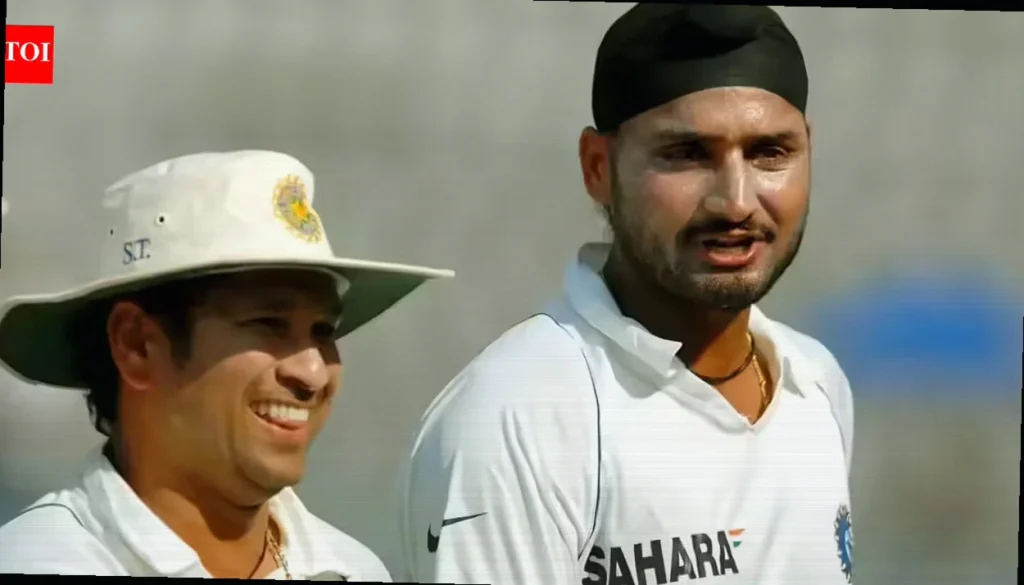
Members of the Legends Club gathered at the CK Nayudu Hall in Mumbai’s Brabourne Stadium on a warm Friday to mark Sachin Tendulkar’s 53rd birthday with stories, debate, and a shared love for the longer version of the game. The evening’s central voice was Harbhajan Singh, an off-spin standout with 417 Test wickets, a World Cup winner in 2007 and 2011, and a prominent figure across formats through his IPL career as well as his work beyond the pitch.
Key takeaways
- Harbhajan Singh said the best way to safeguard Test cricket is to play more Tests, not less.
- He argued that better pitch preparation is essential, insisting matches should run for five days rather than ending in about two-and-a-half.
- The off-spinner stressed that spinners must still spin the ball in both Tests and T20s, warning that a lack of spin makes batting easier.
- He said his approach is to stay aggressive when facing new batters, aiming to challenge even from the first delivery.
- Harbhajan praised Tendulkar as a disciplined teammate, recalling how juniors were given freedom to celebrate him after a New Zealand Test win in 2009.
- On T20 match values, he felt the format’s best contests often involve totals around 160 or 170 that can still be defended.
Harbhajan on how cricket has shifted
As Yajurvindra Singh, president of the Legends Club and a former India player, welcomed Harbhajan and MCA president Ajinkya Naik, the conversation immediately turned to how far cricket has evolved. The discussion included the changes from the era when a 60-over contest was treated almost like a mini-Test, and how Harbhajan’s own playing years belonged to a tougher period for bowlers.
Harbhajan pointed out that the game had already begun transforming by the time he arrived. He highlighted that one-day cricket had firmly taken space on the calendar, T20 was on the verge of exploding, and shorter boundaries along with power-focused batting had begun to leave spinners with fewer openings. In that environment, he suggested, spinners were expected to be defensive more than genuinely threatening.
Still, Harbhajan maintained that he “graduated” through Test cricket’s demands and that the format builds skills across every possible challenge. “Test cricket tests you in every possible way,” he said, adding that reaching 100 Tests was the defining achievement of his career. He explained that the milestone became his personal target after watching Kapil Dev reach it, though he expressed doubt that many modern players will manage the same feat in today’s scheduling realities.
Why Tests matter, and the role of pitches
From there, the group moved toward the modern game’s heavy emphasis on shorter formats, six-hitting, and money-driven leagues. The key question was where Test cricket stands now—and Harbhajan’s reply was direct. He called for saving the format by playing more of it, while also stressing that the preparation of pitches must improve.
He argued that Tests should be given enough time to produce full contest arcs, insisting they should last five days instead of wrapping up in roughly two-and-a-half. He compared it to major multi-day series such as the Ashes, where matches naturally stretch to the five-day framework. He also questioned why India’s Tests against Australia should end so early, and he cited a memorable reference point: an India-England Test where Joe Root took five wickets in five overs, and Harbhajan recalled the number of overs he needed to deliver a five-wicket haul in a Test setting.
He further connected the argument to the 2001 Eden Gardens Test, when Harbhajan’s spin brought India back into a dead series against Australia. The lesson, he implied, was what five-day cricket allows: momentum can shift, morale can be broken and rebuilt, and belief can return as the match progresses.
Spinning basics, mindset, and deception
Spin bowling became another central theme at the Brabourne venue, with Harbhajan lamenting how the craft has been diluted. “Spinners are supposed to spin the ball,” he said, making the point that if the ball isn’t turning, batters simply enjoy easier conditions. He added that whether it’s T20 or Tests, the fundamentals do not change.
Harbhajan framed the discussion as much about mindset as about technique. He said spinners need courage because they cannot rely on the same tools as fast bowlers—bouncers and yorkers don’t fit the same role. Instead, he insisted their primary weapon is deception, created through changes in flight and through the way the ball behaves off the surface. He underlined the idea in Hindi, stressing that the ball should be shaped from the hand—like a half-moon—and then allowed to land low.
To test how those traits would translate into a match situation, the conversation turned to Vaibhav Sooryavanshi. Harbhajan said his attitude would be the deciding factor: he would look to take wickets quickly, trying to get the batter out on the very first ball rather than protecting himself by bowling flat. He admitted that his aggression has sometimes caused problems, but he said it is the only approach he knows.
Tendulkar, the dressing room brotherhood, and playful rule talk
With the focus shifting from bowling to character, the discussion quickly returned to the birthday boy: Sachin Tendulkar. Harbhajan spoke about him not as a distant figure but as a senior teammate and a kind of elder brother. He described Tendulkar as disciplined, endlessly available, and someone who made room for younger players to grow.
“On the field he was the great Tendulkar,” Harbhajan said, then added with a smile that in the dressing room he was “Paaji.” He recalled an incident after India won a Test in 2009 in New Zealand, when juniors—including himself and Zaheer Khan—were given the freedom to toss Tendulkar into a jacuzzi as part of the celebration.
The evening also brushed past the laws of cricket and whether any tweaks could improve the balance between bat and ball. Harbhajan joked that if bowlers are restricted from delivering after two beamers, then he would like batters to face a similar restriction after hitting two sixes.
He then moved from humour to seriousness. “The law is not the problem,” he said. In his view, wickets are the real factor. If good wickets are prepared, the natural balance between bat and ball follows. He offered examples through recent match situations, citing Mohammed Shami’s spells in Lucknow for LSG versus RR and pointing to the MI versus CSK game, where spinners such as Akeal Hosein and Noor Ahmad influenced the result. Harbhajan also shared his belief that the strongest T20 contests are often those where totals in the 160-to-170 range are defended.
Brabourne message: patience still wins
At the history-rich Brabourne Stadium, the tone of the discussion was consistent: formats will keep shifting, and leagues may continue to multiply, but the players who ultimately dominate will be those who combine patience with skill and courage to challenge the game itself. The Legends Club gathering ended with that theme echoing through the conversations—an emphasis on craft, character, and the value of longer matches even in a fast-changing cricket landscape.
