
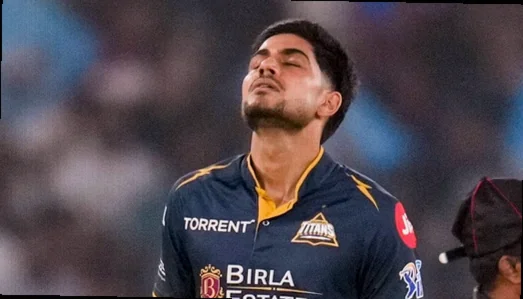
Gujarat Titans’ loss to Royal Challengers Bengaluru at the M Chinnaswamy Stadium was more than a story of falling short of defending 205. The defeat quickly turned into a debate about captaincy timing, because GT had brought the chase back under control at a stage where one well-timed bowling switch could have dragged RCB’s pursuit deeper into the final overs.
How the chase stayed alive for GT
For long stretches, RCB looked dominant, powered by Virat Kohli’s 81 off 44 balls and Devdutt Padikkal’s 55 off 27. Yet Gujarat found a way to create doubt after the middle-order wickets.
- By the time RCB reached 173/5 in the 16th over, the chase was still not beyond reach for GT.
- With 33 needed off 27 balls, and the set top-order batsmen already gone, Gujarat still had a credible path to force pressure late.
Debate over Shubman Gill’s bowling call
The key talking point centred on Shubman Gill’s decision regarding Mohammed Siraj. Siraj had delivered his quota of overs with discipline—three spells for 25 runs and a wicket—making him arguably the most reliable pace option for Gujarat on the night. However, his final over was delayed during the critical phase of the chase.
Instead, Manav Suthar was introduced in the 18th over against Krunal Pandya, and the result swung the contest firmly towards RCB.
- Siraj’s wicket-taking and control were on display earlier, but he was not brought back when the equation was still manageable.
- Suthar bowled the 18th over and conceded 15 runs, immediately changing the pressure dynamic.
- After that over, the target reduced to seven runs from the final two overs, leaving little room for a late comeback.
Sehwag questions the late-overs strategy
Former India opener Virender Sehwag criticised the logic behind holding back Siraj when the match was still in play. Speaking on Cricbuzz, he argued that bringing Siraj in during the final stretch—when wickets could have shifted the required rate—might have made the ending far more uncertain for RCB.
Sehwag’s comments focused on the exact moment the chase could have been pushed into the last over rather than being resolved early:
- He noted that when 22–25 runs were required off the last three overs, returning Siraj could have enabled a wicket and reduced the asking rate to roughly 20 from two overs.
- He suggested that, with such a shift, the contest might have been taken at least until the final over.
- Sehwag also pointed out that the match did not extend to the last over.
Why GT’s options and the spin phase both mattered
Sehwag’s criticism went beyond a single overshoot. He felt GT appeared reluctant to revert to their main wicket-taking bowlers after earlier spells had been hit. Prasidh Krishna, Rashid Khan, and Kagiso Rabada all faced damage during different parts of the chase, but Sehwag argued that in a high-stakes chase at Chinnaswamy—where momentum can flip quickly—captains must still trust their frontline attack at the most demanding stage.
- Krishna conceded runs, Rashid Khan was also expensive, and Rabada was taken apart at points in the chase.
- Even so, Sehwag believed the captain should have brought them back when the match required wickets most.
- He framed it as a loss of courage if a bowler is not used simply because of earlier conceding, stating that the captain’s job is to redeploy attacking options.
The left-arm spin matchup added another layer to GT’s problems. Krunal Pandya, a left-handed batter, was allowed to attack the angle against Suthar, and once that over vanished from the contest, RCB had less reason to worry about losing control of the chase.
Gill later indicated that Gujarat had observed grips on slower balls during their own innings and believed spin could still offer a wicket-taking moment. Still, the risk did not pay off. In the crucial segment, Siraj’s length and control appeared to be the more reliable choice for a defensive-but-wicket-oriented approach.
What this defeat means for GT and Gill
For GT, the worry stretches beyond one result. Their late-overs bowling has already come under scrutiny this season, and another match slipped away because they could not convert a squeeze into a proper finish in the final over(s). For Gill, who is continuing to grow as an IPL captain, this was the type of night where the scoreboard alone does not fully explain the loss—the real impact came from when the decisions were made.
