
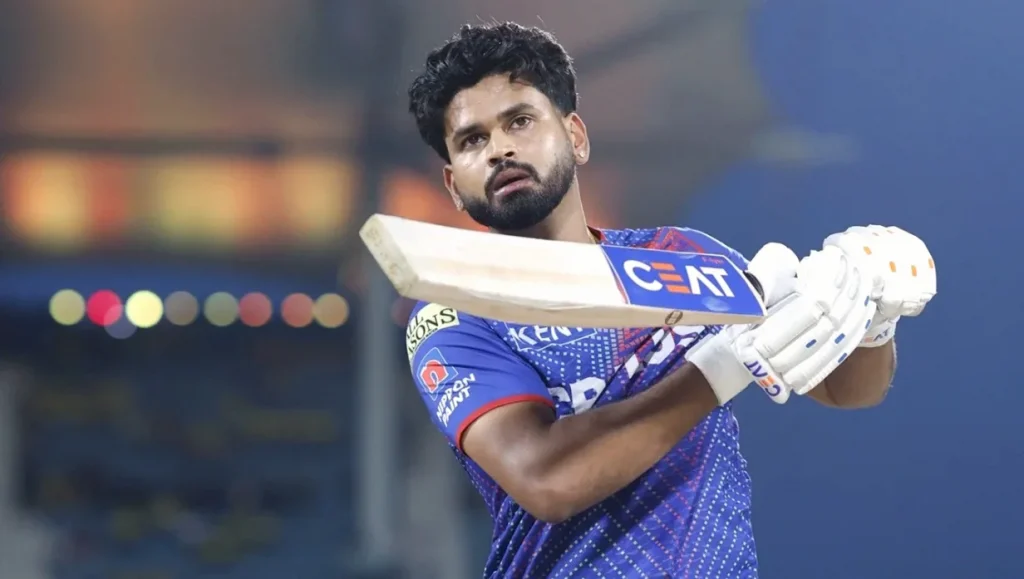
Gen Z cricket talk calls it a “generational fumble” — the kind you drop, then replay in your head for days. For Kolkata Knight Riders, the letting-go of captain Shreyas Iyer after their IPL 2024 triumph is likely to feel that way from the outside. PBKS, meanwhile, have turned that missed chance into their advantage, with the two sides set to meet on Monday following sharply different starts to IPL 2026.
Key takeaways
- Kolkata’s post-IPL 2024 decline has followed their inability to retain Shreyas Iyer, while Punjab Kings have benefited from his departure.
- PBKS reached the IPL 2025 final and have carried that momentum into IPL 2026 with strong early performances.
- Iyer’s captaincy impact is backed by leadership metrics, including a win rate above 60% that is higher than MS Dhoni and Rohit Sharma’s.
- In IPL 2025, Iyer scored 604 runs at a strike rate of 175, and he has continued to shape PBKS’ batting and chase plans.
- KKR’s middle-order (positions 4 to 8) has struggled in 2026, with the highest dot-ball percentage since IPL 2025, plus the third-lowest batting average and strike rate.
PBKS surge in IPL 2026, powered by Iyer
After spending more than a decade as the franchise frequently joked about off the field and comparatively less threatening in matches, the Iyer touch has helped transform PBKS into a far more consistent unit. That shift was underlined by their run to the final in IPL 2025.
The 2026 season has started in the same spirit. Iyer used only five bowlers to limit Gujarat Titans to 162 in New Chandigarh. Then, on a batting-friendly Chepauk wicket against Chennai Super Kings, he managed the innings to perfection by restricting the hosts to 209. With the chase in front of them, Iyer contributed a brisk 50 to guide PBKS home successfully. His strokeplay in that effort looked effortless, even though his strike rate clocked in at 172.41.
What PBKS have been able to do, match after match, is keep pressure on both ends — controlling totals with disciplined bowling plans and then anchoring chases with a captain who can change the tempo when needed.
KKR’s struggles after the captaincy change
Kolkata’s new era has produced some runs from Ajinkya Rahane, but the bigger picture has not followed. The team finished well outside playoff contention in 2025 and have opened IPL 2026 with two defeats.
When it comes to what is measurable, KKR’s batting at positions 4 through 8 has been the clearest concern. Those spots have registered the highest dot-ball percentage since IPL 2025, along with the third-lowest batting average and the third-lowest strike rate.
Cricket can easily quantify what’s visible — runs, averages, strike rates, and economy rates — but replacing leadership is a far tougher task. In KKR’s case, the captain and the side couldn’t align on the value of their No. 4 role and captaincy. PBKS seized a rare window to add a proven, young leader, one who could reconnect with a coach without having to build a relationship from scratch.
Why the Iyer decision changed the storyline
Among many voices in cricket circles, Iyer’s captaincy has been viewed as one of the standout leadership stories of the 2020s. Tom Moody has pointed to Iyer’s calm temperament and the way it filters through the dressing room. Brad Haddin has highlighted the care Iyer shows toward players, while Ian Bishop has noted his preference for making things happen instead of waiting for opportunities to arrive.
The numbers are said to support the narrative as well. With a win percentage above 60%, Iyer’s record is described as superior to both MS Dhoni and Rohit Sharma. There is also a unique captaincy marker: Iyer is the only player to have led three separate teams to IPL finals — DC in 2020, KKR in 2024, and PBKS in 2025.
And the discussion doesn’t end with leadership. While Iyer has long been recognised as one of the more effective batters of spin, his improvements against the short ball helped raise his all-round profile. The payoff came in IPL 2025, when he amassed 604 runs at a strike rate of 175. Since Iyer’s exit, KKR have been attempting to solve the No. 4 vacancy that he left behind.
For PBKS, pursuing Iyer in the auction was framed as a straightforward decision. After years of cycling through multiple captains, the franchise had a chance to secure a stable leader with a longer-term direction. In that context, the value Iyer brought was considered to outweigh the size of the cheque PBKS ultimately committed to.
It would be unfair to reduce PBKS’ recent rise and KKR’s dip entirely to one individual. Still, his influence has been central. On Monday, with Iyer walking out in front of the Eden Gardens crowd that once cheered his captaincy, the question will linger for many: what could have been if Shreyas Iyer had stayed?
