
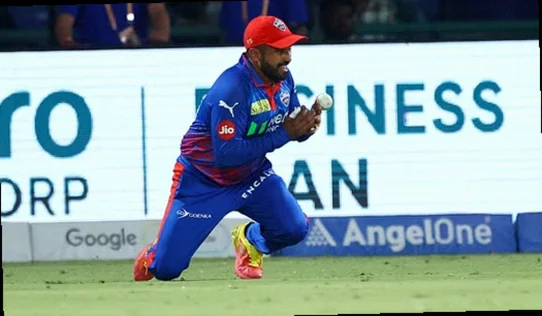
Delhi Capitals posted 264 runs and still let Punjab Kings take control of the finish. KL Rahul’s unbeaten 152 had set up a score that typically holds up even through a rough spell. But in this chase, two chances went down at the worst possible moments.
Quick facts
- Delhi Capitals made 264 on the board.
- KL Rahul scored an unbeaten 152 for DC.
- Karun Nair dropped Shreyas Iyer twice—both on the long-off/long-on side.
- DC’s missed catches are valued at ₹89.38 lakh in batting-consequence terms.
- Punjab were 202/4 after 14.5 overs, needing 63 from 31 balls.
- Punjab chased 265 in 18.5 overs; Shreyas Iyer finished 71* off 36.
- Direct fielding loss from the two drops is estimated at ₹32.03 lakh (seven-point penalty per dropped catch).
Karun Nair let Shreyas Iyer survive twice within a span of three deliveries. Those two reprieves quickly turned into a major swing in the chase, with the batting impact on the model clocking an estimated ₹89.38 lakh cost for Delhi. In other words, the dropped catches didn’t just look like errors—they became the difference between a near-close and a complete turnaround.
Punjab’s situation was already pressurised when the first miss landed. They were 202/4 after 14.5 overs, still needing 63 off 31 balls, and the required rate sat above 12. Shreyas was on 28 from 20, and Delhi had weathered the initial storm from Prabhsimran Singh and Priyansh Arya. From there, the game was entering the sort of phase where one wicket could have flipped the momentum.
The first reprieve: 14.6 overs
The opening came at 14.6 overs. Shreyas went for a big shot, mistimed it, and the ball travelled towards long-off. Karun Nair had the chance and put it down. The batters crossed for a run, and Shreyas moved to 29 off 21.
From that delivery until the end of the contest, Shreyas added 43 runs off 16 balls. Punjab still required 63 when he was dropped, and the model attributes 68.25% of the remaining runs after that first miss to the reprieve. That first missed chance carries a valuation of ₹48.86 lakh in batting-consequence value.
Almost immediately, Delhi paid again. At 15.2 overs, Shreyas miscued Kuldeep Yadav and sent it towards long-on. Karun Nair was the fielder once more—and this time he dropped the chance again.
Punjab moved to 209/4, but the chase was still not straightforward: they needed 56 from 28 balls, with Shreyas on 35. The second missed opportunity is priced at ₹40.52 lakh. After that, Shreyas added 36 runs off 13 balls and finished unbeaten on 71 off 36, with Punjab completing the chase of 265 in 18.5 overs.
Taken as two separate missed moments, the combined batting-consequence cost for Delhi totals ₹89.38 lakh. But there’s a key nuance in how that figure is framed: the two values overlap in the match sequence because the second chance existed only after the first had already been allowed to slip.
How the numbers are shaped
If the innings is treated as one continuous “damage window” created by the first dropped catch through to the finish, the cleaner single-chain value comes out to ₹48.86 lakh. That figure runs from the first reprieve all the way to the end of Shreyas’ innings. However, if each dropped catch is priced as its own separate dismissal opportunity, then the combined chance cost becomes the full ₹89.38 lakh.
That ₹89.38 lakh number is designed to show how much DC allowed Punjab to gain by failing to complete the same wicket twice. The direct fielding penalty, though, is smaller. In the fielding layer, each dropped catch carries a seven-point deduction, and with one impact point valued at roughly ₹2.288 lakh in this match, Karun Nair’s two drops amount to an estimated direct fielding loss of ₹32.03 lakh.
The takeaway is that a dropped catch isn’t valued only by the act itself. Its true cost depends on who is dropped, the situation at that point, and what follows after the reprieve. Dropping Shreyas while Punjab were still needing 63, and then again when they were down to 56, wasn’t a routine slip—it kept alive the batter who ultimately sealed the chase.
DC still had a contest to win even at 202/4. They even got a second opening at 209/4. In both instances, Shreyas offered Delhi control back—yet on both occasions, Karun Nair failed to complete the dismissal.
The punishment arrived quickly after the second miss. Once Shreyas was reprieved again, he attacked Kuldeep’s over and eased the chase into Punjab’s hands. What had been a demanding equation became manageable, and the game’s defining number shifted away from Delhi’s 264/2—built from Rahul’s 152 and Nitish Rana’s 91—towards Shreyas’ match-winning 71 not out.
For Delhi, the night will linger as much for fielding as for bowling. Their bowlers had been stretched by Punjab’s aggressive start, but the chances to remove Shreyas were there. The match offered them two clear routes to dismiss Iyer before he could finish the job—and both chances were missed by Karun Nair.
In the model, those misses carried a combined batting-consequence damage of ₹89.38 lakh, alongside a direct fielding debit of ₹32.03 lakh. The first number represents what Shreyas’ survival helped Punjab extract in the chase. The second captures the cost of the dropped catches themselves.
In a record chase, Delhi didn’t just lose because Punjab batted brilliantly. They lost because, when Shreyas Iyer finally made mistakes, Delhi couldn’t hold the chances—twice.
