
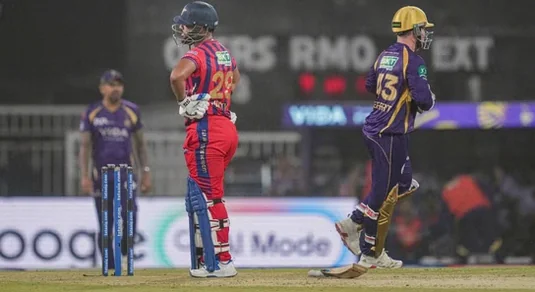
The call to bring Nicholas Pooran into the Super Over has drawn sharp criticism, with plenty of observers questioning whether Lucknow Super Giants made the right matchup choice. Former West Indies all-rounder Carlos Brathwaite, a hero of the 2016 T20 World Cup in India after striking Ben Stokes for four straight sixes, pointed to the risk of Pooran facing his fellow countryman Sunil Narine—especially given Narine’s past record versus the batter in the game’s biggest moments.
Quick facts
- Brathwaite questioned LSG’s decision to send Nicholas Pooran to bat in the Super Over against Sunil Narine.
- Pooran was dismissed on the first ball while attempting a slog sweep.
- On the third delivery of the Super Over, Aiden Markram was also sent back, leaving KKR needing only two runs to seal the result.
- In the Caribbean Premier League, Narine had previously restricted Pooran in a Super Over situation 12 years ago.
- Pooran’s strike rate versus Narine before the match stood at 131.08, with four dismissals in 148 balls and an average of 49.
After Pooran walked out, the Super Over barely got started. He was cleaned up off the opening ball as he went after a slog-sweep attempt, and the pressure only intensified immediately after. Aiden Markram was removed on the third ball, which reduced the chase to a simple two-run target for KKR, completed without any fuss.
Brathwaite’s concern wasn’t just about the immediate outcome—it was rooted in how Narine has previously operated in high-pressure T20 situations. He referenced the Caribbean Premier League from 12 years ago, when Narine made Pooran “dance to his tune” and, crucially, did not concede a single run in a Super Over.
Even with that history, the numbers leading into the match suggested Pooran had not been completely helpless against Narine. Ahead of the game, Pooran had scored at a strike rate of 131.08 versus Narine, and across 148 balls he had been dismissed only four times, maintaining an average of 49. On paper, that looked like a reasonable case for LSG to explore.
Form vs matchup
Still, Brathwaite and many others believe the deciding factor may have been Pooran’s current rhythm. The criticism hinges on the contrast between last season and the present one: in the IPL last year, Pooran struck at 196.25, while this season he has struggled to find his previous intensity, posting a strike rate of 81.18.
In that context, the selection for the Super Over feels even more questionable to Brathwaite. He was also caught off guard by the call made by Rishabh Pant regarding Pooran’s role in that decisive spell of play.
“Baffling decision,” Brathwaite said, while describing how someone—without naming them—had suggested that if Pooran came out, it could be a maiden. He added that the outcome unfolded exactly as feared “like, many, many years ago,” drawing attention to how the moment can quickly turn when a batter is not in form.
Brathwaite went on to argue that the logic of choosing a batter in a Super Over should be driven by who is actually performing. “When he’s on form, you want him against anyone,” he said, “but he’s not.” With only six balls available, he questioned why LSG would not instead go with their most in-form options rather than lean on a matchup that looked better historically than it did in the present.
He also pointed to the fact that the night itself wasn’t producing big-impact hits from the group, meaning LSG may have been forced to rely on something other than rhythm. With two countrymen who know each other well, Brathwaite suggested there may have been a “fairy-tale” mindset—or a touch of fantasy—that the move could pull Pooran out of a rut. The plan, however, didn’t deliver, and the downturn continued as the Super Over ended in a rapid collapse.
