
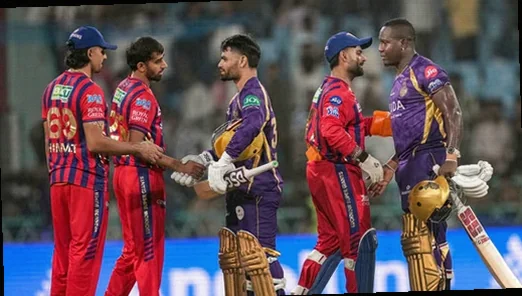
The Indian Premier League (IPL) remains one of the most watched T20 leagues on the planet, with fan interest continuing to climb each season. Yet one recurring problem refuses to go away: the matches rarely finish within the intended window. Although the T20 format is built to deliver a complete game in about three hours, IPL contests have consistently run over that mark. Even without any Super Over being required, an IPL 2026 clash between the Mumbai Indians and Royal Challengers Bengaluru stretched to four hours and 22 minutes.
While time-related penalties for slow over rates exist, they have not stopped the pattern of games slipping to the 3 hour 30 minute range. Former India captain Sunil Gavaskar has now urged the BCCI to take stronger control and remove what he sees as a casual approach to maintaining match tempo.
Gavaskar calls for tighter match-area rules and clearer SOPs
- Gavaskar argued that the BCCI should introduce strict standard operating procedures (SOPs) for the strategic time out.
- He suggested that only a tightly defined number of reserve players and support staff should be permitted to enter the playing area during such breaks.
- He pointed to situations where reserve players appear on the field unnecessarily, such as when a player walks out to hand a bottle of water to a fielder stationed near the boundary.
- He said this kind of practice effectively creates a scenario where more than the allowed number of players are present while play is still in progress, even if it happens between deliveries.
- He also noted that during strategic time outs, it is common to see several additional people on the ground, including batters who are due to come in next.
- Gavaskar said that should be curtailed, allowing only two reserve players for drinks and two from the coaching staff—no one else should be on the playing surface.
- He referenced a lesson from cricket broadcasting pioneer Richie Benaud, stressing that the field of play should be treated as a sacred space and should be entered only by those officiating and those actively playing.
- Gavaskar added that if he is not doing a pitch report or a television segment, he hardly steps onto the ground himself—making the point that access should be respected, not expanded.
- He further urged that even committee members who hold accreditation should avoid crossing into the boundary unless required by their roles.
- Wrapping up the argument, Gavaskar said the IPL is already a fantastic tournament, but looseness and laxity are creeping in—something he believes the BCCI can fix through firmer, crisper enforcement.
To underline the need for discipline, Gavaskar also proposed adjustments to the wicket-related timing procedures, believing that the current allowances are being taken advantage of.
Changes Gavaskar wants: wicket timer and time-out execution
- Gavaskar called for reducing the wicket timer from 2 minutes to 1 minute.
- He noted that modern match setups keep batters in the dugout, and that once a wicket falls they should be able to take their position quickly without needing the full two-minute window.
- He suggested that if a batter is not ready to face the next delivery, the team should receive a couple of warnings before penalty runs are applied.
- He said the first ball after the strategic time out should be delivered exactly after 2 minutes and 30 seconds have elapsed.
- Gavaskar argued that the way breaks are currently measured—factoring in the time at the end of an over and the umpire’s signalling—often turns the intended stoppage into almost three minutes.
- He acknowledged that it is peak summer, so drinks and a brief reset are understandable, but maintained that the delay is being exploited.
- He again advocated for penalty runs, saying they would make a “huge difference” in discouraging unnecessary extensions.
Beyond timings and access, Gavaskar also called for penalties that apply broadly—stressing that teams can absorb small fines, so the punishment must be meaningful enough to influence behaviour.
Penalty philosophy: make delays costly
- Gavaskar said financial penalties should be imposed on anyone failing to complete responsibilities within the required timeframes.
- He argued that with the money involved in the IPL, financial penalties are often not painful enough to change how teams operate, particularly when franchises may already handle individual player fines internally.
- He warned that unless penalties are severe enough to potentially affect the game’s outcome, they will not be effective.
- He used an example of teams being penalised for not completing their overs on time, resulting in a reduction of manpower for the final over by allowing one fewer player outside the 30-metre ring.
- He said that kind of impact demonstrates how result-influencing consequences can curb dawdling between overs.
- He concluded that points or runs penalties would be more likely to prevent delays and keep the match moving at the right pace.
