
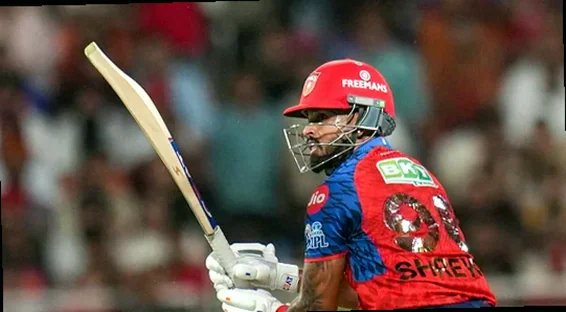
Punjab Kings captain Shreyas Iyer had a rare evening where the bat didn’t quite come off, and it helped trigger his side’s first loss of the season on Tuesday. Known for taking control early, Iyer struggled to find his rhythm against Rajasthan Royals in a chase-heavy, high-scoring game. He finished with 30 runs from 27 balls, striking at 111.11, and while the intent to score was clear, the crispness he usually brings to the middle order never fully arrived.
Despite the setback, PBKS put up a formidable total of 222. However, Rajasthan Royals hunted it down successfully with four balls remaining, turning what looked like a big score into a slightly under-par one by the time the chase got going. In a match decided by narrow margins, Punjab will be left thinking about moments—particularly in the middle overs—where they needed sustained acceleration but didn’t quite take the leap.
Quick facts
- Punjab Kings suffered their first defeat of the season on Tuesday.
- Shreyas Iyer made 30 off 27 balls (strike rate 111.11).
- PBKS posted 222 in the match.
- Rajasthan Royals chased the target down with four balls to spare.
- The post-match discussion included whether Iyer should have been retired out while struggling.
The conversation after the match quickly shifted to a familiar tactical question: should Iyer have been retired hurt (or otherwise taken off) while he was struggling to get settled in the middle? Former fast bowler Shaun Pollock addressed the debate with a grounded perspective, arguing that the decision depends less on form in isolation and more on what the team actually has lined up in the batting order at that point.
Pollock’s view was that a retirement call becomes more justifiable only if there is a clear, in-form option ready to take over and the team can still expect meaningful momentum from the remaining overs. He highlighted that if a player such as Marcus Stoinis had already made an impact in the contest and was still scheduled to come in later, then the captain could consider a tactical change. But if there is no similarly set batter waiting in the wings, the “brave call” becomes harder to defend.
"It depends on who you have coming in next. If Stoinis had already played two knocks like he did in this game, and he was still to come, you could consider it. But there was no one else down the order who was in better form. It would have been a brave call," Pollock said on Cricbuzz.
Why Pollock said intent still mattered
As the debate rolled on, Pollock also expanded on the nature of Iyer’s dismissal and kept the focus on execution rather than intent. In his assessment, Iyer’s approach wasn’t absent—he was still trying to play his shots and keep the run flow moving—but the timing simply wasn’t arriving at the level needed to convert effort into results.
"His intent was there, and he was swinging at times. But he just couldn't get anywhere near the connection he wanted. You have one of these days where you try as hard as you can, but the timing is not on. I wouldn't read too much into it, but it'll be something where he'll look at himself. No one will bring it to his attention, but he'll be conscious of it to ensure he doesn't fall into that trap again," Pollock added.
