
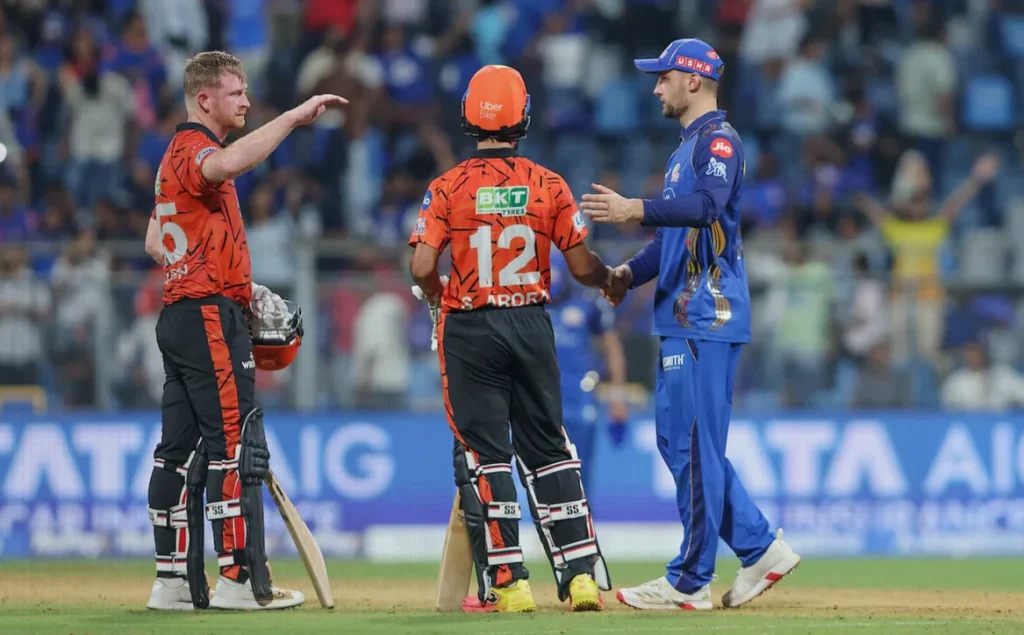
The 2026 IPL has delivered a brand of T20 cricket that feels almost built for fireworks: totals in excess of 200 are no longer rare, but routine. After 40 league matches, 31 games have produced a score of 200 or more, with teams either reaching or successfully chasing those numbers repeatedly, including nine successful 200-plus chases. The latest reminder came on Wednesday night when Mumbai Indians and Sun Risers Hyderabad combined for a staggering 492 runs at the Wankhede Stadium.
Key takeaways
- After 40 league games in IPL 2026, 31 matches featured team scores of 200 or above.
- There have been nine successful chases of 200-plus totals in the season so far.
- Mumbai Indians made 243/5 at Wankhede before Sun Risers Hyderabad chased it down.
- IPL 2026 has seen 200-plus run fests become a consistent pattern rather than a novelty.
- Several tactical and rule-driven changes—especially attacking powerplays and the Impact Sub—are pushing scoring higher.
How the 2026 season keeps flipping into run fests
Very few low-scoring thrillers are now gracing the IPL, as fearless batting and flatter surfaces have shifted the balance of power toward batters. Alongside the impact of the Impact Sub structure, teams are finding ways to keep pressure on from ball one through to the death overs—turning many contests into high-scoring spectacles.
The clash between Mumbai Indians and Sun Risers Hyderabad underlined that reality. Mumbai Indians posted 243/5 at the Wankhede Stadium, and the chase was completed in a controlled, calculated manner by Sun Risers Hyderabad, with the total adding up to 492 runs across both innings.
The big drivers behind 200-plus becoming normal
So why has IPL 2026 produced so many mind-bending totals? Several trends—both on the field and in how squads are constructed—have combined to make 200-plus cricket feel like the default setting.
1) Fearless, power-packed powerplay
Teams are now taking the initiative during the opening overs instead of pacing their innings slowly. That approach has lifted overall totals, because top-order batters are scoring at a far faster tempo than players who typically specialize in the middle overs or at the back end.
Abhishek Sharma has scored 425 runs at a strike rate of 209.35. In the Orange Cap race, seven of the top 10 batters are openers for their respective sides, including Vabhav Suryavanshi and Virat Kohli.
2) The Impact Sub rule
The Impact Sub rule has also changed how teams think about selection and risk. By increasing squad depth, it reduces the punishment for losing a wicket early, because the batting unit can still add another specialist later through the substitution mechanism. In practical terms, that means teams can keep attacking even if the start is shaky, since an additional batter is often still available.
The shift is measurable: JioStar, the host broadcaster, noted that the introduction of the Impact Player rule in 2023 moved the combined run rate from 8.46 to 9.3 in the ongoing 2026 season.
3) More pace, less spin
Another major factor is the change in bowling mix. Spinners have been used for a smaller percentage of deliveries this season, and that matters because spin frequently slows down scoring in the middle overs.
ESPNcricinfo reported that after 34 matches, spinners accounted for just 32.48% of balls—down from roughly 41.19% at the same point in 2025. When teams lean heavily on pace, batters often receive more deliveries that carry pace onto the bat, which can make boundary-hitting easier.
4) The Made in India flat tracks
Flat pitches have helped too. When the wicket is true and the ball comes onto the bat regularly, batters can time the ball more consistently and bowlers have less margin to work with. One example came when Delhi Capitals posted 264/2, the highest team total of the season at that point. Punjab Kings then chased it down, finishing on 265/4.
5) Shorter boundaries and weaker bowling protection
Shorter, more forgiving boundary sizes have added to the scoring ease. On top of that, teams have often prioritized batting depth over bowling variety, making hitting for six a more profitable option.
ESPNcricinfo said the six-hitting rate at that stage of the season was the best ever. The pattern has also shown up in who is doing the scoring: Indian batters have contributed more runs this season than overseas recruits. Notably, only Sun Risers Hyderabad’s Heinrich Klaasen is among the top 10 batters in the Orange Cap race.
With these elements—aggressive early batting, deeper lineups enabled by the Impact Sub framework, a bowling mix that leans more toward pace, flat wicket conditions, and boundary setups that suit power hitting—200-plus totals and chases have become the norm rather than the exception.
Bowling coach Shane Bond warns of the need to adapt
Former New Zealand pacer Shane Bond, now Rajasthan Royals’ bowling coach, offered a blunt assessment on why bowling has struggled to keep up. In an exclusive conversation with NDTV, he said that bowling “hasn’t caught up yet,” suggesting bowlers may need to change angles more often—going over and around the wicket—while also varying run-ups and looking for different methods.
Bond also emphasized that preparation off the field and planning must improve. He added that the message to bowlers is straightforward: they need to get better because batting has reached another level.
Even with that challenge, he pointed out that players like Archer, Bumrah and Hazlewood have continued to perform exceptionally well. That, in turn, sets the bigger question for every bowler: what will be done differently now? Bond suggested that after relying on the same patterns for a long time, players may have to adjust their game, view it from a new perspective, and discover fresh routes to success.
He concluded that it’s time for professionals—especially those working as bowling coaches—to “think differently.”
