
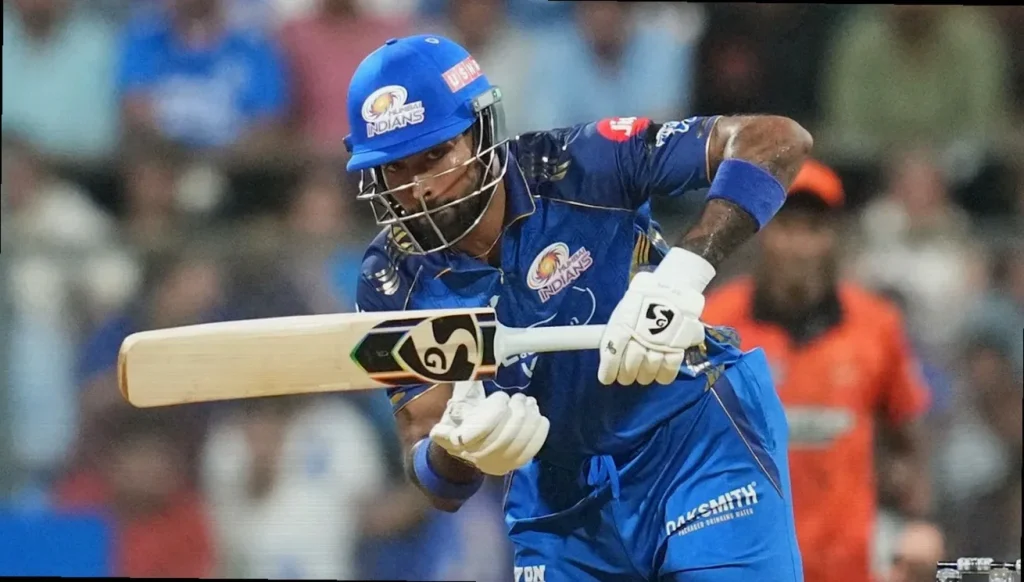
After eight matches in the IPL 2026, Mumbai Indians find themselves ninth out of a ten-team field on the points table, having collected just two wins and suffered six defeats. The situation would be easier to shrug off if it were a one-off wobble, but the franchise has previously finished at the bottom in 2022 and 2024, while also managing playoff appearances in 2023 and 2025. This year’s start, however, has looked distinctly uneven, and batting coach Kieron Pollard believes the core issue is simple: the team has not been able to “string a complete game of cricket together as a team”.
The most recent blow came in Mumbai’s latest outing against Sunrisers Hyderabad, a defeat by six wickets. MI posted 243 runs, only to fall short in the chase with eight balls still remaining, a result that naturally stings even more given the size of the total.
Speaking at the post-match press conference, Pollard admitted the inconsistency has been visible in the results. He said it is something the team cannot ignore, adding that while there are plenty of small details that can be analysed, the larger picture is that MI have not been good enough collectively.
Pollard also addressed the emotional balance of the campaign. He noted that in a league format, results naturally swing both ways, and the side has accepted that it has spent too much time on the losing end. Still, he stressed that the team has not surrendered to defeat because it remains in contention and is searching for ways to climb further in the tournament.
Pollard’s answers turned more guarded when he was asked about Jasprit Bumrah’s output so far. Bumrah has taken only two wickets across eight matches, yet his figures include what is described as the most economical rate among MI’s bowlers at 8.80. Even with that, he conceded 54 in his four-over spell versus SRH, which has added to the scrutiny around his tournament so far.
When pressed further, Pollard suggested the spotlight intensifies whenever things go wrong. He compared it to a regular working situation where people can correct mistakes, while players and staff do not get the same luxury. Pollard said that when performance is not at the level expected, criticism tends to be amplified, but the team is still confident Bumrah will respond and return to his best wicket-taking form.
He added that the conversation around Bumrah will continue beyond Mumbai Indians and beyond the IPL, implying he will also remain a key figure for India. In that context, Pollard asked for a measure of patience with the fast bowler.
Background: MI’s search for consistency and the pressure around key players
- MI sit ninth on the IPL 2026 points table after eight games, with a record of two victories and six defeats.
- The franchise’s past in recent seasons includes finishing bottom in 2022 and 2024, with playoff qualifications in 2023 and 2025.
- Batting coach Kieron Pollard attributes MI’s struggles to an inability to “string a complete game of cricket together as a team”.
- The latest loss came to Sunrisers Hyderabad by six wickets; MI made 243 but lost with eight balls remaining in the chase.
- Pollard said the team has not shown the consistency it hoped for and that collective performance has not been sufficient, even if individual factors can be analysed.
- On the tournament’s mental side, Pollard said MI has accepted being on the losing side more often, but has not accepted defeat because the side remains in the hunt.
- Pollard acknowledged the debate around Jasprit Bumrah: two wickets in eight games, the best MI economy rate at 8.80, and a 54-run spell from four overs against SRH.
- He defended Bumrah against the heightened public scrutiny and expressed confidence that Bumrah will bounce back to take wickets, while also suggesting fans will keep chanting his name for both MI and India.
Hardik Pandya under scrutiny as opposition plans narrow in
While Pollard’s comments focused largely on team consistency, attention has also drifted toward captain Hardik Pandya’s form. Despite his impact with India in the past, his IPL aura appears to have dimmed this season. Across seven innings, Hardik has scored 128 runs at a strike rate of 152.38. With the ball, he has taken four wickets, maintaining an economy rate of 12.26, but his batting—particularly in a key lower-middle-order role—has not produced the level of returns MI would expect.
Saba Karim, discussing the situation on ESPNcricinfo’s TimeOut show, argued that rival bowlers have identified a workable pattern against Hardik. Karim said teams are rarely allowing him deliveries in the slot, which is the area where Hardik’s set-up and timing are most effective. According to Karim, when the ball arrives short of the slot or outside the off stump, Hardik has been unable to play as freely as he usually can. Karim also pointed to the added burden of leadership: the pressure of carrying the MI captaincy and the weight of the team’s poor run have, in his view, been affecting Hardik’s performance.
Karim further suggested Hardik, even with his obvious talent, has not adapted his batting as the game has evolved. He contrasted Hardik’s approach with other batters who have, in Karim’s opinion, reinvented their game into a more multi-dimensional skill set. Karim said those players have become comfortable with a wider range of shots, including dealing effectively with short deliveries and executing upper-cut-style strokes, and he implied Hardik needs a similar evolution in his batting.
Former MI fast bowler Mitchell McClenaghan offered a different angle, linking Hardik’s bowling to confidence and the way he manages his overs. McClenaghan said Hardik is bowling at the right times, but noticed that accuracy has not been consistently sharp. He described a pattern where Hardik sends down three or four good balls, then misses with the remaining deliveries—leading to overs that still become expensive when the bad balls are added to the good ones.
McClenaghan added that Hardik should take more ownership of his spells and place himself in roles that suit him, referencing how he has operated internationally. He suggested that Hardik should bowl at the backend of the powerplay or towards the end of an innings, rather than simply turning up, running in, and waiting for the batter to respond. In McClenaghan’s view, a more deliberate plan—built around knowing what is required in that particular over—would help him execute better and reduce the damage caused by a couple of missed deliveries.
