
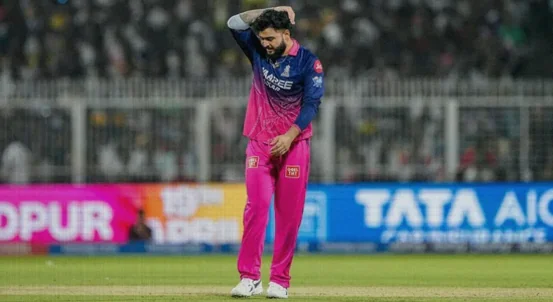
Rajasthan Royals captain Riyan Parag has been thrust into the spotlight for the wrong reasons in recent days. While the franchise has been delivering solid performances and occupying a position in the top four, the focus of discussion has shifted from match results to a vaping incident involving Parag during the team’s clash against Punjab Kings. The controversy has been amplified by the fact that e-cigarettes and vapes are banned in India, and footage of Parag using a device in the dressing room circulated widely—appearing on television and quickly drawing sharp criticism from fans and observers.
What happened and why it drew immediate backlash
The incident unfolded during the Punjab Kings match when Parag was seen using a vaping device inside the dressing room. Because the visuals were broadcast live, the episode did not remain a private matter and became public almost instantly. With vaping already prohibited in the country, the act was widely described as more than just a lapse in judgement—especially coming from a player entrusted with leadership responsibilities.
- Riyan Parag was caught using a vape/e-cigarette during the match against Punjab Kings.
- The incident took place in the dressing room and the footage was shown on live television.
- Vapes/e-cigarettes are banned in India, which intensified the reaction.
- The controversy diverted attention from Rajasthan Royals’ strong run in the league, as the team was comfortably placed in the top four.
BCCI disciplinary action and the leadership factor
In response to the episode, the BCCI moved with disciplinary measures. Parag was fined 25% of his match fee and also received one demerit point for bringing the game into disrepute. Beyond the punishment itself, the matter has sparked broader questions about awareness, accountability, and the expectations placed on senior figures within a franchise setup.
The timing has further complicated the situation. With Rajasthan Royals needing focus, the public nature of the incident—captured and broadcast on TV—has added to the seriousness of the episode. In a cricket culture where players are often viewed as role models, leadership conduct is scrutinised closely, and the controversy has inevitably raised eyebrows in that context.
- Parag was fined 25% of his match fee by the BCCI.
- He was also handed one demerit point for bringing the game into disrepute.
- The incident has reignited debate around responsibility, particularly for a captain.
- Because it played out on live television, the episode drew even stronger public criticism.
Ashwin’s response: avoidable choices, public accountability
Veteran off-spinner Ravichandran Ashwin addressed the controversy with a measured but direct message. While he avoided turning the moment into a harsh condemnation, he argued that the situation could have been prevented and that players—particularly younger ones—should not get drawn into avoidable distractions.
Ashwin said on his YouTube channel that the episode was something that could have been avoided, stressing that he does not want young players to become caught in such matters. He also framed the discussion as sensitive, suggesting that the broader cricketing community should treat the issue as a lesson rather than a spectacle.
Continuing, Ashwin drew a clear distinction between private decision-making and public responsibility. He noted that what a player does in personal life is ultimately their own choice, but the boundary changes when an action is displayed in public. He presented his views as friendly advice—especially relevant for someone who leads a franchise and serves as a visible inspiration for younger cricketers and fans.
Key points from Ashwin’s message
- Ashwin believes the situation could have been avoided and does not want young players to fall into such traps.
- He highlighted the difference between personal choice and the obligation that comes with being seen by the public.
- He stressed that actions in public space carry responsibility, particularly for captains and franchise leaders.
- He urged Parag to keep personal conduct in private, given the influence a captain has on youth and aspiring players.
Ashwin’s empathy, but the need for action
Ashwin also softened his stance with empathy. He acknowledged the pressures young players face and expressed sympathy for someone like Parag, while still insisting that these episodes should and can be avoided. In his view, while the modern world brings intense scrutiny, incidents like these should not be ignored, because ignoring them removes the chance for learning.
He concluded by pointing out that it may not always be easy for players in today’s environment, but that the response matters. Ashwin argued that if no action is taken, there is little opportunity for improvement—reinforcing that prevention is better than reaction.
- Ashwin expressed empathy for Parag as a young player under intense scrutiny.
- He maintained that such incidents can be avoided despite the pressures of the modern game.
- He argued that incidents should not be brushed aside, because action is needed for learning.
- He reiterated that avoiding the situation in the first place is the best outcome.
