
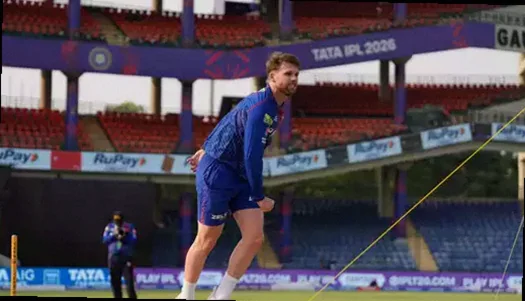
Lockie Ferguson’s IPL campaign has not unfolded in the familiar, gradual way he would normally build into a tournament. Instead of easing in from the start, he arrived after a deliberate pause—one driven less by cricket than by personal priorities. With the competition already underway, Ferguson stepped away at the beginning of the season to spend time with his wife and newborn son, trading the certainty of an uninterrupted run for the challenge of rejoining midway through an event that does not wait for anyone.
Speaking about the choice, Ferguson said there is always an “opportunity cost” when a player steps out of a schedule. He explained that he opted to be at home with his family, emphasising that communication with the team leadership was encouraging. The discussions—he referenced Ricky Ponting, the coach, and the CEO—were centred on retention, and he was transparent from the outset that he would be absent for a major portion of the early weeks because he would be at “the World Cup” of his son’s life.
Ferguson added that he missed the birth by only a short margin, but still managed to spend four days with them before having to return to international duties. He acknowledged that this is one of the realities fast-paced sports can create for cricketers: while he feels fortunate to play the game professionally, the job still comes with difficult trade-offs. For him and his family, he said, being present during that period was the priority.
He also described having an open conversation with the squad, telling them he was eager to return but would only be available for the second half of the tournament. Ferguson said the team were comfortable with that arrangement and were highly supportive, noting that the culture around the franchise aligns with his own—where family comes first. He expressed real appreciation for the way the situation was handled.
That decision, along with the backing he received, points to a subtle change in how modern careers are being managed. Ferguson is now working under a more flexible set-up with New Zealand Cricket, and he is part of a growing group of players who are increasingly finding ways to shape their own calendars—balancing international responsibilities, franchise cricket, and time at home. Yet leaving the tournament early is one challenge; returning is another entirely.
Joining the IPL in its middle stages brings its own hurdles, particularly around rhythm, understanding your role quickly, and keeping up with a tournament that moves at speed. Ferguson said it is not straightforward to switch from training at home straight into IPL intensity, and that the competition is tough even when you have been preparing within the same environment from the start. He admitted that it is never easy to enter halfway, but stressed that the team had been doing well—making the return more manageable.
Ferguson also highlighted the feeling of coming back to familiar ground. He described being a Punjab supporter at home as “epic,” and said it has been good to fit back into the group dynamic. He noted that there are always details to tighten up, and that having played only one match so far means he is still making adjustments, studying what is working in this phase of the tournament, and learning from teammates about their routines and success patterns across the competition.
What has eased the transition, according to Ferguson, is familiarity—especially the dressing room atmosphere and the consistent energy that carries over from the previous season. He said the team feels like a similar unit to the one from last year, and that it remains a positive environment where the players are enjoying themselves. He added that the squad talks often about celebrating each other’s achievements, and that he noticed the same culture last season and again this year: when someone has a good day, the rest of the group tends to rally behind them, which Ferguson believes is a strong sign for where the team can go next.
Looking beyond the immediate present of this IPL stint, Ferguson’s return fits into a wider, more complicated reality for today’s cricketers. The pressures come from the sheer volume of matches, the constant movement across formats and leagues, and the physical demands placed on fast bowlers in an increasingly crowded calendar. He described the balancing act as a question with no clear solution, and said he has been working on a personal foundation—specifically mentioning a “Yorker” platform designed to help athletes manage workload independently and understand how much bowling they should be doing. He stressed that the approach must be tailored for each individual: some players require more work, while others need less.
Ferguson believes finding a pathway that keeps bowlers fresh for longer and helps reduce injuries is worthwhile, though he suggested that more work still needs to be done. While he wants the best players available as much as possible, he sees the ideal outcome as striking the right equilibrium between being available and maintaining long-term health. In his view, that balance is shifting rather than fixed.
He said the objective is to prevent injuries where possible, but he also acknowledged the nature of fast bowling means injuries are part of the sport. The key, he argued, is to find a healthy trade-off so players can stay on the park for as long as possible and for as many matches as possible. He also questioned whether the game will ever move toward something like a baseball-style rotation system, where there is a defined roster of bowlers, and he admitted he does not know what the answer will be—but believes it is worth considering.
Ferguson added that for players who peak at major moments—such as the World Cups—there may be room to rest during other parts of the season, but again, he stressed that it is different for every individual. He pointed out that strong support networks exist around players to help work through these decisions, and he said the fast-bowling community is actively exploring the issue.
In a sport that rarely slows down, Ferguson chose to step away—and in doing so, found a different kind of balance. For him, that balance may influence not just how he approaches this IPL return, but also how he manages his game moving forward.
