
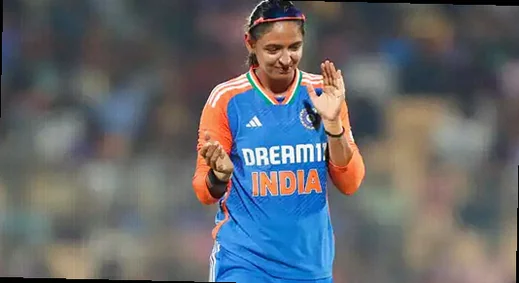
India captain Harmanpreet Kaur sounded upbeat as the national women’s T20 World Cup squad was announced on Saturday, insisting the side has the strength to contend for the title once more. Speaking after the selection, she said the team put together has the “calibre” to win again, while also stressing there should be no added mental load or unnecessary swagger. Her comments came even after India’s recent 1-4 series defeat against South Africa, a run that has naturally raised questions about balance—particularly in bowling.
Chief selector Amita Sharma addressed those concerns directly, explaining that the selection process aimed to shore up India’s bowling unit. She said India had “lacked a bit” with the ball in the preceding series, pointing to their inability to regularly take wickets and to the impact of South Africa’s top batter, who piled up the most runs. In response, the selectors added two bowlers with the specific goal of striking early in matches—something Amita said had been a problem for India during the South Africa tour.
Even so, Harmanpreet played down the idea that the South Africa series should define India’s upcoming campaign. In T20 cricket, she noted, bowlers face a particularly demanding role, and she argued that one stretch of results should not be used to judge players. South Africa, she said, was the only series in which India’s bowlers “could not click,” and she underlined that there are plenty of learning points from that run. The captain added that the squad will work through those lessons in the camp, with an additional confidence boost coming from a preparation series in England ahead of the World Cup. She also referenced India’s recent success in England, stating that they had done well in their last two outings there, across both T20 matches and in England overall.
For Harmanpreet, India’s priority areas begin with the Powerplay—both in how they score and how they take wickets. She said T20 Powerplays are crucial because they set the tone of the match, requiring India to target runs when batting and wickets when bowling. The captain indicated that the team will put special emphasis on that phase, while also admitting that the middle order has not received as much attention as it should have. Still, she insisted all aspects will be worked on, using the South Africa series as the baseline for improvement. Harmanpreet also pointed to the preparatory camp at the CoE, where India will look to regain the right rhythm, and reiterated that the England series will help them fine-tune ahead of the World Cup.
One of India’s major selection headaches is the injury absence of Amanjot Kaur, the seam-bowling all-rounder who is recovering. Amita confirmed that Amanjot was replaced by Kashvee, who too suffered an injury, leading to Nandni Sharma coming into the squad. The chief selector acknowledged how difficult it is to replace Amanjot, given her ability to contribute across multiple facets of the game and her experience, though she expressed optimism and kept the message light by saying, “No pressure.” Harmanpreet, however, framed Amanjot’s loss more seriously, calling her a key player and noting that finding a direct replacement is tough. She said India is trying to cover the role through Bharti Fulmali, who has been working to prove herself whenever opportunities have come her way, and she also named Radha Yadav as part of the options.
Harmanpreet also backed Jemimah Rodrigues to find form again after a lean run in South Africa, where she managed only 82 runs across five innings, including three scores in single digits. According to the captain, India’s batting order is now settled, with Jemimah operating as the one-down batter, and the team does not want to make unnecessary changes. She expressed confidence that Jemimah will bounce back after the dip, insisting she will come good. At the same time, Harmanpreet endorsed the other less-experienced selections: Bharti, she said, has already proven herself in domestic cricket and the WPL, including helping win crucial matches, and is a perfect fit for the No. 6/7 role India is targeting. Harmanpreet added that Nandni Sharma is also a proven performer in the WPL and among the top wicket-takers, concluding that despite losing some key players, the replacements will step up when required.
Looking at the group stage, India’s schedule includes matches against Australia, Pakistan, Bangladesh and Netherlands, along with South Africa — with only two teams advancing to the semi-finals from the group. Harmanpreet expects Australia, the six-time champions, to be India’s biggest threat, while South Africa—who reached the last two T20 World Cup finals—could also pose a serious challenge. Nevertheless, she said India cannot afford to treat any opponent lightly, stressing that every match matters and that all teams have improved enough to beat anyone on their day.
Harmanpreet pointed to India’s disappointment in the previous T20 World Cup, when they were unable to play as a cohesive unit. She said that memory has driven the team to prepare hard since then, and that India has tasted success in every series except the most recent one. While she acknowledged there will be pressure and a degree of desperation as the tournament approaches, she insisted the focus must remain on mental preparation and on ensuring every player stays in peak condition. For Harmanpreet, what has already happened is history; the task now is to execute the right plans and repeat that process throughout the competition.
