
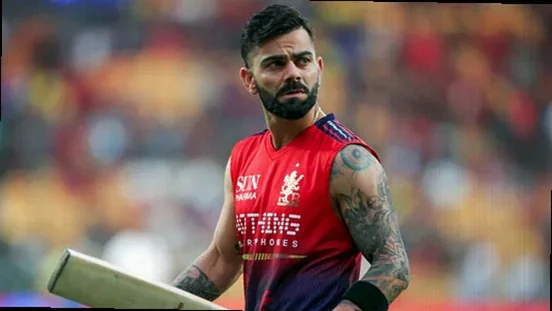
Nearly a year has passed since Virat Kohli stepped away from Test cricket, yet the reasoning behind the move still isn’t fully clear. Some believe he anticipated the endgame and chose to leave on his own terms before outside criticism could sharpen. Others have pointed to the Border-Gavaskar Trophy, suggesting that brutal exposure in that campaign hastened his decision. With the Test selection door already closing for Rohit Sharma, many felt Kohli’s turn was next. For years, Kohli had been drifting away from the very format where he once looked untouchable—his rhythm appeared to fade as his averages slipped and his century returns became rarer. And with the 2027 World Cup on the horizon, Kohli knew he couldn’t realistically juggle both formats at the age of 37. The choice, then, was simple: step back from Tests, commit elsewhere—and he did.
When you look at Kohli’s ODI numbers, the shift becomes easier to read. In nine matches, he has piled up 616 runs, including three centuries and three fifties. Yet the biggest beneficiary of his new approach appears to be the Royal Challengers Bengaluru, where his batting is being backed by confidence and clarity. He is playing with nothing held back—freedom in shot-making, minimal hesitation, and a willingness to attack. No-look strokes are showing up more often, and the power side of his game is finally being pushed into the spotlight, a quality that had long been harder to find from him. In many ways, leaving the format he loved most has unlocked a different level for Kohli in both ODIs and the Indian Premier League. A two-time winner of the Orange Cap, he is now chasing a third, and with his current form, only an injury would realistically derail him.
To understand Kohli’s batting makeover, former India spinner and teammate Ravichandran Ashwin highlighted the technical changes he believes have taken place since Kohli exited Tests in May last year. Speaking on the ‘Champions vali Commentary’ on JioStar, Ashwin explained that Kohli’s movement and bat mechanics have altered as his role has changed. “Virat was still playing Test cricket in 2024. He was very still—the bat wouldn’t move much. But now, in 2026, the bat comes down initially and then he brings it up again. That’s what we call potential energy, or the continuous movement of the bat, and he’s getting into great positions. In 2024 his head was so quiet that even the footwork looked well-balanced because he was still playing Tests. In 2026, since he doesn’t play Test cricket anymore, he doesn’t need to control his hands in the same way and he’s letting them go—he’s committing to more shots,” Ashwin said.
Kohli batting at his finest
This season, Kohli’s impact in the IPL has been striking. He is striking at 173.21—his best rate in a single campaign—compared to his overall T20 league strike rate of 133.20. It is still early, and two matches can’t tell the whole story, but the early signals are difficult to ignore. In ODIs, the improvement is even clearer: his strike rate has climbed to 106.4, rising from his career figure of 93.82.
Irfan Pathan, another former India all-rounder, connected the numbers to how Kohli is building momentum in his batting. “Because of that backlift, he is getting that momentum, more power, and that is why the strike rate has gone up. When you’re standing still in the prelude—before the bowler delivers—you don’t get the momentum you want to create for those big hits. But when you bring the bat down and then up again, you already have that momentum,” Pathan said on the same platform.
The shift is showing up on the scoreboard. Kohli’s Test retirement may not have been the most popular decision when it landed, especially since he was still 36 and might have had more in the tank. But now that he has stepped away and looks fully engaged again, it raises a more practical question: was it actually a bad call? In Tests, he had already moved beyond his peak, and rather than suffering from any “ring rust,” he appears to be benefiting from the breaks. If a fit Kohli can power the IPL and help India chase the ODI World Cup next year, then giving up the whites may end up looking less like a loss—and more like the right trade.
