
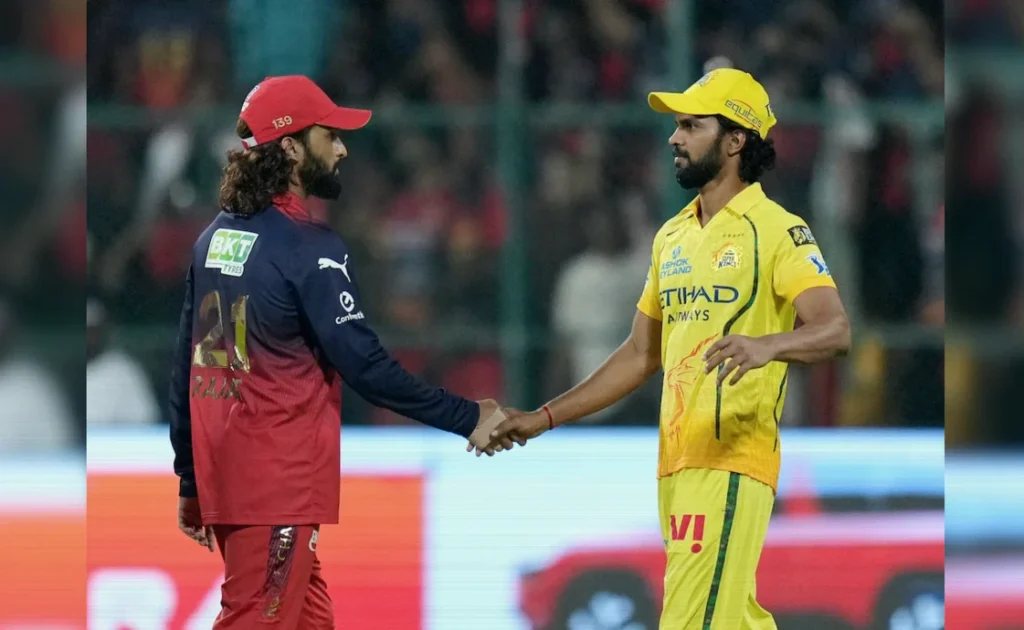
With the Chennai Super Kings still searching for their first victory after the opening trio of matches in the IPL 2026, captain Ruturaj Gaikwad is already facing intense scrutiny around his leadership and decision-making. Chennai had pinned plenty of hopes on their skipper to guide the franchise into a fresh chapter, yet the early returns have not lived up to expectations—especially in their recent clash against Royal Challengers Bengaluru on Sunday, where a few of Gaikwad’s tactical calls have drawn sharp criticism.
One of the most discussed aspects was how CSK’s bowlers handled the late-innings phase. During the death overs, the pacers—particularly Anshul Kamboj and Jamie Overton—sent down yorkers that missed their mark, and Tim David along with Rajat Patidar made them pay in a brutal manner. The end result has raised questions about whether the plan was always the right one for that moment.
Former CSK batter Ambati Rayudu went further, suggesting that the approach itself would never have been accepted during MS Dhoni’s captaincy. Rayudu said that while such angles and tactics might be practised in training, they did not naturally translate into matches because Dhoni did not approve of using that style during the final overs. He also added that batters found it easier to nullify those deliveries in real game situations, arguing that if a batter stays just marginally outside the crease, the effectiveness of the angle drops significantly.
Rayudu said, “They’ve tried that in practice sessions over the years, but it never translated into games because MS didn’t approve of using that kind of angle in the death. Even as batters, we found it easy to counter those deliveries—if you stand just half a foot outside the crease, the angle is completely nullified.” He continued by stressing that CSK may need to revisit the idea and lean back towards more traditional execution. In his view, sticking with proven methods—accurate yorkers, well-disguised slower balls, and keeping the plan simple—often works best at the business end of an innings.
After the match, CSK head coach Stephen Fleming pointed to a different factor for the shift in momentum. While Gaikwad’s calls were under the microscope, Fleming highlighted Tim David’s finishing burst as the key turning point. The coach said the decisive moment came from what David did in the final stretch, describing the acceleration he produced through the last portion of the contest.
Fleming also acknowledged that CSK started well and created opportunities, but felt they did not secure enough wickets and then lost control during the closing overs. He believed that if the innings had been managed differently, a total in the 210–220 range would have been achievable for Chennai. However, the late collapse shook the side and spilled into their batting early on as well, leaving them off-balance from the outset.
“Some good things early on, we created some chances. We unfortunately just couldn’t get a couple more wickets for our efforts, and then we hung in, and then unfortunately just lost our shape in the back end. It was a good wicket, and I think if we’d just been able to hold our nerve and execute a bit better, 210, 220 would have been in our grasp. But we just got a little bit shell-shocked and that flowed through into the early parts of batting as well,” Fleming explained.
