
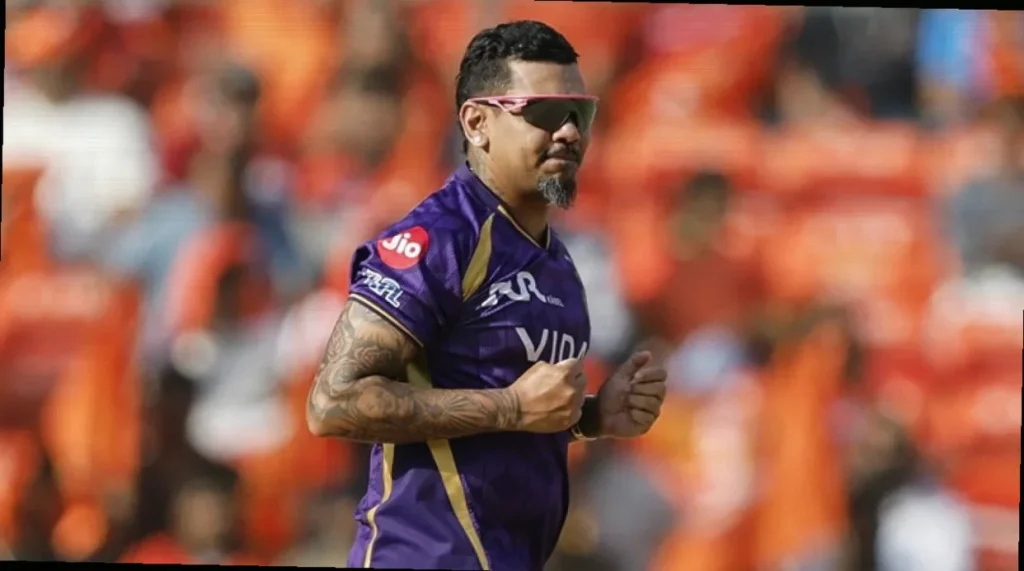
Sunil Narine etched his name into IPL history on Sunday by becoming the first overseas bowler—and just the third bowler overall—to reach the 200-wicket milestone in the competition. The achievement came when he removed Sunrisers Hyderabad’s Salil Arora, taking Narine into an elite group that now features only Yuzvendra Chahal and Bhuvneshwar Kumar.
Quick facts
- Sunil Narine became the first overseas bowler to take 200 IPL wickets, and the third overall.
- Narine reached 200 wickets by dismissing Salil Arora of Sunrisers Hyderabad on Sunday.
- He is the only bowler to take 200 IPL wickets for a single franchise, having played only for Kolkata Knight Riders since 2012.
- Only David Payne (Gloucestershire) and Chris Wood (Hampshire) have managed 200-plus wickets for a single team in the T20 Blast.
Narine’s landmark is even rarer when viewed through the lens of franchise loyalty. He has taken 200 wickets for just one IPL side—Kolkata Knight Riders—after making his debut in 2012, and he remains the first to do so for any single team in the league’s history.
In other franchise T20 competitions, the same kind of one-team dominance is harder to find. David Payne for Gloucestershire and Chris Wood for Hampshire are the only players reported to have reached 200-plus wickets in the T20 Blast while playing for a single franchise.
A rapid start, then a tougher wicket trail
Back in 2012, Narine’s arrival suggested the 200-wicket mark could come far sooner than it did. He claimed 24 wickets in his debut season, then followed it with back-to-back campaigns where he picked up more than 20 wickets each time.
By the end of 2014, he had 67 wickets—leading the bowling charts for that three-season stretch. His control was equally striking, with an economy rate of 5.77 that stood as the best among bowlers who had delivered at least five overs in that period.
After that explosive run, wickets became harder to collect. Since then, he has never topped 20 wickets in a season; his highest totals are 17, recorded in both 2018 and 2024. His strike rate also drifted upward, moving beyond 27 balls per wicket as he collected just 85 wickets across 100 innings from 2015 to 2022.
With the Impact Player era now part of the modern IPL structure, his wicket-taking rhythm has steadied at roughly 22 balls per wicket. Of his eight innings where he took four or more wickets, six arrived during the 2012-14 window, followed by only two more since—one in 2015 and another in 2021.
While the volume of wickets has fluctuated over time, Narine’s ability to deliver economical spells has remained constant. Among the 38 bowlers who have bowled 300 or more overs in the IPL, he carries the best economy rate. Even looking only from 2015 onward, his economy of 7.13 is the top mark among bowlers with at least 200 overs in that span.
Across 194 IPL innings, Narine has bowled a minimum of three overs in 189 of them. In those 189 innings, he has kept the scoring rate at a run-a-ball or better 82 times, and he has conceded eight or fewer runs per over on 141 occasions. Conversely, he has been hit for more than ten runs per over just 14 times.
How he controls run flow
When matched against other spinners who played in the same contests, Narine’s economy has consistently been more than a run better. Between 2012 and 2014, his economy rate was 5.78, compared with 7.26 for the other spinners in those matches—a gap of 1.48. From 2015 to 2022, the difference narrowed but still held at 1.13, and since the Impact sub was introduced, he has continued to sit over one run ahead of the other spinners in the games he has featured in.
His toughest phase is typically the middle overs. From overs seven to 16, Narine’s economy rate is 6.44, the best among 65 bowlers who have bowled at least 100 overs in that segment. Yet his numbers don’t rely on one phase alone: he has a 6.9 economy across 161 powerplay overs, and at the death he has taken 62 wickets with a strike rate of 16.35 and an economy of 7.97.
Across a 15-year IPL career, Narine has faced some of the format’s toughest batters, and his head-to-head record reflects that. He has dismissed Rohit Sharma eight times in 137 balls, conceding just 145 runs; Shane Watson has managed only a run-a-ball 33 from his 5 dismissals. Even AB de Villiers averages 13.25 against him, striking at the highest level of the T20 era—53 off 39 balls—while being dismissed four times. Against Virat Kohli, Narine’s numbers are similar in impact: 136 runs from 129 balls with four dismissals, just above a run a ball.
Among 24 batters who have faced at least 50 balls against Narine, ten have not even managed to score at a run-a-ball rate, including several of the biggest names in T20 cricket. The list includes Chris Gayle, Glenn Maxwell, Quinton de Kock, Sanju Samson, and most notably MS Dhoni. Dhoni’s strike rate of 51.94 against Narine is the lowest for any batter to face 50 or more balls from a bowler in the IPL.
Only two batters have faced at least 50 deliveries from Narine and still maintained a strike rate above 140. Heinrich Klaasen struck at 170.37, scoring 92 from 53 balls, while David Warner made 195 from 123 balls at 158.53. For a bowler with such longevity and repeated matchups, those rare exceptions help underline how dominant Narine has been across IPL seasons.
