
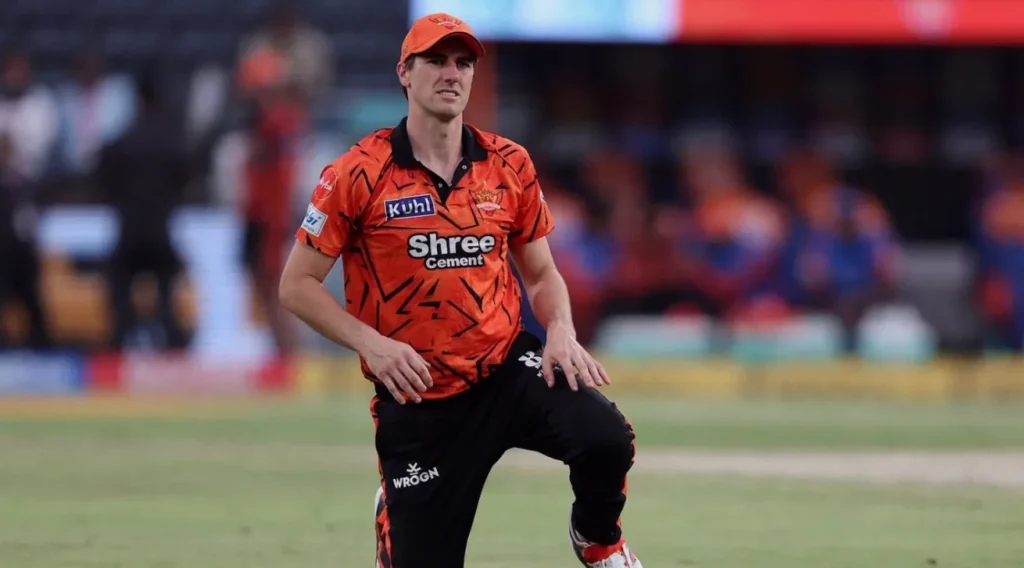
Sunrisers Hyderabad (SRH) were not supposed to look like a side that could drop off after a run of form, but Kolkata Knight Riders (KKR) changed the mood quickly—bowling SRH out for 165 and cruising to a seven-wicket victory in their IPL 2026 match on Sunday.
Rayudu calls it more than a bad day
Ambati Rayudu was asked about SRH’s collapse and disagreed with the idea that they simply “weren’t good enough” on the day. He argued that the team’s recent momentum had bred complacency.
“They actually looked like a team after five wins because they have been complacent,” Rayudu said.
Expanding on that view, he described it as “proper complacency”, suggesting SRH believed they could get results without the usual level of planning and preparation. In his assessment, the rhythm of winning made it feel as though everything would keep working automatically.
Rayudu also pointed to the nature of the surface in Hyderabad, noting that in afternoon conditions the ball tends to slow down and come on differently, making batting more challenging early on and then gradually easier later. He said SRH should have anticipated how the pitch would play since many of their players have been based in the city for extended periods.
“In an afternoon game in Hyderabad, you know that the ball generally stops and comes. It’s not an easy wicket to bat on… Later on, it becomes better,” he said. “They should have known that because most of these guys have been playing there for a couple of years or more. I think it’s bad planning to start off with.”
KKR’s bowling swing the contest
SRH were still positioned at No. 3 on the points table after the defeat. With Punjab Kings (PBKS) losing later in the day to Gujarat Titans (GT), SRH could have climbed to the top had they won—but they missed that opportunity.
SRH’s head coach Daniel Vettori felt the defining issue was the timing of dismissals. He highlighted the impact of Varun Chakravarthy and Sunil Narine, along with support from Kartik Tyagi, and stressed that once wickets fell at key moments, it became extremely hard to defend a total in T20 cricket.
- Varun Chakravarthy: 3 for 36
- Sunil Narine: 2 for 31
- Kartik Tyagi: 2 for 30
Vettori also noted that none of KKR’s six bowlers returned wicketless — meaning SRH were never allowed to settle into a steady rhythm at the other end.
“We had a great start” — then crucial wickets arrived
Vettori said SRH did begin strongly, reaching 71 for 1 in the powerplay, but failed to convert that platform into a score that could withstand sustained pressure.
“I think we had got off to a great start [71 for 1 in the powerplay] and couldn’t capitalise on that,” he explained. “Lost some wickets at crucial times and when you’re left with 160 [165], it’s incredibly difficult to defend even if the wicket was a little bit slow.”
He added that KKR’s chase was made easier by the way momentum shifted at the exact moments SRH needed to keep going. Although SRH had fight left after the powerplay—especially because KKR also had 71 for 1 in their batting—KKR managed to chase effectively.
“I think we had enough fight in there after the powerplay [KKR had an identical 71 for 1] to give us a small chance but they managed to chase really well,” Vettori said.
- SRH lost wickets at critical junctures, leaving them short of a defendable total.
- Vettori stressed that in T20, even when a side has momentum, it becomes difficult to rebuild once the opposition disrupts the flow.
- He singled out three key dismissals: Travis Head in the ninth over, Ishan Kishan in the 16th, and Heinrich Klaasen in the 11th.
Vettori’s view was that those specific breakthroughs changed the trajectory of the innings. He suggested that if any of those wickets had not fallen, SRH might have continued more smoothly.
Katey Martin focuses on batting “thought” and resets
Katey Martin, speaking separately, was less severe in her reading of SRH’s performance than Rayudu, but she still felt the batting lacked planning and intent—particularly because two of SRH’s high-value top-four contributors failed on the day.
She pointed to Abhishek Sharma scoring 15 and Klaasen managing only 11, while the bulk of SRH’s scoring came from the two main hitters: Head struck 61 off 28 balls and Kishan made 42 off 29. Together, they helped SRH post 103 runs in 57 deliveries—but after that, no other batter reached double figures.
Martin also observed that captain Pat Cummins provided little support at the lower order, scoring 10 from No. 8, with the innings unable to gather enough depth beyond the early and middle bursts.
- Abhishek Sharma: 15
- Heinrich Klaasen: 11
- Head: 61 (28 balls)
- Ishan Kishan: 42 (29 balls)
- Total for Head + Kishan: 103 in 57 balls
- Pat Cummins: 10 (from No. 8)
“Just a little bit more thought” in approach
Martin said SRH have often relied heavily on their top three, and that this match showed the limits of that pattern when the early wicket-taking begins to bite.
“I think sometimes you have those days,” she said. “They have had such a reliance on the top-three batters as well. We talk so much about GT, but they are very close as well.”
She argued that SRH needed “just a little bit more thought” in how they approached the innings. In her framing, it can be easy for a team to get carried away when results have been flowing, slipping onto a “conveyor belt” where the process becomes automatic rather than deliberate.
“[They needed] just a little bit more thought in the way that they needed to approach [the innings]. Maybe that just comes on when you’ve been going so well. You sort of just get on the conveyor belt and things just sort of tend to happen as they need to.”
Martin finished by suggesting SRH may need performances like this to reset their momentum and return with a sharper mindset.
“For Sunrisers, I think maybe sometimes you just need that type of performance to reset and go again in terms of that momentum.”
