
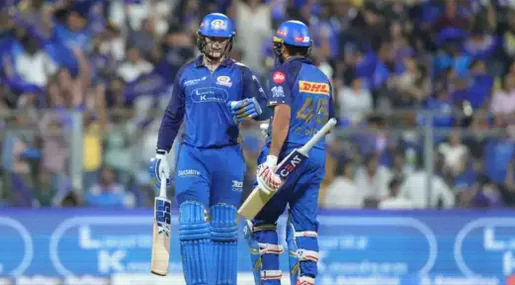
Nicholas Pooran blasted a rapid 63 off just 21 balls as Lucknow Super Giants posted 228 for 5, but Mumbai Indians turned the chase into a one-sided affair. Rohit Sharma and Ryan Rickelton built a 143-run opening stand in only 65 deliveries, and MI got over the line with eight balls remaining and six wickets in hand—delivering their first win at the Wankhede this season. It was also the highest successful chase by Mumbai Indians in IPL history, and the sixth-highest total ever chased in the tournament.
Key takeaways
- Pooran’s 21-ball 63 helped Lucknow reach 228/5 in their 20 overs.
- MI chased 229/4 in 18.4 overs, thanks to a 143-run first-wicket partnership off 65 balls between Rohit and Rickelton.
- In the middle (overs 12–15) and death (overs 17–20), MI’s bowlers conceded only 42 runs across those combined seven overs.
- Rohit finished with 84 (44), while Rickelton struck 83 (32) to power the chase.
- It marked MI’s first win at the Wankhede this season, and the chase became the highest successfully chased target by MI in the IPL.
Match summary and standout performances
Lucknow Super Giants made 228/5 in 20 overs. Pooran struck 63 off 21 balls and Mitchell Marsh added 44 off 25 as the innings delivered a strong foundation. For Mumbai Indians, Corbin Bosch returned figures of 2 for 20 and Raghu Sharma took 1 for 36, but the total still proved too large. In reply, Mumbai Indians reached 229/4 in 18.4 overs to win by six wickets.
Rickelton led the charge with 83 off 32, and Rohit contributed 84 off 44. Manimaran Siddharth was the most prominent bowler for Lucknow, finishing with 2 for 47, yet he could not stop the opening pair from running away with the chase.
Why MI controlled the contest
It would be tempting to credit only the explosive start from Rickelton and Rohit, but MI’s turnaround in bowling during two key phases proved equally decisive. Across overs 12–15 and 17–20 combined, three bowlers—Jasprit Bumrah, Raghu Sharma, and Deepak Chahar—bowled twice each, while Ghazanfar was used once. In those seven overs, they conceded 42 runs, a margin that mattered greatly in a match where close to 460 runs were scored in total.
Team changes and notable inclusions
Both sides entered the fixture with several alterations. Mumbai Indians saw the return of Rohit Sharma after he had recovered from an injury, but their captain Hardik Pandya was unavailable due to a back spasm.
Lucknow also had a much-discussed inclusion finally arrive: Josh Inglis made his long-awaited IPL debut appearance in IPL 2026, selected for his first match of the season. He opened alongside Mitchell Marsh. Inglis made an immediate impact, striking three boundaries in his first four balls, but he was dismissed early when he mistimed a carrom-ball delivery from AM Ghazanfar.
LSG’s batting: powerplay momentum and the Bosch breakthrough
Out-of-form Nicholas Pooran began to look like his usual self soon after Inglis’s dismissal. Will Jacks’s off-spin failed to keep a tight grip on the batters, particularly when the pace slowed, and Pooran was able to clear the ropes three times. He carried that momentum into the following over as Ghazanfar was hit for 19 runs.
At the other end, Marsh kept the pressure on and ensured the scoring rate did not sag. He launched a six down the ground off Jasprit Bumrah’s slower delivery, then added two more boundaries. Bumrah’s two powerplay overs ultimately went for 31, yet Lucknow still surged with 90 runs in the first six overs—matching their best powerplay output in the IPL.
After restrictions: LSG keep swinging
Even after the fielding restrictions were lifted, Lucknow showed no sign of slowing. They struck their 10th six of the innings midway through the eighth over. The momentum then received a sharp jolt from Corbin Bosch.
Pooran attempted a pull, edged to the wicketkeeper, and Marsh was dismissed immediately after—his pull finding the fielder at deep midwicket. Although both set batters departed in the same over, their partnership had already produced a 94-run platform that enabled Lucknow to build toward a massive total.
Could MI claw it back during the middle phase?
After the two wickets, Lucknow responded with two consecutive overs that yielded 14 runs apiece. But once Akshat Raghuwanshi fell, the scoring briefly lost its flow. Ghazanfar, Bumrah, and Raghu Sharma then tightened things up, conceding only 20 runs across four overs.
Lucknow could also have been saved a few moments of frustration. Bumrah had Himmat Singh nicking to the wicketkeeper, only for the bowler to realize he had overstepped. That overstepping concern has followed Bumrah through much of the season, and this incident was one of three such occurrences in the innings—pushing his season total to seven, more than twice the tally of the next-highest bowler.
No-ball drama and the final overs
At one stage, it looked like an earlier no-ball might swing the game. Himmat had been batting on 2 off 4, then added 21 runs off the subsequent 12 balls. During that period, he punished Ghazanfar and Raghu Sharma for sixes.
However, Deepak Chahar and Bumrah changed the plan in the closing sequence by bowling yorkers in the last three overs. Himmat and Aiden Markram struggled to find a strong response to those deliveries, managing only 23 runs from the final 20 balls. Only one of those balls resulted in a hit for the fence.
MI’s chase: Rohit finds rhythm and Rickelton accelerates
Rohit needed a little time to get going, but there were no clear signs of rust. After a few assured punches, his first boundary came after an edge. The first convincing big hit arrived in the third over when he deposited Mohammed Shami’s ball for six over deep midwicket.
Even though Rickelton had already raced to 30 off 12, Rohit began his acceleration during the last over of the powerplay. He struck Avesh Khan for two boundaries and followed it with two sixes off successive deliveries.
Did MI slow down after the powerplay?
They did not. If anything, the chase shifted into a higher gear immediately after the powerplay. Mumbai Indians were slower than Lucknow in the powerplay, but once they entered the middle overs, the openers kept the required pace well within reach, and the flat surface helped them convert timing into big shots.
Rohit in particular benefited from yorkers that dipped low enough to become full toss-like deliveries. He struck seven sixes in his innings—the most he has ever hit in the IPL. Within a span of three balls, both openers completed their respective half-centuries. Rohit reached his mark by launching Manimaran Siddharth over long on for a six.
Together, they smashed 143 runs, and their stand ended when Rickelton—having reached 83 off 32—hit straight to Inglis at extra cover off the penultimate ball of the 11th over.
LSG’s final challenge: too little, too late
There was no realistic way back for Lucknow. Full tosses continued to come, and Rohit found a vintage flow. He added 34 more in the next three overs with Tilak Varma for company, before top-edging a sweep to short fine leg and finishing 16 runs short of a century.
Rohit’s 84 was the highest score posted by an MI batter against LSG. By then, Mumbai’s target had reduced to 52 needed from six overs, with eight wickets still in hand.
With victory seemingly assured and the ball coming easily onto the bat, Suryakumar Yadav and Tilak attempted to press for further boundaries. Their dismissals slowed the scoring rate, but the result was already effectively decided. Will Jacks and Naman Dhir completed the chase as Lucknow’s late hopes fizzled out.
Points table situation and next fixtures
Despite the impressive victory, Mumbai Indians remain ninth on the points table. Lucknow, meanwhile, are still searching for a way out of the bottom spot after only two wins in nine matches.
Both teams are scheduled to face the same opposition next. Lucknow will return home to play Royal Challengers Bengaluru on Thursday, May 7. Mumbai Indians will have a longer break before taking on RCB in their new ‘home’ venue in Raipur on Sunday, May 10.
