
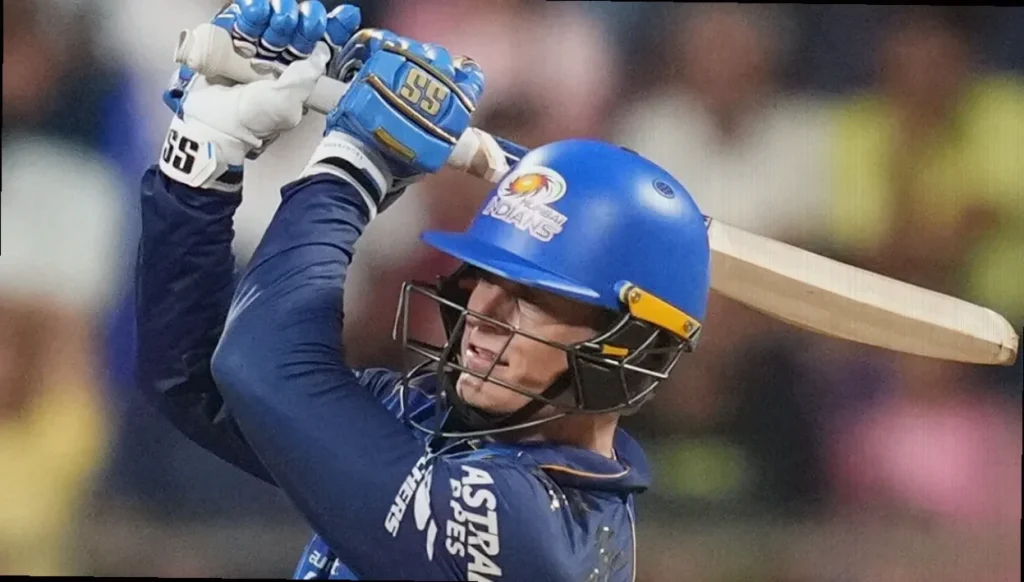
Ryan Rickelton has quickly become Mumbai Indians’ most reliable run-getter in IPL 2026, standing out in a batting order filled with homegrown talent. Through eight matches, he has amassed 380 runs while striking at 190.95, making him the second-best among the league’s 300-plus run scorers. His run tally has been built across several momentum swings, starting with an 81 against Kolkata Knight Riders and followed by a century versus Sunrisers Hyderabad.
Quick facts
- Ryan Rickelton is Mumbai Indians’ leading run-scorer in IPL 2026 with 380 runs from eight matches.
- His strike rate is 190.95, the second-highest among players who have scored 300-plus runs.
- Key knocks include 81 vs Kolkata Knight Riders, a century vs Sunrisers Hyderabad, and 83 vs Lucknow Super Giants.
- In the 229 chase vs Lucknow Super Giants, he made an 83 off 32 balls and combined for a 143-run partnership with Rohit Sharma.
- Rickelton and Rohit have batted together 18 times since Rickelton joined MI in 2025, scoring 825 runs in total, including three century stands and two fifty partnerships.
On Monday, Rickelton delivered again when it mattered most, smashing 83 against Lucknow Super Giants to help steer a chase that went all the way to 229. Two of his best innings in the campaign have also been tied closely to major stand-building work with Rohit Sharma, including the 143-run platform they forged together in that successful pursuit. Rohit, returning from injury, made the collaboration even more significant for the MI dressing room.
“Chemistry” with Rohit
Speaking at a press conference after the LSG game, Rickelton pointed to the “chemistry” he and Rohit share for those big partnerships. He highlighted how Rohit’s return changed the rhythm of the chase, calling his comeback “free-flowing” and noting that it has been a unique sight after time on the sidelines. Rickelton also described their pairing as a balanced left-right combination that they both seem to complement naturally.
Rickelton added that the pressure is shared rather than piled onto one batter. He explained that there are moments when Rohit accelerates quickly and relieves the workload, and other spells when Rickelton finds his own pace and pushes the same pressure back onto bowlers. He also noted that with Rohit coming back after five or six games away, the skipper gave himself a few deliveries to get back into routine before transferring that pressure into the later stages.
To Rickelton, watching Rohit at full speed is a treat because it changes how the innings is managed. He said Rohit plays shots that feel almost impossible, while also taking the burden off his partner when the game opens up. Rickelton concluded that when Rohit is flowing, it makes the chase easier for the rest of the batting group to play their roles.
Since Rickelton joined MI in 2025, the duo have built a productive partnership record. They have batted together 18 times, collecting 825 runs across those appearances, including three century partnerships and two additional fifty stands. The numbers reflect a consistent ability to turn starts into substantial innings when both are set.
Rickelton also spoke about what he has learned from Rohit beyond pure T20 mechanics. He said he “picked his brain” more in the first year, not just on short-format batting, but across Tests and 50-over cricket as well—especially the mental approach behind different phases of the game. In his view, Rohit’s guidance is less about dramatic, life-changing tips and more about practical habits that players already hear along the way, but refine through experience.
He singled out Rohit’s methods for handling pressure, staying composed, and trusting his own game. Rickelton emphasized that it is “cool” to bat alongside one of India’s greatest players, and expressed hope that he can keep doing so for a long time. The tone of his comments made it clear that their partnership is both strategic and deeply understood at an individual level.
Rickelton’s broader T20 output this year underlines why he has become such a key figure for MI. In 21 matches, he has totaled 931 runs with a strike rate of 171.13. At Wankhede Stadium in particular, he has been especially effective, averaging 54.50 across 12 IPL games, including one century and four half-centuries. His performances there have helped MI make the most of home conditions.
He also credited the team’s preparation and scouting support for shaping his mindset ahead of the season. Rickelton said he owes a lot to Rahul Sanghvi, the team manager and scouting head, who told him his game suits the stadium. The comparison was made to Johannesburg’s Wanderers, where the ball offers similar pace and bounce, and Rickelton admitted he initially didn’t fully believe the forecast about how the pitch would play for him.
Once he arrived at the venue, he found the pitch behaved in a way that rewarded attacking cricket. He said the surface provides enough pace, shots come with strong value, and the ball “really flies” once timing is right. Rickelton added that he adapted his approach to the home ground and tries to do similar work when MI travels, but he is happiest when he can get a firm footing at Wankhede.
Competition with de Kock
Rickelton’s season began with Quinton de Kock in the XI, and he later ended up partnering with him during Rohit’s absence. However, he also had to manage a shifting role when he briefly missed out and then returned after de Kock was sidelined with a wrist injury. For Rickelton, the “healthy” competition created its own mental hurdles, especially early on when a player of de Kock’s calibre was waiting on the bench.
He said it was difficult to manage the pressure of knowing there was someone capable of game-changing innings sitting behind him, with the entire world pushing for that call to be made. Rickelton explained that the pressure could creep in and start affecting how he prepared, but he also acknowledged that the situation created an opening when de Kock’s injury allowed him to play again. He said he still backed his skill and stayed confident in the opportunity when it came.
Rickelton stressed that the two batters have been supportive of each other. He mentioned that de Kock was the first person to challenge him after the match for not scoring a hundred, and Rickelton agreed with the criticism. He added that de Kock’s support throughout the tournament has been real—watching his batting and making tweaks—helping Rickelton adjust as the campaign progressed.
As MI’s chase strategy evolved, Rickelton aligned with a bigger league-wide trend: using the powerplay aggressively when chase totals are climbing. He pointed to how teams are setting the tone early, saying the IPL is “ridiculous” in the way chases are being constructed. He referenced Suryakumar Yadav’s message that if you get a good start, you set the platform, and Rickelton believes that has become the team’s direction.
He admitted MI may not have fully lived up to that plan earlier in the year, but he stressed that the squad’s batting depth from spots like three down through eight or nine is strong enough to make powerplay success achievable. Rickelton said that once MI builds a platform early, their chances improve significantly. While he doesn’t see his job as finished after the powerplay, he believes the talent waiting in the middle order makes his role clearer and more defined.
