
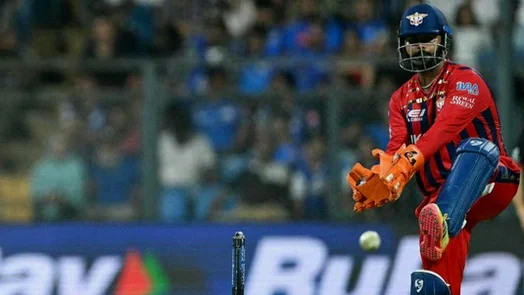
Rishabh Pant’s Lucknow Super Giants find themselves in a troubling IPL 2026 spell, after six straight defeats left them teetering on the edge of elimination. Their most recent setback came against Mumbai Indians, and the loss has effectively turned their playoff hopes into a near-impossible equation: they now need to win every game left on the calendar and still rely on other results to fall into place.
The pressure on Pant’s leadership has intensified following a match where Lucknow failed to defend a hefty 229-run target. What stung was not only the margin, but the way Mumbai Indians seized control early and never truly looked back. Rohit Sharma struck 84, while Ryan Rickelton made 83, and the opening partnership between the two grew into a decisive 143-run stand that blunted Lucknow’s response from the start.
Captaincy and bowling concerns after another heavy loss
As questions mount, Pant’s overall IPL 2026 batting output has also come under the microscope. Across nine innings, he has scored 204 runs, averaging 25.50, and has maintained a strike rate of 128.30. For a player typically known for shifting gears quickly and targeting bowlers, those numbers underline a noticeable dip in influence. He has managed 19 fours and seven sixes so far, with only one half-century to his name—an uneven return that has repeatedly left Lucknow searching for momentum at key moments.
Criticism has not been limited to batting form. Former South Africa all-rounder Shaun Pollock pointed to captaincy choices and squad usage as areas where Lucknow lost shape. Pollock specifically highlighted that the team leaned on just five bowlers, did not bring in Aiden Markram as an additional option, and made tactical calls that, in his view, disrupted the balance of the side—particularly during the bowling phase.
Pollock argued that Lucknow’s bowling unit did not lean into what should have been its most natural strengths. He suggested that when the team had Avesh Khan available—someone whose game is built around attacking the “good length”—the plan veered away from that identity. In Pollock’s assessment, the bowler was pushed into unfamiliar areas, with yorkers attempted too often and ending up short, allowing batters to punish the length.
“They also used only five bowlers and didn’t go to the extra option of Aiden Markram. Someone like Avesh Khan, his strength has always been pounding the good length. Here, he was running up and trying to bowl yorkers. And they were knee high, getting smacked away. Bowlers have to realise what their strength is and stick to it. By bringing in Inglis, they missed out on an international bowler, which probably would have served the balance better,” Pollock said.
Pollock then extended his critique to Pant’s on-field decision-making while the match was slipping away. He suggested that during the chase, Lucknow did not appear to execute a clear, proactive wicket-taking strategy or a coherent method to rein in scoring once Mumbai’s top order was in rhythm.
“Sometimes in such games, it almost looks like you are aimless as a captain. When two players are flying like they were at the top of the order for MI, you feel like there is nothing you can do. But it looked like there were no clear-cut plans on how they were going to pick up a wicket or restrict scoring. It didn’t look like they went to something unique, but more a case of them hoping the MI openers get out,” he added.
