
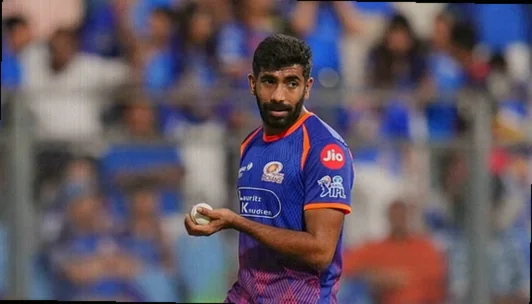
Ravi Shastri has voiced growing concern over Jasprit Bumrah’s dip in rhythm during the 2026 IPL. The Mumbai Indians fast bowler, once so reliable for breakthroughs, has looked far from his usual self across the tournament so far. In 10 matches, Bumrah has managed only three wickets—his toughest stretch in the competition to date. Unless there is a significant turnaround in the remaining fixtures, the situation could become even more challenging. What stands out is that the wickets are not drying up because of lack of control; Bumrah has continued to bowl economically, yet the returns have not followed. He went through five consecutive games without taking a wicket, and his long wait finally ended against the Gujarat Titans. There had been hope that the breakthrough would spark a revival, but the pattern has largely continued.
With a demanding schedule looming, Shastri—India’s former head coach—has urged Mumbai to think beyond the immediate results and focus on Bumrah’s long-term welfare. He points to the international workload that awaits, including a World Cup in South Africa next year and Test tours of New Zealand and Australia in the run-up, alongside other major commitments. In Shastri’s view, Bumrah’s challenge is not purely about physical execution; it is also about mental fatigue, and the franchise must do what it can to help him reset.
Shastri said that Bumrah arrived in this IPL carrying the weight of a heavy stretch with the India team over the previous 12 months. He stressed that the difficulties are not only physical and that mental strain is a major part of the story. The former coach added that Mumbai Indians need to manage his workload carefully, given that the next two years are set to be packed with fixtures, including multiple Test series and the 50-over World Cup. The message was clear: fitness and bowling burden must be handled with precision rather than treated as an afterthought.
What went wrong
There is a sharp contrast between where Bumrah was earlier in the year and where he is now. He was in excellent shape during the T20 World Cup in March, a campaign India went on to win. In that tournament, Bumrah picked up 14 wickets and ended as the joint-leading wicket-taker, underlining that his skill and intensity were still very much present. But just a couple of weeks later, his form fell away. Some supporters believe that the IPL dip can be tolerated as long as Bumrah delivers for India when it matters most. Yet slumps rarely stay shallow for long, and as time passes, the question becomes whether the problem is temporary loss of sharpness—or something deeper that needs more than a single change in approach.
Workload management has naturally become a central theme around Bumrah. Efforts have been made to keep him fresh and reduce the risk of injury, including resting him during the Test series against England and limiting his exposure against lower-ranked opponents. Even so, Shastri’s warning remains relevant: nothing can be assumed to fix itself simply because the right precautions are being taken. India’s full international calendar begins again in earnest from the end of June, starting with a tour of Ireland and then moving into a white-ball series in England. With the 50-over World Cup scheduled for next year—and India still chasing that elusive title since 2011—the stakes are high and the margin for error is small. For India, the best-case scenario would be to remove one major concern and have Bumrah return to his peak level as the workload ramps up.
