
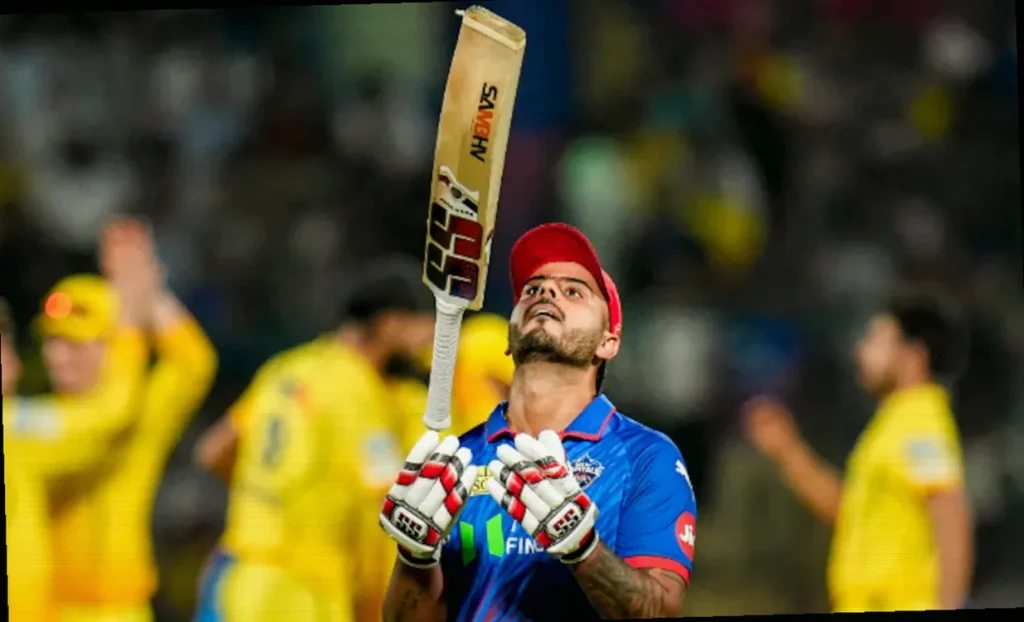
Delhi Capitals once again found their batting in trouble at home, slipping to a below-par total on a track that offered help to spinners. On Tuesday, they were bowled out for 155 for seven against Chennai Super Kings in the Indian Premier League, falling short despite a late push from a couple of key contributors.
Delhi’s innings: how the collapse took shape
- Delhi’s batting never really settled on a surface where grips for the spinners and occasional skid made shot selection difficult.
- The innings began with promise, but the slide started when opener Pathum Nissanka was dismissed. He couldn’t clear the fielder at mid-on after being beaten by a slower delivery from left-arm pacer Mukesh Choudhary.
- Nissanka made 19 off 15, while K.L. Rahul also struck early boundaries, but both batters failed to carry on.
- After Nissanka’s wicket, Rahul looked to attack by going inside-out against left-arm spinner Akeal Hosein. However, he couldn’t get close enough to the pitch of the ball and was taken by Ruturaj Gaikwad, who completed the catch.
- Rahul scored 12 off 13 before falling.
- During the powerplay, Delhi struggled to build momentum, managing only 37 for two. Hosein was particularly influential, bowling half of the overs and striking at the other end, including the wicket of Rahul.
- After the initial phase, Noor Ahmad continued the pressure by removing Karun Nair and Nitish Rana. Both dismissals came after poor execution of sweep shots.
- Delhi captain Axar Patel had an opportunity to swing the contest with the bat, but he fell to a soft dismissal. A delivery from Gurjapneet Singh appeared to stop on Axar, and he was caught at cover, leaving Delhi struggling at 69 for five in 11 overs.
- Still, the innings wasn’t completely lost. Tristan Stubbs struck 38 off 31 and Impact Player Sameer Rizvi finished unbeaten on 40 off 24, combining for a 65-run stand.
- That partnership accelerated the scoring with a flurry of sixes, but the damage from the first half of the innings meant Delhi could not reach a more competitive score, ending on 155 for seven.
Pressure off the field and powerplay woes
As the match progressed, the atmosphere reflected Chennai’s influence at the venue. Much of the crowd, dressed largely in yellow, backed CSK and M.S. Dhoni, and chants of “CSK, CSK” could be heard repeatedly during Delhi’s innings. With Delhi struggling at home and appearing unable to shake off the mental setback of being dismissed for 75 in their previous game at the ground, the pressure only intensified.
Delhi’s difficulties in the powerplay were also underlined by their IPL 2026 record across four parameters: 21 wickets lost, an average of 23.85 runs per wicket, a run rate of 8.35, and a dot-ball percentage of 46.4%. In the match against CSK, the numbers translated into a slow start from the batters, setting the tone for a difficult chase of momentum throughout the innings.
