
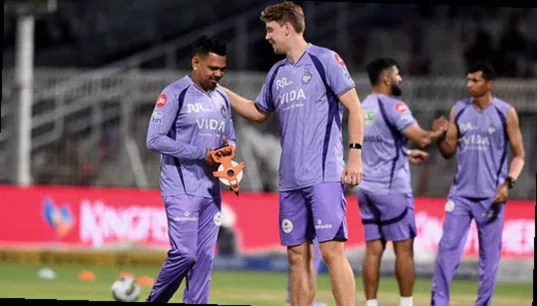
Ajinkya Rahane’s latest toss update ahead of Kolkata Knight Riders’ meeting with Punjab Kings in IPL 2026 offered a clear glimpse of the hurdles KKR were facing right from the start. Rahane confirmed that Varun Chakaravarthy had been ruled out after picking up an injury during an earlier match while taking a catch. He also said Sunil Narine would not be available due to illness. To cover the gaps, KKR named Navdeep Saini and Rovman Powell in their playing XI.
Speaking during the toss, Rahane explained the situation plainly: “Two forced changes for us. Varun Chakravarty unfortunately got injured while taking the catch in the last game, and Sunil Narine is sick. So, in place of Varun, Navdeep Saini comes in, place of Sunil Rovman Powell comes in.”
Such disruptions are rarely welcome so early in a campaign, particularly for a side still trying to lock down its rhythm. In KKR’s setup, Narine and Varun are not merely supporting options—they sit at the heart of how the team balances its bowling and overall match strategy. Narine brings more than just wickets; he provides experience, control, and the captain multiple ways to shape matchups across different phases of the innings. Varun, meanwhile, remains one of KKR’s most reliable wicket-taking threats in the middle overs, capable of slowing down scoring when batting gets going and also delivering breakthroughs when a chase or set starts to drift in the opposition’s favour.
KKR forced into an early test of balance
That is why Rahane’s toss remarks carried more weight than a routine team-news announcement. KKR weren’t simply swapping out two players—they were being compelled to rethink the structure of their XI. Navdeep Saini offers a pace angle, but his bowling profile is notably different from Varun Chakaravarthy’s style and impact. Powell adds flexibility and energy, yet replacing Narine is never a direct like-for-like change, because Narine’s importance is tied to the tactical options he gives the captain throughout the innings.
The timing also heightened the blow. KKR entered the clash looking to find momentum after an inconsistent start to the season. Early fixtures often set the tone for the rest of an IPL campaign, and teams that are still searching for the right combinations can’t afford to lose key players to injury or illness. When absences strike specialists, the complication isn’t only about the drop in talent—it also affects role clarity. The remaining squad must compensate for the missing overs, the altered matchups, and the loss of a specific kind of flexibility in their planning.
In the match-up against Punjab Kings, that challenge became even steeper. PBKS had looked sharper in the early part of the tournament, and any side missing two major contributors is automatically placed under greater pressure. Rahane’s comment at the toss therefore served as a reminder that KKR were already being pushed toward adjustment mode rather than settling into a settled and consistent XI.
Over a long IPL season, not every setback proves decisive. Still, certain disruptions reveal just how reliant a team is on particular individuals. Rahane’s update underlined that reality for KKR—showing they were not entering the game at full strength, not completely settled, and already forced to work through problems that most teams would prefer to avoid during the opening stretch of the tournament.
