
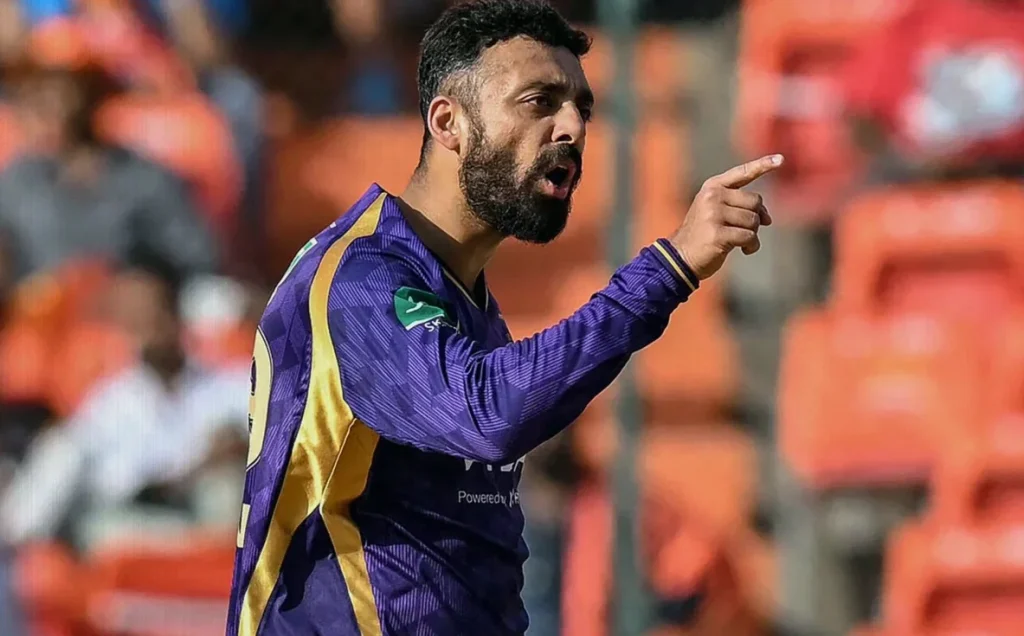
Delhi Capitals head into their Friday clash with Kolkata Knight Riders in New Delhi with the kind of pressure that leaves little room for error. The hosts, sitting seventh with eight points from 10 outings, must win each of their remaining four matches to reach 16 points and force their way into the playoffs. Kolkata, placed eighth, have an even steeper demand: they need victories in all five of their remaining games to finish on 17 and stay in the hunt.
With both sides chasing must-win results, the playing surface becomes a central storyline. DC’s likely approach is to lean on a batting-friendly wicket, a move aimed at blunting the threat posed by spin twins Sunil Narine and Varun Chakravarthy. The plan points towards Pitch No. 6, a strip where Delhi posted 264 but ultimately couldn’t hold their advantage against Punjab Kings.
Why DC may favour a belter
- Delhi Capitals are expected to choose Pitch No. 6 to counter Sunil Narine and Varun Chakravarthy.
- On that same pitch, DC made 264 but failed to defend it versus Punjab Kings.
- Delhi’s batting has looked fragile on slightly seaming tracks, including a collapse to 9 for 6 against Royal Challengers Bengaluru.
- The decision is also linked to recent struggles on slower, gripping surfaces against Rashid Khan and spin from Akeal Hosein and Noor Ahmed.
That selection is driven by what the team appears to have seen from its batting unit on tougher decks. On a surface that offered grip and slowed the ball down, Delhi’s batters struggled to adjust against Rashid Khan of Gujarat Titans, along with Akeal Hosein and Noor Ahmed from Chennai Super Kings. In that kind of environment, Narine and Varun—both already known for squeezing scoring rates—can turn a chase or a total into a slow grind.
Sunil’s economy rate of 6.80 and Varun’s 8.88 underline why DC may be searching for a flatter track. Names like Pathum Nissanka, Sameer Rizvi and Karun Nair have all been vulnerable to the kind of control these spinners can impose when the surface assists their craft.
Adding to Delhi’s stress is the form of premier spinner Kuldeep Yadav. Across 10 matches, he has taken seven wickets at an economy rate of 10.36, and the current IPL has been his toughest stretch so far. In that context, the message reads clearly: if there is no obvious Plan B, the most logical route is to seek conditions where batting can be productive.
A flat deck would allow DC’s home batters to build a substantial total without having to survive too many overs of difficult ball movement. The hope then shifts to the bowling unit, with Mitchell Starc and Lungi Ngidi—who suffered a concussion in the game against Punjab—expected to be the ones who can finish the job with the ball.
KKR’s biggest weakness is also their strength
DC’s only notable advantage may come from the fact that KKR’s main issue mirrors their best weapon: their top-order performances have been inconsistent, but the same team carries spin options that can swing matches. At the top, captain Ajinkya Rahane has 205 runs at a strike rate of 131.42, while Angkrish Raghuvanshi has 268 runs at 137.43. Yet, in most games, they haven’t been able to take control early.
Outside of Rinku Singh, who has provided heavy lifting in KKR wins with 245 runs at 145.39, the rest of the batting group has often struggled to impose itself. If Kolkata remain in contention for qualification, it has largely been because Narine and Varun have combined for wickets—9 and 10 respectively—keeping them connected to contests even when the batting doesn’t dominate.
For Delhi, the problems have piled up in multiple areas. KL Rahul has shown effort with what has been described as his best-ever IPL strike rate of 180-plus, backing it with an aggregate of 445 runs. Still, it hasn’t been enough, particularly when batters such as Abhishek Sharma and Vaibhav Sooryavanshi are striking at well over 200.
One decision that has raised eyebrows is Delhi’s continued backing of Pathum Nissanka, who has scored 228 runs in nine matches. There’s also been a sense of mismatch in the selection of Karun Nair, who has been struggling even in the nets. Nitish Rana, despite his experience, has also found it difficult to handle the short ball consistently.
Delhi’s bowling numbers don’t offer much comfort either. The pace department—Mukesh Kumar, T Natarajan, and “Baramullah’s Dale Steyn” Auqib Nabi Dar—has produced economy rates of 11, 11.18, and 13.42 respectively. On the wicket front, none of DC’s bowlers have reached double figures, with captain Axar Patel’s nine scalps at an economy rate of 8.25 standing as the best return.
Playing squads
Delhi Capitals: Axar Patel (captain), KL Rahul (wk), Pathum Nissanka, Sameer Rizvi, Karun Nair, Nitish Rana, Ashutosh Sharma, Abhishek Porel (wk), Kuldeep Yadav, Vipraj Nigam, Sahil Parakh, Mitchell Starc, Lungi Ngidi, Kyle Jamieson, David Miller, Tristan Stubbs, Mukesh Kumar, T Natarajan, Auqib Nabi Dar, Rehan Ahmed, Tripurana Vijay, Dushmantha Chameera, Madhav Tiwari, Ajay Mandal, Prithvi Shaw.
Kolkata Knight Riders: Ajinkya Rahane (captain), Angkrish Raghuvanshi (wk), Tim Seifert (wk), Finn Allen, Rovman Powell, Cameron Green, Rinku Singh, Varun Chakravarthy, Sunil Narine, Kartik Tyagi, Vaibhav Arora, Navdeep Saini, Tejasvi Dahiya (wk), Ramandeep Singh, Sarthak Ranjan, Rahul Tripathi, Prashant Solanki, Matheesha Pathirana, Daksh Kamra, Rachin Ravindra, Anukul Roy, Saurabh Dubey, Umran Malik, Manish Pandey.
