
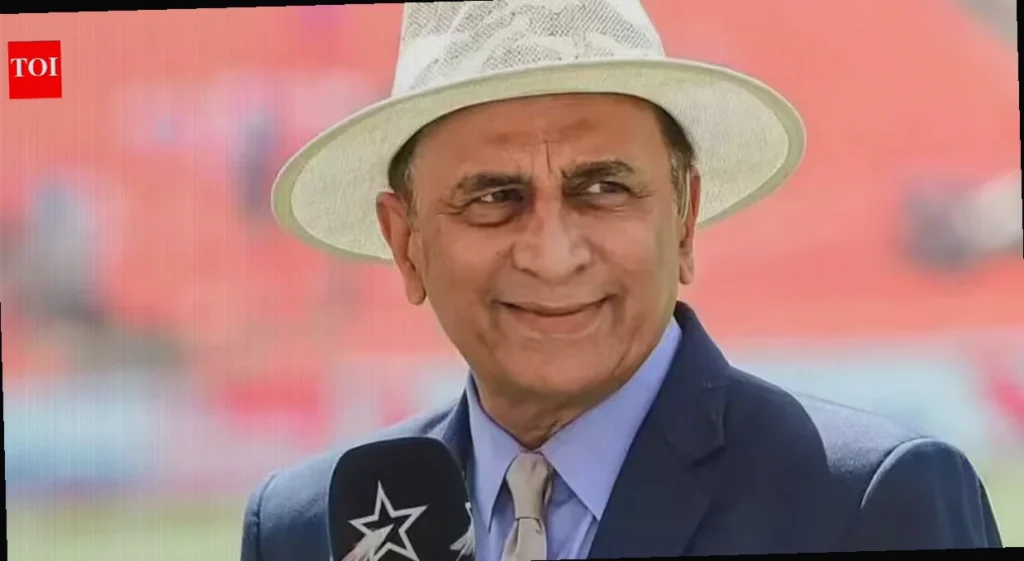
Sunil Gavaskar believes the sport’s batting-heavy balance has tipped further in the T20 era, and he is not convinced that the current rules are doing enough to protect fast bowlers. With the IPL 2026 season producing huge totals with regularity and scores beyond 250 increasingly treated as a normal benchmark rather than a warning sign, the former India opener argues that bowlers are being asked to defend far too much without enough help. In his view, shorter boundaries, tighter restrictions in the field, and the sheer power and timing of today’s modern batters are combining to create a clear imbalance between bat and ball.
Gavaskar’s focus then sharpened on one specific law: the way the wide-bouncer rule is being interpreted. He suggests that pace bowlers are effectively punished even when a short ball does not truly threaten the batter, but simply passes marginally above the head. In his words, the “wide ball” call for a delivery that clears the batter’s head by a small amount amounts to an unrealistic expectation from a fast bowler.
He also pointed out that many venues still have the space to move boundaries back further, which would naturally ease some of the pressure on defenders. Instead, Gavaskar feels pacers are being put under even greater scrutiny through strict enforcement of existing regulations. His proposed solution is simple: give bowlers a little more leeway when delivering bouncers, so that they can execute the skill without living in fear of an immediate call against them. Gavaskar even floated a tweak to the margin, suggesting that if the law allowed roughly the length of a bat handle—around one foot—above the batter’s head while the batter is in their stance, it would offer “relief” and encourage fast bowlers to keep firing.
The batting great also looked back to an earlier era of limited-overs cricket, when bouncers were fully banned. He recalled that, in that period, lower-order batters gained prominence as pinch-hitters because teams could not attack them with short-pitched bowling. Gavaskar described how, after he became Chairman of the ICC Cricket Committee, the group decided to reintroduce bouncers into the game—though with limits, specifically one per over per batter. He argued that the change brought back an important weapon for bowlers and altered the contest more fairly.
Gavaskar’s argument then widened beyond one rule. He questioned why bowlers should be forced to operate within narrow restrictions when batters are allowed to go after the ball in almost any way they choose. “You don’t restrict a batter from playing any shot, do you? So why restrict the bowlers from trying all the varieties that they possess?” he asked, framing the issue as one of symmetry in freedom between the two disciplines of the game.
Finally, Gavaskar addressed Sourav Ganguly directly, urging the current ICC Cricket Committee chairman to think about reforms that could restore balance. His call was clear: when the next committee meeting takes place, the bowling side should not be overlooked, and measures should be considered that give pacers a fair chance to use their skills effectively in modern T20 cricket.
