
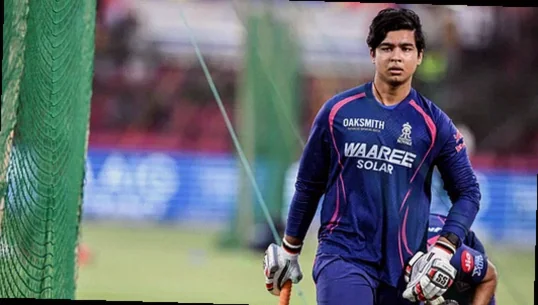
Vaibhav Sooryavanshi’s IPL 2026 campaign has moved well past the usual “promising youngster” phase. The Rajasthan Royals batter is just 15, yet his run-making has started to resemble the kind of production typically expected from franchise centrepieces: senior Indian mainstays and established overseas match-winners. RR have not only benefited from occasional bursts—this season, they have built a significant part of their batting ceiling around him.
Sooryavanshi’s numbers: volume, boundaries and impact
The clearest way to judge how deeply the Royals rely on him is through the scale of his output. Sooryavanshi has amassed 404 runs from 170 balls, striking at 237.65. He has also hit 72 boundaries. Within Rajasthan’s batting group, he tops every major category: most runs, most boundaries, the highest batting-impact contribution, and the biggest overall performance contribution.
That multi-layered dominance changes the story of his season. What began as a breakout has become a structural dependence—RR’s batting plan, at least in practical terms, runs through his bat.
The “load” coefficient that shows RR’s dependence
To explain how much responsibility Sooryavanshi carries, a load-carrying coefficient is used. The framework blends four indicators: his share of team runs, his share of team boundaries, his share of team batting impact, and his share of total player-performance impact. On this basis, Sooryavanshi’s weighted load share is 22.82%, meaning nearly a quarter of Rajasthan’s combined weighted batting and performance output has been routed through a 15-year-old.
Even more striking is how his load compares to the typical batter in RR’s core group. Sooryavanshi carries 1.78 times the load of an average main Rajasthan Royals batter. Against the average of the Royals’ other principal contributors, his coefficient rises to 2.05x.
For context, Yashasvi Jaiswal sits at 16.14% weighted load share, Dhruv Jurel is 15.23%, Donovan Ferreira is 14.34%, and Riyan Parag is 9.96%. Sooryavanshi has separated himself from that group through both volume and boundary violence.
When the same measure is applied across the league, the picture becomes even more pronounced. Among qualifying IPL 2026 batters, Sooryavanshi’s load coefficient is 1.56 times the league average. He is second in the tournament for weighted load share, behind only KL Rahul. The rest of the leaderboard includes Shubman Gill, Ryan Rickelton, Mitchell Marsh, Sanju Samson, Heinrich Klaasen, Jos Buttler and Abhishek Sharma—names that define the very top tier of T20 batting influence.
Resource equation: impact without soaking up balls
The season’s value proposition is not just that Sooryavanshi scores heavily; it’s how efficiently RR’s batting economy is shaped through his role. He has generated 22.89% of Rajasthan’s batting runs, 27.59% of their boundaries, and 24.77% of their batting impact-score—while facing only 15.78% of the total balls the team has played.
This imbalance is where the real match-day advantage appears. RR do not have to hand him a large chunk of the innings to manufacture influence. He creates output at a pace that reduces pressure on the rest of the order, allowing the batting unit to operate with more freedom rather than reacting to early setbacks.
Powerplay foundation: 323 runs in the first phase
Sooryavanshi’s season is built heavily in the powerplay. Out of his 404 runs, 323 have come in the first overs. He has produced those powerplay runs from 132 balls, striking at 244.70 and clearing the ropes 59 times. In practical terms, Rajasthan’s early phase has frequently turned into a “Vaibhav” show—when he arrives, the innings accelerates before opposition bowlers can settle into a repeatable rhythm.
That early shift helps the middle order bat from better positions more often than raw team totals alone would suggest. The match-by-match burden is especially visible in three specific games.
- Against CSK, Sooryavanshi made 52 off 17, contributing 42.62% of RR’s batting runs.
- Against RCB, he struck 78 off 26, accounting for 39.20% of the team’s batting runs.
- Against SRH, he produced 103 off 37, contributing 46.61% of RR’s batting runs and 44.77% of their player-performance impact.
In each of those innings, the teenagers’ impact is not peripheral. He becomes the central scoring engine.
The dependency during 30-plus innings
His 30-plus contributions underline the franchise-level reliance. In seven innings of 30 or more, Sooryavanshi has scored 392 runs with an average of 56 and a strike rate of 251.28. In those games, his average share of RR’s run total is 31.87%, and his average impact share is 25.17%.
Whenever he has the opportunity to bat with momentum, Rajasthan typically receive match-shaping returns—almost every time.
Volatility: the cost of early aggression
Despite the strong overall balance, volatility remains part of the picture. His three lowest scores have yielded just 12 runs in total, at a strike rate of 85.71. In those matches, his average share of RR’s runs is roughly 2.35%, and his impact share drops into negative territory.
That is the price of a role built around early aggression. RR, by design, ask him to change the innings quickly, and that naturally brings exposure. Rajasthan’s worry is straightforward: when his approach doesn’t land, the batting unit can lose immediate scoring momentum—unless Yashasvi Jaiswal, Dhruv Jurel, or Donovan Ferreira step in to absorb the damage.
Even so, the overall tilt remains heavily in his favour. His efficiency-adjusted load ratio stands at 1.47, the best mark among qualifying batters in the league. These figures reward players who generate high output without requiring a matching share of balls. That distinction separates steady productivity from high-force “sharpener” innings that depend on heavy delivery usage.
In that sense, Sooryavanshi’s season belongs firmly to the productive-accumulation category.
What it means for Rajasthan Royals
For Rajasthan, the implication is direct: the improvement in their batting is not simply a reflection of one young opener’s form. Their batting model draws major value from how disproportionate his early output tends to be. His presence alters the innings’ economy—RR get more runs per ball, more boundaries per opportunity, and more impact per delivery than any other batter in their squad.
At 16, Vaibhav Sooryavanshi is carrying the load expected from a franchise batter. The age makes it remarkable, but the deeper reason it stands out is the combination of youth and the impact coefficient. Together, they form one of IPL 2026’s strongest analytical narratives.
Method note
This analysis is built on an impact model created by the author. The approach evaluates a player’s contribution by looking at batting output, boundary production, match impact, and overall player-performance value. It then compares that contribution against both the player’s team batting group and the wider league.
For the load-carrying coefficient, four inputs are used: share of team runs, share of team boundaries, share of team batting-impact score, and share of total player-performance score. These are combined into a weighted load share, which is compared against Rajasthan Royals’ main batters and, separately, qualifying IPL 2026 batters across the league.
The coefficient is an analytical estimate rather than an official IPL statistic. Its purpose is to show how much responsibility a player has carried inside his team’s batting structure, and how that load stacks up against the rest of the competition.
