
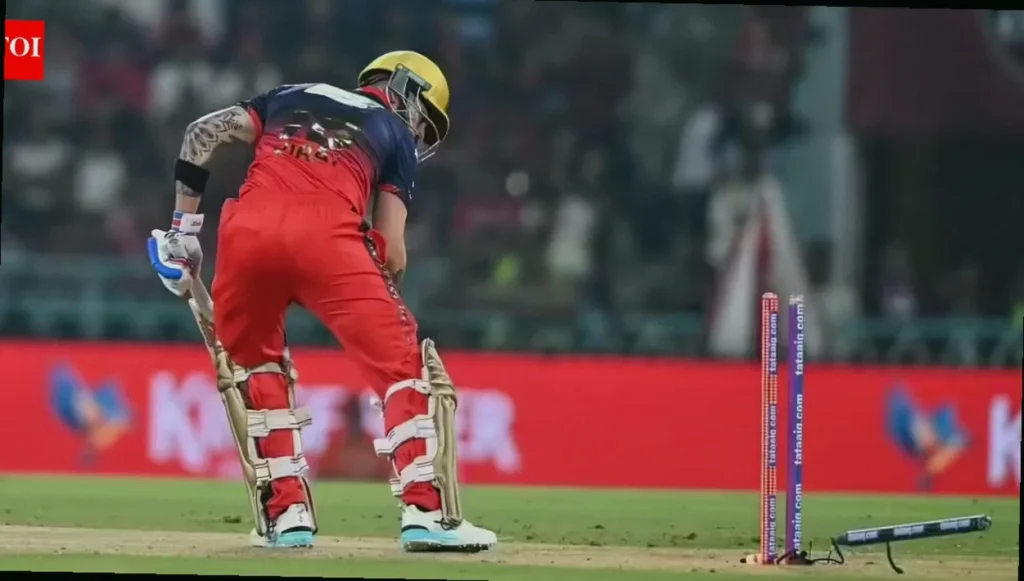
Royal Challengers Bengaluru head into a critical phase of IPL 2026 with their title defence under pressure after a noticeable mid-season wobble. The defending champions are set to face Mumbai Indians in Raipur, a match that could swing momentum quickly for the Red and Gold. RCB have slipped into fourth place on the points table, holding six wins and four defeats, and their last four fixtures may decide the tone of the remainder of the campaign.
Quick facts
- RCB are defending champions and sit fourth in IPL 2026 with 6 wins and 4 losses.
- They face Mumbai Indians in Raipur after consecutive defeats to Gujarat Titans and Lucknow Super Giants.
- Major concern: a sharp drop in No. 4 to No. 8 batting output across the middle of the season.
- Middle-order slump: average fell from 39.30 to 21, strike rate from 190.77 to 148.58; fifties dropped from two to one.
- Phil Salt’s finger injury has disrupted the top order; he played six games and made 202 runs.
- Spin and bowling form dipped after the opening phase, with wicket totals falling and averages rising.
- Virat Kohli’s wicket has become pivotal: RCB’s results swing sharply depending on whether he survives beyond 30 balls.
RCB’s current dip has been sharpened by the way their middle order has faded. They began the tournament with a stable top three featuring Phil Salt, Virat Kohli and Devdutt Padikkal. Captain Rajat Patidar, Jitesh Sharma, Venkatesh Iyer, Krunal Pandya, Romario Shepherd and Tim David also gave them a deep batting menu, which initially looked like a reliable strength.
In their opening five matches, RCB’s batters arriving from number four to number eight posted the best combined figures across the league. That stretch produced an average of 39.30 and a strike rate of 190.77, along with two fifties. They also struck 23 fours and 33 sixes in that period—numbers that helped them put opponents under immediate pressure.
However, the next five games told a different story. The same segment’s output collapsed, with the batting average dropping to 21, the lowest among all teams in that phase. Their strike rate slid to 148.58, and they managed only one fifty while hitting 23 fours and 23 sixes, a clear reduction in the ability to accelerate when set.
Injuries and batting form: Salt’s absence felt early
Salt’s injury has added another layer to RCB’s troubles. He appeared in six matches and scored 202 runs, averaging 33.66 with a strike rate of 168.33, including two fifties. A finger problem then forced him to return to the UK, and RCB have not provided many specifics about the nature or timeline of the injury.
With Salt out, Jacob Bethell was pushed into a top-order role. Bethell had already created excitement after a century in the T20 World Cup semifinal against India at the Wankhede, but his IPL start has not matched the early promise. In four innings he has scored just 43 runs, with a highest score of 20.
Romario Shepherd has also struggled to deliver consistently. Despite being known for power hitting, he has made only 79 runs in six innings, averaging 26.33 with a strike rate of 143.63, and his best score is 23 not out. In RCB’s most recent game versus Lucknow Super Giants, he struggled in a chase of 20 runs during the final over against the spin of Digvesh Rathi.
RCB have seen similar issues in Shepherd’s bowling. He has taken five wickets in nine matches at an average of 44.00, while conceding at 12.94 per over with a strike rate of 20.40. Among pacers who have taken at least five wickets this season, Shepherd’s economy is the second-worst, sitting behind Shardul Thakur’s 13.57.
Wicketkeeper-batter and overseas pacer under strain
Jitesh Sharma’s season has been tough as well. After a strong campaign the previous year, he has managed 64 runs in eight innings, averaging 8.00 with a strike rate of 108.47, and his top score has been 23. At times, his struggles have forced Tim David and Romario Shepherd to come in earlier than RCB would have preferred.
RCB have also not extracted the expected impact from Josh Hazlewood. Known as “Hazlegod” for delivering under pressure, he has nine wickets in seven matches at an average of 28.77 and an economy rate of 9.41, including a four-wicket haul. Yet in the matches RCB have lost, Hazlewood’s numbers have weakened—he has taken only three wickets in those defeats, averaging 62.33 with an economy of 11.68.
The spin department has not delivered the same returns in the later stretch either. In the first five matches, Krunal Pandya and Suyash Sharma were effective, with RCB spinners taking 11 wickets at an average of 27.63 and an economy rate of 9.21. In the next five games, their wicket haul fell to five, the bowling average rose to 42.16, and the strike rate climbed to 30 — the worst figure for that period. The only noticeable improvement came with economy rate, which slipped down to 8.2.
Krunal has still produced a respectable season tally, taking 10 wickets in 10 matches at an average of 27.00 and an economy of 8.30. Suyash has seven wickets in nine appearances at 38.42 with an economy of 8.45. But for RCB, the priority is taking wickets, not just containing runs.
Kohli’s wicket: the hinge point for RCB’s fortunes
Another storyline gaining attention is Virat Kohli’s changing role within RCB’s batting rhythm. Since IPL 2024, Kohli has boosted both his strike rate and his six-hitting. This season he has scored 379 runs in 10 matches at a strike rate of 164.06—his best ever for an IPL campaign—along with three fifties.
Yet the team’s results suggest his wicket has become more decisive than ever. In the 40 innings Kohli has played since the start of IPL 2024, there have been 20 instances where he faced more than 30 balls. In those matches, RCB won 18 times and lost only twice. In the remaining 20 innings where he was dismissed within 30 balls, RCB lost 14 games and won only six.
This season’s four defeats underline the pattern even more. In each of those losses, Kohli faced fewer than 30 deliveries. Against Lucknow Super Giants, he made 0 as RCB lost by nine runs. Versus Gujarat Titans, he scored 28, and RCB were bowled out for 155. Against Delhi Capitals, Kohli hit 19 before being dismissed by Lungi Ngidi, after which RCB gradually lost momentum to finish on 175/8. In the defeat to Rajasthan Royals, Kohli scored 32 before falling to Ravi Bishnoi as the third wicket at 58, and RCB slipped to 125/7 before a middle-order repair took them to 200.
RCB do have a mix of Indian and overseas batting options and can adjust to match situations, but Kohli remains the central figure in their batting plan. From RCB’s 1,862 runs this season, Kohli has contributed 896 runs while he was at the crease, accounting for 48.12% of the team total. His presence often gives his partner more freedom, because the set-up can be managed with the knowledge that Kohli can steer the innings. That is why his early wicket has become so damaging to RCB’s outcomes in IPL 2026.
With the Raipur contest against Mumbai Indians looming, RCB will be looking for a faster recovery in their middle-order balance, more consistent wicket-taking from their bowlers, and a batting display that protects Kohli’s wicket as the season reaches its decisive stretch.
