
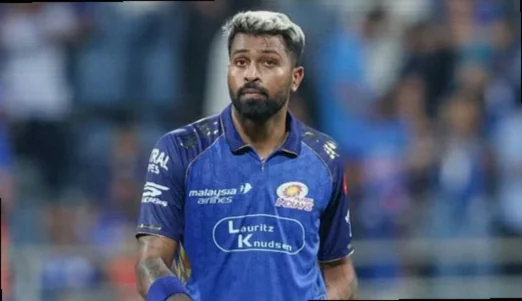
Quirky Fact 1: Between 2013 and 2025, spanning 13 straight IPL seasons, Mumbai Indians managed to lose their opening match in every single campaign. Quirky Fact 2: Yet, across the same general period, they went on to dominate the league’s biggest stage, hoisting the trophy five times in eight years from 2013 to 2020. Quirky Fact 3: Even after steering Mumbai to Qualifier 2 in 2023—where the team fell to Gujarat Titans—Rohit Sharma was removed from the captaincy despite being India’s all-format leader at the time.
The final development in that chain was shaped by Mumbai’s leadership group and its “vision” for what was next. The plan included bringing Hardik Pandya back to the franchise after his successful spell with Gujarat Titans, where the Baroda all-rounder had enjoyed major success while captaining the side.
How Pandya’s Gujarat success set the stage
On Gujarat’s IPL debut in 2022, Pandya played a key role in a remarkable run that ended with the team lifting the title. A year later, Gujarat were again present in the final against Chennai Super Kings, and for long stretches they looked in control—until Ravindra Jadeja swung the game decisively. Jadeja struck a six and a four off the final two deliveries of the tournament, bowled by Mohit Sharma, powering his team to a record-matching fifth championship.
Why Mumbai wanted Pandya back
Mumbai’s interest in Pandya was easy to understand. At just 30 years old, he was viewed as the future, while Rohit was 37 with many of his best years already in the rear-view mirror. The franchise wanted a durable winning setup—and a strong long-term identity—built around the flamboyant all-rounder.
Pandya, too, had clear reasons to return. He had already built a reputation as a leader, was on the verge of becoming India’s T20I captain (he served as Rohit’s deputy and led the side during Rohit’s long international break in the 20-over format from November 2022 to January 2024), and Mumbai was where his professional journey truly took off, beginning in 2015. Beyond that, Mumbai Indians is one of the IPL’s flagship franchises, backed by deep resources and strong institutional power.
Still, while the logic behind the move was obvious, the execution left plenty to be desired. Mark Boucher—former South African wicketkeeper—was brought in as coach for the 2024 season, with the expectation that he would oversee the transition in leadership. Instead, the change was surrounded by intrigue and an unusually noticeable lack of polish. Boucher’s eventual dismissal after that one season only strengthened the belief that he had been made something of a “scapegoat,” though his situation wasn’t helped by Mumbai stumbling to the foot of the table during Pandya’s first stint as captain, winning just four of their 14 matches.
The way captaincy was handled, especially Rohit being pushed into a peripheral role despite his value as a top batter and a highly effective man-manager and tactician, sparked major anger among Mumbai supporters. Even at the Wankhede Stadium—where they are at their loudest—Pandya received sustained booing throughout the season, every match. In some respects, it was hard not to feel sympathy for him; in others, it was a natural reaction, because fans made it clear where their loyalties lay.
Three seasons, and little progress
Now, with three seasons under the Pandya captaincy, Mumbai Indians look like they are heading into a difficult future. They finished last in 2024 and were the fourth lowest in the standings the previous year, having lost Qualifier 2 to Punjab Kings. With that context, their supporters could have felt encouraged when the team finally won their opening game in style on March 29.
Chasing a target after Kolkata Knight Riders compiled 220 at the Wankhede, Mumbai cruised to victory by six wickets with five balls remaining. The platform came from a 148-run opening partnership between Rohit and Ryan Rickelton. The result also offered another boost: Rohit looked unaffected even after being away from competitive cricket for about two and a half months, which may have mattered as much as the win itself.
But roughly six weeks later, Mumbai were eliminated from playoff contention after losing a last-ball thriller against Royal Challengers Bengaluru in Raipur on Sunday night. The game captured the broader story of their season: they were competitive at times—like the “Curate’s Egg” that is good in parts—but when the pressure arrived, they fell short. It may have been narrow, but the margin was still enough to end their campaign.
Pandya was absent again, still working through a hamstring problem that has now forced him to miss two consecutive matches. Stand-in captain Suryakumar Yadav—the captain of India’s T20I World Cup-winning side—was also missing with the bat, continuing a run of repeated failures after being dismissed for a golden duck. Jasprit Bumrah, widely considered the best bowler in the world, extended a dry spell for the seventh time this season, going wicketless. Mumbai also showed a stream of fielding slips, misjudgments, and errors in decision-making, which all added up to an eighth defeat in 11 matches and an early exit from the tournament.
Time for a reset
If Mumbai are willing to be brutally honest with themselves—and the franchise will need to be, for its own long-term health—then a structured reset is the obvious next step. One would assume that process must begin at the very top, involving the leadership group that includes Pandya, the captaincy setup, and Mahela Jayawardene in his role as head coach. However, removing Pandya as skipper would also amount to admitting, indirectly, that bringing him in from Gujarat was a mistake—and it is unclear whether that message would sit comfortably with the wider management structure.
Pandya has not delivered with either his words or his actions, and that assessment comes without bias or hostility. His numbers read poorly for a captain: only 146 runs across eight innings, including a top score of 40 and a strike rate of 136.44, along with four wickets at an economy rate of 11.90. On these returns, he stands among the least effective captains of the season, possibly alongside Rishabh Pant, whose own struggles have also left Lucknow Super Giants officially out of the playoff race. If he were not the captain, the suggestion is that he would likely be warming the bench.
Of course, the situation has been made tougher by injuries and form issues across the squad. Rohit missed five matches because of injury. Bumrah has looked like he is searching for his next breakthrough. Trent Boult has lost some of his edge and bite. Suryakumar, meanwhile, has been stuck in a prolonged nightmare run. Yet leadership and man-management are precisely what matter when a team is facing a crisis and must navigate a difficult stretch. Pandya has not quite met the standard, and it’s worth saying plainly.
On the field, Mumbai have looked lethargic, and at times it has seemed as though almost every player is trying to solve the problem alone. That is the classic contrast between raw talent and actual output. With the squad they have, they should be strutting across each venue like confident, proud peacocks; instead, they are mostly going through the motions. Finger-pointing and blame allocation have been visible, even in the limited television shots that capture only fragments of what is happening.
Tilak Varma as a longer-term bet
Perhaps it would not be a bad idea to give greater responsibility to Tilak Varma. The young Hyderabadi is as much a Mumbai Indians product as anyone in the current group. He made his IPL debut in 2022, has remained a steady contributor across all five seasons so far, and is still only 23, with a long and distinguished career ahead. He certainly looks like a sensible horse to back. Captaincy may still be a couple of years away, but allocating him a larger role now—both with the bat and in decision-making—would be a move Mumbai would do well to consider.
A shake-up is also needed behind the scenes. Long stretches of continuity can bring comfort and eventually stagnation. When results are going well, staying consistent is a virtue, but when things are not working, over-familiar routines can become a millstone. That can show itself in avoiding tough calls, drifting toward “softness,” and falling into a buddy system that is ultimately self-defeating. Mumbai is a proud franchise, not used to the kind of repeated inconsistencies that have appeared over the last few seasons. If they are truly serious about halting their alarming slide, they will need to act decisively—immediately—with an eye on 2027 and beyond. Whether that means beginning at the top is the key question they must answer first.
