
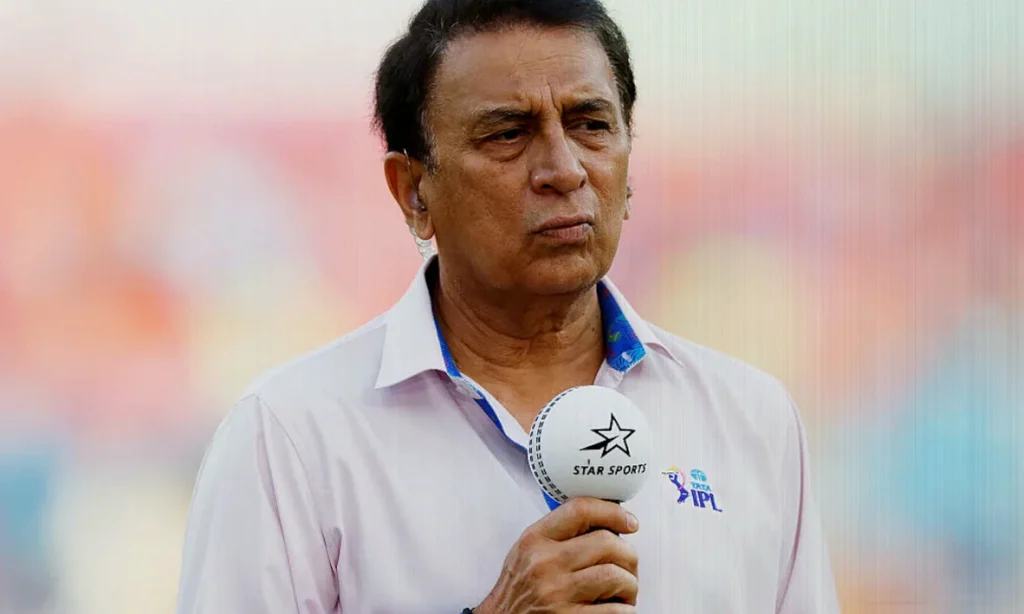
Sunil Gavaskar, the former India batting great, last played an international match in 1987. Since hanging up his national colours, he has remained deeply involved in cricket in multiple capacities, including his current work as a widely followed commentator. He also spent time within the IPL ecosystem, serving on the league’s Governing Council in 2010, and has now shared a behind-the-scenes episode from that period along with his views on how T20 cricket’s laws should evolve.
Key takeaways
- Gavaskar says he served on the IPL Governing Council in 2010 and later wrote about an incident from that tenure.
- He claims a council member questioned the authority behind his direct letter to franchise captains for ideas on improving the league.
- Gavaskar highlights Adam Gilchrist’s proposal to reward teams finishing first and second with another title opportunity via the Qualifier and Eliminator.
- He believes the game is currently leaning too far towards batters and wants specific rule adjustments to restore balance.
- His primary suggestion is to redefine the no-ball/wide-ball thresholds for bouncers to give fast bowlers more room.
Letter to franchise captains and the “pulled up” moment
Gavaskar recalled that, years ago during his time on the IPL Governing Council, he had written to the captains of the eight franchise teams in his personal capacity. The purpose, he explained, was to ask what could be done to make the tournament even better than it already was.
He said most of the replies did not bring any major new direction, but one response stood out—an idea from Adam Gilchrist. Gavaskar described Gilchrist’s suggestion as a novel approach: teams that finish in the top two should receive another chance to win the trophy through the Qualifier and Eliminator structure.
It was then, according to Gavaskar, that he was “pulled up” by another member of the Governing Council. The member asked what authority Gavaskar had to write to franchise skippers with their suggestions. Gavaskar responded that he had sent the message personally, as a former captain and player, and that he did not feel he needed permission to reach out. He added that it was ultimately for the Governing Council to decide whether to accept the proposal.
Gavaskar said the council did accept it, and he noted that the approach has since become a major objective for franchises. Finishing among the top two now matters greatly because it provides teams with another shot at the title.
Rule tweaks to ease pressure on bowlers
While discussing the current state of the sport, Gavaskar said he is not fully comfortable with how the balance is shifting towards batters. Even though he is known as a batting icon, he argued that some adjustments are necessary to bring the contest back into equilibrium.
He began with what he wants to be changed regarding the wide-ball/no-ball framework. Gavaskar pointed to the “wide ball” decision that comes into play when a bouncer rises only slightly above the batter’s head. He compared it to forcing a fast bowler to operate with one hand tied behind the back, saying the bowler should be given more allowance.
Gavaskar also connected the issue to changes around boundary dimensions. He stated that boundaries have been shortened even while there is still scope to move them back, and that this has already reduced the margin for bowlers. In his view, the current interpretation—treating the delivery as wide if it goes above the batter’s head in the batter’s normal stance—has handicapped pace bowlers even further.
To address the concern, Gavaskar suggested a practical tweak: if the law is adjusted so that the fast bowler gets a margin of one foot above the batter’s head—roughly the length of the bat handle while the batter is set in his stance—it would give bowlers relief and encourage them to attack with more pace and confidence.
