
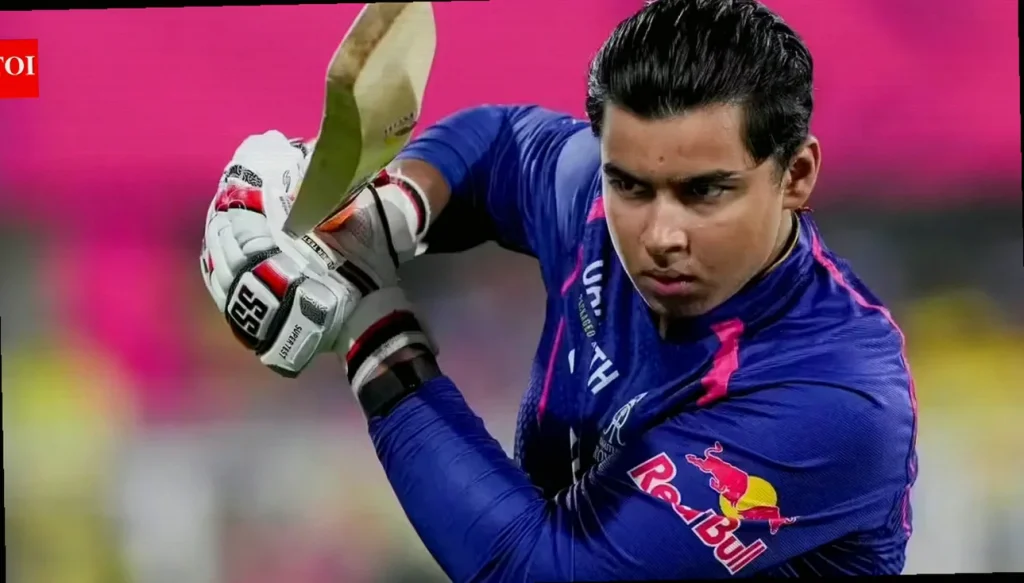
Vaibhav Sooryavanshi has quickly become one of IPL 2026’s most watched teenage talents, smashing 440 runs in only 11 innings at the age of 15. While his aggressive approach has drawn plenty of praise, former India batter Sanjay Manjrekar has raised a specific worry about the way the franchise is deploying him—suggesting that a heavy reliance on the Impact Player role may be slowing his all-round growth.
Key takeaways
- Sooryavanshi has made 440 runs in 11 IPL 2026 innings at 15 years old.
- Manjrekar believes Sooryavanshi is being used mainly as an Impact Player rather than as a regular on-field contributor.
- The former India batter argues that fielding is a crucial part of development, not an optional extra.
- He says young players should face match pressure and learn from on-field mistakes and moments.
- Manjrekar contends T20 success can happen under the Impact Player model, but complete cricketers are still needed for higher levels.
Impact Player usage under the spotlight
Manjrekar feels the franchise’s current method—bringing Sooryavanshi in primarily to bat and rarely using him in the field—could leave gaps in his overall skill set. In his view, the Impact Player framework is being used in a way that may reduce the youngster’s chances to build rhythm across all phases of the game.
He questioned whether this is the kind of player development the IPL should be encouraging, stressing that a modern cricketer’s value is not limited to batting output. “A cricketer should be able to bat well and also field well,” Manjrekar said, pointing to the idea that two-dimensional contributions create a more accurate picture of talent.
Why fielding and pressure matter
Manjrekar highlighted how earlier eras judged players on multiple skills. He referenced the way fans and selectors used to evaluate batters not only through their scoring, but also by watching how they performed in the field and handled different match situations.
He added that the current system can allow a player to appear briefly, show hitting ability, and then be absent from the remainder of the contest—meaning the public sees only one facet of their cricket. In his opinion, that limits how well people can assess a player’s full potential.
Another concern he raised was about exposure to pressure. He argued that youngsters need time on the field where they must respond to tension, deal with errors, and learn in real match conditions. If a batter is a possible weak link in fielding, Manjrekar believes it should be tested and worked on rather than avoided.
He also drew attention to the learning that comes from high-stakes moments—such as the tension involved after a dropped catch—and said the highest level of the sport should not become too comfortable for any player. Letting a young talent spend less time on the field, he implied, deprives them of that essential pressure education.
International cricket needs more than one skill
Manjrekar went further by linking the discussion to international cricket, where specialists who only contribute in one department are less likely to succeed over time. He suggested that Sooryavanshi’s growth might be constrained if he continues to be used in a limited role.
While acknowledging that T20 World Cup winners have still operated within the Impact Player rules, he pointed out that outcomes don’t erase the underlying issue. He cited India’s title-winning campaign and also mentioned Shivam Dube’s reduced bowling involvement during the tournament, emphasizing that things can still work—but insisting that the broader aim should be to make players more tested and rounded.
Manjrekar concluded by arguing that players should face a fuller set of match demands, not simply bat and then exit the contest. His message was that complete participation—whether a player is a bowler or not—helps build the kind of cricketer who can handle all dimensions of the game.
