
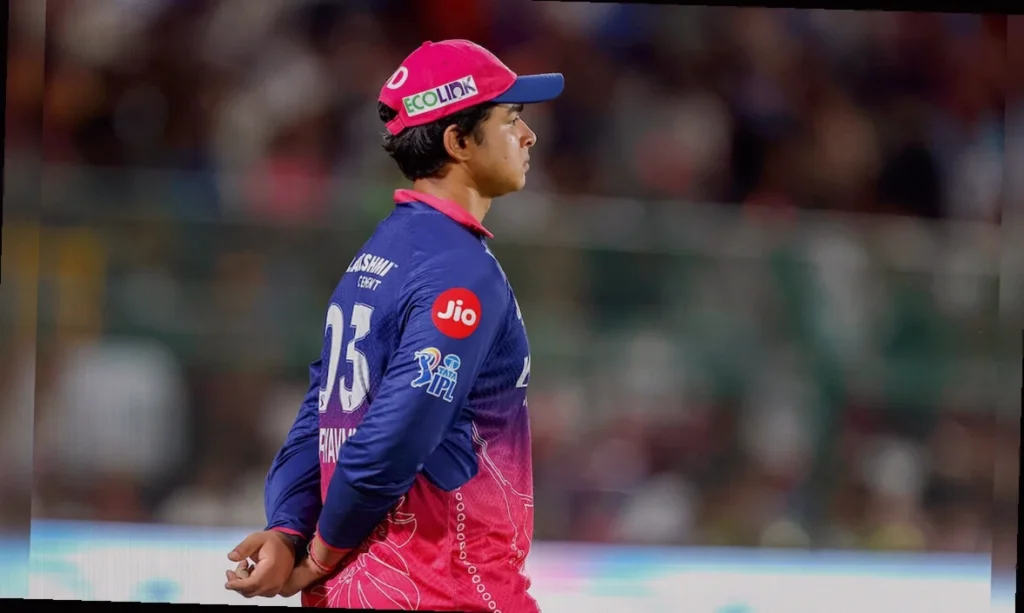
Rajasthan Royals youngster Vaibhav Sooryavanshi has quickly turned heads in the IPL, with his fearless hitting and a knack for clearing the ropes at will. The 15-year-old batter’s burst of power has intensified speculation about where he could fit in the India conversation as well. Yet amid the excitement, there is a growing concern among cricket voices about how the Royals are using him—specifically the fact that he is often deployed as an Impact Player, a role that critics argue limits his overall development into a complete cricketer.
One of the main points raised is that Sooryavanshi is not regularly involved in the Royals’ fielding plans during matches. With the team’s strategy frequently keeping him off the field and using him primarily for his batting, the teenage batter is often left watching from the bench when RR’s turn comes to defend. Former India batter Sanjay Manjrekar believes this approach can stall progress, especially for a young player who needs reps in every facet of the game to mature properly.
Manjrekar argued that the Impact Player system, as currently applied, prevents a clearer picture of a prospect’s full skill set. Speaking on Sportstar’s Insight Edge Podcast, he said he is increasingly of the view that the impact-sub idea should be done away with for reasons that include this exact issue. He questioned what fans and selectors truly gain when they only see one side of a player. “Isn’t a cricketer someone who bats well and fields well as well?” he said, recalling how past greats were judged not just for their batting but also for what they brought in the field. In his view, restricting opportunities to a handful of batting deliveries does not allow the player to be tested in the pressure scenarios that come with being on the field throughout an innings.
He also clarified that while it may not be realistic to demand every player show all three key dimensions at once, regular exposure to fielding pressure is still essential. Manjrekar said he wants Sooryavanshi to be placed in situations that demand concentration and decision-making—especially if the intention is to evaluate his readiness for higher levels. If a batter is genuinely strong but has weaknesses in the field, then, he argued, those gaps should be identified and worked on rather than hidden behind a role that keeps him from being tested. “You don’t want one of the highest sort of levels of the sport to be that easy,” he added, pointing to how real match tension often shows itself most sharply when a player has to defend, chase, or recover after a mistake.
When asked whether the rule is hurting Sooryavanshi’s growth specifically as a fielder, Manjrekar did not soften his stance, replying “Absolutely.” He then broadened the argument by noting that India still managed to win the T20 World Cup even with the Impact Player framework in place. He referenced how players such as Shivam Dube did well in the tournament despite not bowling, emphasizing that results can still come under the current system. However, he maintained that the broader model is not ideal because it can reduce the level of challenge and the constant demands that help players sharpen their skills. In his words, the sport should be about being made to respond to pressure repeatedly, not simply entering to “tuck, tuck, tuck” and then taking a break.
Manjrekar further connected the discussion to how modern incentives can affect mindsets. He pointed to an example from Rohit Sharma’s innings in the previous match, noting that Rohit scored 22 runs off 15 balls. While he said he is not fixated on the money side of the game, he suggested that when rewards arrive for limited effort, it can become a worrying template that is unlikely to support long-term success. “So when there is easy money to be made and a reward for very little effort, you’ve got to start worrying about that model,” he remarked, arguing that cricket should not become a system where the path to impact is too straightforward.
The debate around the Impact Player rule has now spread beyond this one youngster. A number of current IPL cricketers have voiced reservations about the concept, with many indicating they would prefer not to have the option. Even so, the BCCI has not yet signaled any move toward reversing the rule, leaving teams and players to navigate the same tension between opportunity and development.
