
After Kolkata Knight Riders (KKR) suffered a defeat to Royal Challengers Bengaluru (RCB), head coach Abhishek Nayar pointed to one key gap in the bowling unit. He said the side missed the combination of spin options Varun Chakravarthy and Sunil Narine, with Chakravarthy unavailable due to a niggle. Nayar also had praise for Virat Kohli’s chase, calling it a masterclass as RCB surged to the summit of the points table, registering their eighth victory of the season from 12 matches. The result pushed KKR further towards the brink, tightening the race around the playoffs.
KKR set a target of 193, but Kohli’s batting provided the platform for RCB’s successful pursuit. He paced the chase with precision, handled the spin portion of the innings with controlled restraint, and then struck decisively against Vaibhav Arora’s pace. Chakravarthy, who had taken 10 wickets across the previous five matches and helped drive a strong comeback, was forced to watch from the sidelines.
Speaking at the post-match press conference, Nayar suggested that the rain before the game did not end up having a major impact. He said the surface played well throughout, adding that any early drizzle typically brings movement for a short spell, which was seen during the opening overs. Still, he felt KKR managed to reach a defendable total, explaining that their internal discussions had suggested a score in the 180 to 200 range would be par for the conditions.
Nayar also reflected on the absence of Chakravarthy, saying the team had done well with the Narine–Chakravarthy combination. He described it as unfortunate that Chakravarthy has missed substantial time this season, noting it was the second occasion around a fracture. While he acknowledged that it is not easy to replace a bowler of Chakravarthy’s quality, he emphasised that the bowling pair’s effectiveness is built on how well Narine and Chakravarthy complement each other.
The coach further indicated that KKR’s batting efforts on the Raipur track were acceptable. However, he believed that one costly moment—letting go of a catch early in Kohli’s innings—hurt the team’s chances. Nayar said that dropping a Kohli catch is often punished, particularly when the captain batter is chasing, and stressed that taking those chances becomes even more important when both Kohli and Devdutt Padikkal are in good form. He added that although Kohli’s catch attempt was sharp and extremely close, it was the kind of opportunity Vaibhav Arora was expected to take, and that in retrospect the outcome could have looked different if the early opportunity had been taken.
He then defended Vaibhav Arora’s spell that returned figures of 0/48 across four overs. Nayar noted that Arora was struck for four boundaries by Kohli in the second over, but said the team trusted his experience and believed he could eventually get Kohli out. He pointed out that Arora had delivered a strong comeback in recent matches and argued that the kind of defensive bowling required in T20 cricket is exactly what Arora provides. With Kohli as the key wicket, Nayar said they felt Arora’s bowling could deliver the needed breakthrough.
With Harshit Rana absent, Arora had been operating as the senior pace lead for KKR. Across 11 matches, he has taken 11 wickets at an average of 35.45, with best bowling figures of 2/24.
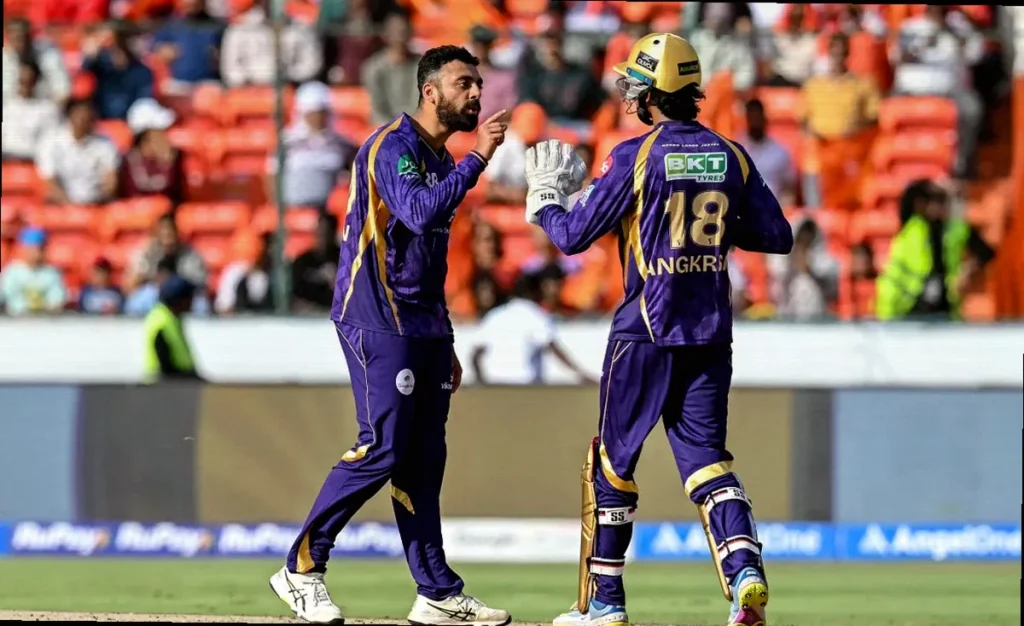
Nayar also singled out Angkrish Raghuvanshi’s contribution, praising how he handled the early movement and difficulty of the overs when the ball was nipping around and gave support to the pacers. He credited Raghuvanshi’s smart decision-making—playing square of the wicket, using the angles effectively, and selecting the right bowlers to attack. Nayar added that Raghuvanshi appeared comfortable at all stages, and he highlighted how the chase dynamics can change when boundaries are bigger, noting that KKR had struck more sixes than RCB, which is unusual given RCB’s power.
In 11 matches, Raghuvanshi has scored 340 runs at an average of 34.00, striking at 139.34. His output includes four half-centuries, with a best score of 71.
Earlier, RCB won the toss and chose to bowl first. KKR were reduced to 48/2, but Raghuvanshi’s innings and Rinku Singh’s late acceleration rebuilt the innings. Raghuvanshi finished unbeaten on 71 off 46 balls, striking seven fours and three sixes, while Rinku made 49 not out off 32 deliveries with three fours and two sixes. Those efforts propelled KKR to 192/4 after 20 overs.
Josh Hazlewood, Rasikh Salam Dar, and Bhuvneshwar Kumar each took one wicket as the innings progressed.
During the chase, Kohli again lost an early partner quickly, this time Jacob Bethell departing for 15. However, a 92-run partnership with Devdutt Padikkal steadied RCB. Padikkal contributed 39 off 27 balls, including seven fours, keeping the chase on track. As the match moved into the closing overs, Kohli took control and RCB completed the pursuit in 19.1 overs with six wickets remaining.
With the win, RCB returned to the top of the standings, improving to eight victories and four defeats for 16 points. KKR, meanwhile, took a major blow to their playoff hopes. After a run of four straight matches without a loss that followed six winless games—containing five defeats and a no result—they now face a situation where their last three matches must be treated as must-win encounters.
