
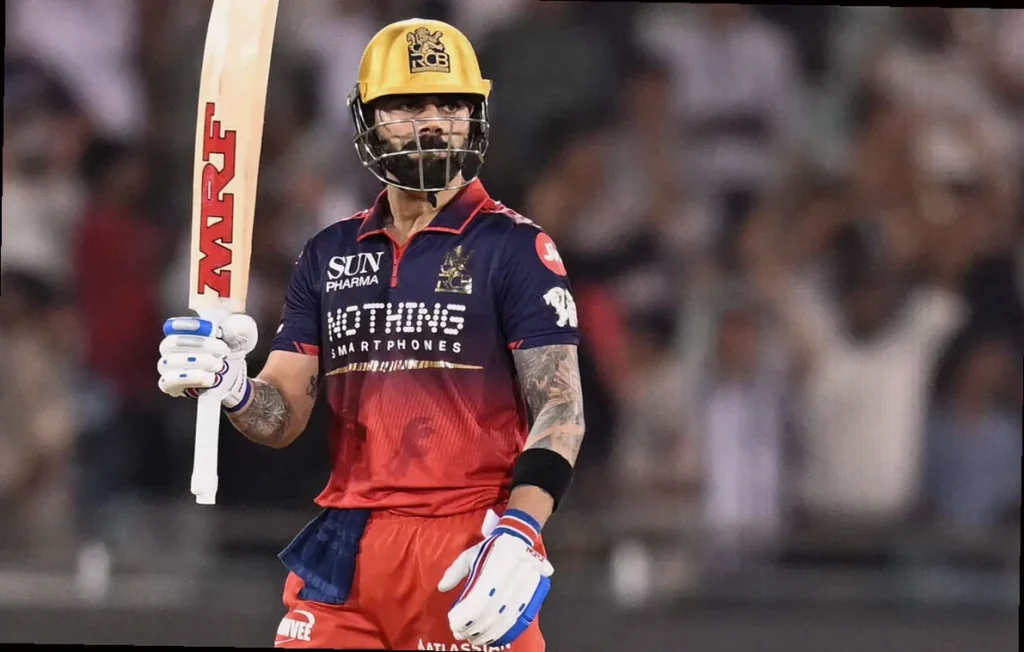
Virat Kohli has opened up about the mental strain that can come with elite T20 batting, saying he felt uneasy after successive scoreless outings in the IPL. The 37-year-old, though, delivered when it mattered most on Wednesday night, remaining unbeaten on 105 from 60 balls as Royal Challengers Bengaluru beat Kolkata Knight Riders by six wickets, taking the top spot in the league standings.
Key takeaways
- Kohli described the pressure after two straight IPL ducks as something that “eats him up,” despite knowing he can bat well.
- His 105* off 60 powered RCB to a six-wicket win over Kolkata Knight Riders and moved the defending champions to first place.
- The knock was Kohli’s record-extending ninth IPL century and his first since the 2024 season.
- With the innings, Kohli also passed MS Dhoni and Rohit Sharma, becoming the player with the most IPL appearances (279).
- RCB captain Rajat Patidar said the side’s control after the 10-over mark was a major factor in limiting KKR, who finished on 192.
- Patidar emphasised a one-match-at-a-time approach, while Kohli stressed the value of pressure and sticking to his natural game.
Kohli on the pressure of performance and bouncing back
Kohli admitted that he is not immune to nerves when expectations rise, explaining that failing to convert starts in the previous two IPL matches left him unsettled. He said the disappointment from not scoring “many runs” in those games continued to bother him because he believes in his ability and felt the situation offered a chance to make an impact.
After being named Player of the Match, Kohli added that not carrying on after getting set—and not creating the required effect for the team—stays with him. He framed it as part of his long-term process: working to improve so he can show up as the best version of himself and deliver when the team needs it.
The former India captain also acknowledged that the end of those scoreless outings had left him a bit uneasy, while insisting that such setbacks can contribute to a player’s development. He said that pressure, when viewed correctly, can be beneficial—keeping a batter grounded and pushing him to raise his level after a couple of matches don’t go as planned.
Speaking about his mindset after reaching the landmark, Kohli noted that the celebration was kept modest because the team points were what mattered. He said he made a conscious effort to contribute more for RCB, and he linked the idea of “pressure as a privilege” to improvement—suggesting that nervousness in tough stretches can actually help a player go up a level.
Kohli further explained that he did not try to be extravagant in his approach. Instead, he leaned on fundamentals: choosing the right lengths, backing himself to find gaps, and focusing on his positions at the crease. He expressed satisfaction that he was able to stick to his game plan and trust his natural batting instincts.
Record ninth century as RCB surge to the summit
With his unbeaten 105, Kohli extended his IPL century tally to nine and reinforced that he still wants to challenge himself at the highest standard. He said he loves batting and takes it as an honour to compete against the very best, adding that he gives “heart and soul” in every match because it will not last forever.
He also described how he looks forward to pressure situations, saying that when he feels the heat, he uses it as fuel to attack the moment. Kohli stressed that the sport continues to shape individual character, and he said that even after many years, the drive remains rooted in love for the game—especially the joy of striking the ball cleanly.
RCB skipper Rajat Patidar, meanwhile, said he was pleased the defending champions climbed to the top of the table with 16 points, moving ahead of Gujarat Titans. Patidar framed the win as the result of everyone doing their job across different phases of the tournament, and he reiterated that RCB are taking things step by step—one game at a time.
On the match itself, Patidar expressed strong satisfaction with the team’s execution. He highlighted that after 10 overs, RCB controlled KKR’s innings and restricted them, limiting the opposition to 192 after their opening start—an outcome he viewed as a positive sign for the side’s approach.
