
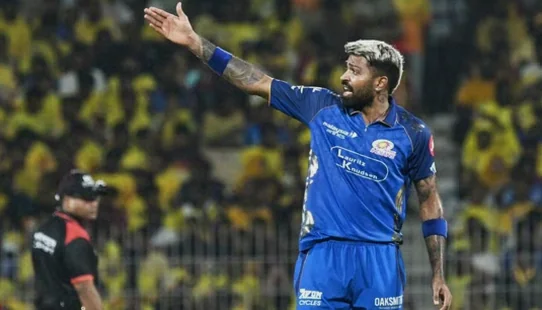
Three IPL captains are reportedly facing serious questions about their futures, with the growing sense that at least some could be relieved of leadership duties before the season ends. The pressure has been building due to disappointing league outcomes and failed attempts to reach the playoffs, but in each case, the bigger irritation appears to be the strategic decision-making. When results slip and tactics come under scrutiny, franchises often look for a reset.
Quick facts
- Axar Patel, Ajinkya Rahane and Rishabh Pant are described as the leading candidates to lose captaincy roles following poor IPL 2026 campaigns.
- All three have captained their sides for two straight seasons without securing a playoff berth.
- Lucknow Super Giants, led by Pant, are already officially eliminated.
- Delhi Capitals and Kolkata Knight Riders are still in the playoff race mathematically.
- Mumbai Indians have also struggled this season, but Hardik Pandya is not mentioned as facing the same captaincy threat.
- MI have won only three matches; they are placed ninth, above LSG and below KKR.
- Delhi are currently seventh in the table.
The report in question highlights Axar Patel, Ajinkya Rahane and Rishabh Pant as the names most likely to be reconsidered. The common thread is that each has led for two consecutive seasons without delivering a playoff spot, and that sustained inability has left little goodwill behind. Even if personal performances have not been entirely disastrous, the tactical choices made during matches have reportedly been the more damaging factor for their respective managements.
Among the three, Rishabh Pant’s Lucknow Super Giants have already fallen out of contention. Delhi Capitals and Kolkata Knight Riders, by contrast, are still mathematically alive, though the situation for both teams has appeared bleak for some time. For franchises still hunting calculations, the “window” can close quickly—especially when results don’t match the belief in the leadership.
There is, however, one notable exception within the broader captaincy narrative: Mumbai Indians. Despite another season of underperformance, Hardik Pandya is not included in the same list of captains under threat. The contrast becomes clearer when the table is viewed closely—MI sit ninth, having managed just three wins, positioned above Lucknow Super Giants and just below Kolkata Knight Riders. Delhi are placed seventh, and their proximity to the playoff line makes their captaincy scrutiny feel more immediate.
Why Hardik looks different
Hardik’s apparent immunity from the same level of scrutiny is tied to context, investment, and prior history rather than this season alone. Mumbai’s captain is not simply another hire for the role—he is a homegrown product. He spent seven seasons with the franchise from 2015 to 2021 before being released, and Gujarat Titans then snapped him up, with Ashish Nehra playing a key role in his transformation into one of the league’s standout young leaders.
In Gujarat’s debut season, Hardik guided the team to the IPL title. The very next year, they returned to a final once again, reinforcing that his leadership trajectory was not a one-off. When Mumbai brought him back ahead of IPL 2024, the move was reportedly made with the expectation that he would captain the side, and it came with a bold reshaping of the leadership group.
Rohit Sharma was removed—despite his status as Mumbai’s five-time title-winning skipper—in one of the franchise’s most high-profile captaincy changes in IPL history. The reaction was immediate and severe: Hardik was booed at venues, trolled heavily online, and became the centre of constant speculation about the dressing-room atmosphere. That season ended with Mumbai finishing bottom of the table, a collapse that made the decision look risky.
Yet the next chapter matters for how franchises judge leadership. A year later, Hardik delivered a recovery by taking Mumbai into the playoffs, winning the Eliminator before losing in Qualifier 2. That rebound, coming after the humiliation of IPL 2024, was seen as a sign of resilience and the ability to lead under intense pressure—qualities that are rarely discarded quickly when they show up at the crucial time of the season.
There’s also an important difference in experience. Unlike Axar Patel, Ajinkya Rahane and Rishabh Pant—who are being judged after struggles in their captaincy stints—Hardik already has a proven captaincy record in the IPL. His overall numbers add weight to that argument as well: he owns a 57.7 win percentage across 45 matches as skipper.
But Mumbai’s struggles aren’t only about tactics
Even with that history, Mumbai’s problems this season cannot be pinned purely on captaincy. The side has lacked the sense that everything is clicking. Rohit Sharma has spent parts of the campaign battling injuries, while Jasprit Bumrah endured a tough first half, remaining wicketless and not receiving consistent support from the rest of the bowling group. On the batting front, Suryakumar Yadav and Tilak Varma have both endured lean spells.
Hardik’s own numbers have also been below par. He has scored 146 runs in eight innings at a strike rate of 136.44, and with the ball he has taken only four wickets at close to 12 runs per over. Beyond performance, criticism has also been directed at certain in-game decisions—such as holding back Bumrah during specific phases, and the puzzling use of Shardul Thakur as an Impact Player against SRH without giving him a single over.
Still, the larger picture for Mumbai goes beyond one disappointing campaign. The franchise’s decision to bring Hardik back from Gujarat was built around the idea of him serving as a long-term leadership successor. That kind of investment typically doesn’t evaporate after a single failure, particularly for a captain who has already demonstrated he can produce results when pressure is at its highest.
Before making any move that could shape the next three-year cycle, Mumbai will be reminded of what Hardik has already delivered: he led a new franchise to a title in its inaugural season, bounced back from a last-place finish to reach the playoffs the next year, and has proven he can handle pressure that many captains never survive.
For a franchise that values stability and long-term planning, the message from this season’s turbulence may be simple. Patience could still be the preferred response, even when panic looks tempting—because the leadership question is rarely answered by one stretch of bad results alone.
