
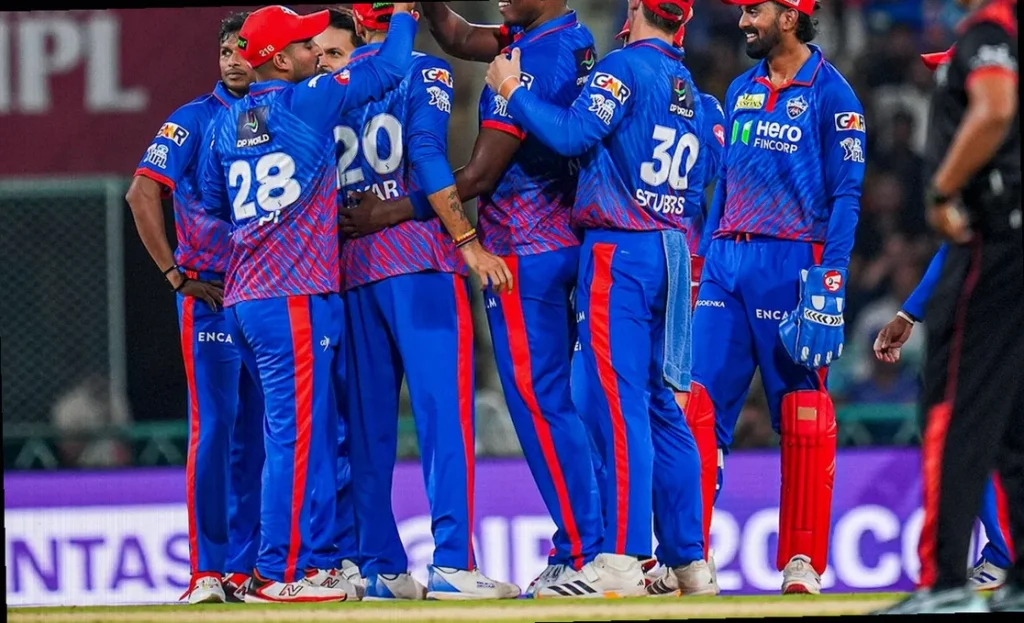
Two franchises in the IPL 2026 have already slipped out of the playoff picture: Mumbai Indians and Lucknow Super Giants. With the majority of the league still mathematically open, Delhi Capitals sit in a particularly tough position. They are placed seventh with 10 points from 12 matches, which means their path to the next stage is now so narrow that it is essentially only a theoretical possibility. In the middle of this disappointing campaign, a report has suggested Delhi could be preparing for a noticeable reset across leadership and support roles ahead of next season.
The report states that Axar Patel is unlikely to continue as captain, and it also points to changes within the coaching setup. The reasoning offered is straightforward: Axar’s record in the role, along with his overall output as a player, has not matched the standard expected from a leader steering a side through a high-pressure tournament. As captain, he has managed only 100 runs across nine innings, striking at 112.50. Those contributions include a single 56-run knock, while the remaining 44 runs have been spread over eight other innings. Notably, this has come despite him generally being used high enough in the batting order to see more balls.
On the bowling front, the numbers also raise questions about impact and control. In the 12 games he has played, Axar has delivered just 36 overs in total—an average of exactly three overs per match—and has taken 10 wickets. His economy rate of 8.08 is not alarming on paper, especially when viewed against the difficult situations Delhi’s other spin option, Kuldeep Yadav, has often been forced to bowl in. However, the point made in the report is that Axar’s own spell usage has sometimes leaned toward being too conservative for the demands of T20 cricket, meaning he has not consistently “bowled himself into” the match when conditions may have called for it.
Delhi’s structure behind the scenes is also set to evolve. Since the franchise operates with shared ownership—JSW and GMR handling cricket responsibilities in alternating cycles—next season is expected to bring Parth Jindal and JSW into the cricket operations leadership position. Against that backdrop, the report suggests that even if Axar’s role as a player remains under discussion, his captaincy is unlikely to be viewed as a long-term solution.
The report further claims that Axar has not been able to establish himself as a decisive leader. It notes that decision-making has frequently leaned on Hemang Badani and Venugopal Rao rather than being led through Axar’s own tactical calls. On that basis, it suggests Delhi may look elsewhere for captaincy. It also adds that there is little indication the coaching group as a whole will be kept intact.
Alongside the leadership debate, the report mentions several selection and usage calls that have drawn scrutiny. These include the decision to largely ignore a flamboyant batter such as Abhishek Porel, not consistently backing an all-round option like Madhav Tiwari, and giving an opportunity to Sahil Parakh that has come with high expectations—particularly the idea that he would deliver performances with the kind of spark associated with Vaibhav Suryavanshi. While Parakh’s talent is acknowledged, the report describes him as still developing and not fully ready to carry the burden placed on him.
With mega auctions scheduled for 2027, Axar could still be retained as a player, the report suggests, even if captaincy looks uncertain. Yet it argues that there has been limited proof of the kind of dynamic leadership required to lift a side out of trouble. And with cricket operations shifting from GMR to JSW, Axar’s future as Delhi’s leader is described as far from secured, leaving the door open for change before the next IPL season begins.
