
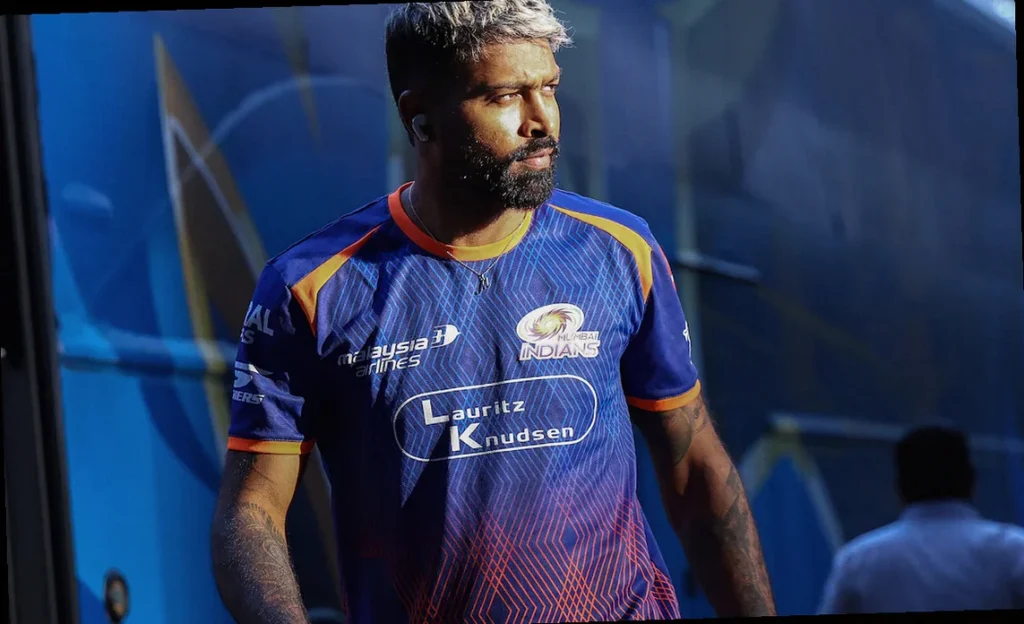
Mumbai Indians’ disappointing IPL 2026 run has prompted fresh debate inside the franchise, and former India all-rounder Ravichandran Ashwin has stepped in to shield captain Hardik Pandya from what he believes is an overly narrow blame. MI have managed only four wins from 12 matches this season and became the second side to be ruled out of the playoff race. Ashwin pointed out that Pandya’s campaign has been affected by both form and injury, but argued it would be unfair to treat the captain as the single cause of the team’s struggles.
“I wouldn’t go back and reassess his captaincy this year at all. Honestly, when seasons like this happen, it’s quite unfair to pin everything on the captain. No one has really fired. The team hasn’t shown up as a unit, and for Hardik to take all the blame is… it’s asking him to do a bit too much,” Ashwin said.
Ashwin also placed Pandya’s return to MI in context, recalling that the captain came back to the franchise in 2024 after a standout period with Gujarat Titans. He noted that Pandya led GT to a title and later followed it with a runners-up finish, highlighting that the leadership qualities were clearly evident earlier in his career.
“He was there with Gujarat Titans. He had two fantastic seasons there—one title and then a runners-up finish. So as a leader, he clearly did something right. When he returned to Mumbai Indians, he had to deal with a lot. It isn’t easy to replace an established Indian white-ball captain like Rohit Sharma. He has five or six IPL titles, and he’s won a T20 World Cup. Then Hardik comes in and takes over. You’ve got a lot of fandom across the country. These days you need thick skin to handle what’s flying around on social media,” Ashwin added.
Moving beyond leadership, Ashwin stressed that captaincy alone cannot explain a franchise’s performance, saying bowling issues have also played a major role in MI’s problems. He argued that even when overs start well, the innings can unravel quickly once the opposition begins scoring heavily.
“I wouldn’t judge his captaincy too much because the bowling has leaked as well—runs are coming from every direction. Every time an over goes for six or seven, then a 15-run over follows. So what can a captain do in that situation? And sure, there are calls he’s made that have been debatable. But captaincy is shaped by how your team is presenting itself. That’s why, when you have a good season, don’t give the captain excessive credit. And when you have a bad season, don’t put it all on him. The same thinking applies to the coach too—because the coach sends the players out, so you can’t blame him to the same extent either,” he said.
This season, Ashwin noted, Pandya’s struggles have been hard to miss. Since resuming the captaincy in 2024, Pandya has not been able to deliver a trophy for MI. In IPL 2026, he contributed 146 runs across eight innings, striking at 136.44, with a top score of 40. With the ball, he managed only four wickets at an economy rate of 11.90, underlining the mixed nature of his individual output.
Ashwin further raised concerns about Pandya’s batting rhythm, describing it as unusual in terms of timing. He questioned whether the delays could be linked to a physical issue, pointing to the possibility of something affecting his execution without being able to confirm what it might be.
“With his batting, I noticed something quite interesting and strange—how late he’s been on the ball. Is he going through something physically? We wouldn’t know if there is something there, and if there is, maybe that physical part will bring him back. But he’s been late on the hard-length deliveries,” Ashwin said.
He also suggested that Pandya is not typically the sort of player who would miss hard-length balls, adding that the pattern raises questions that need answers. Ashwin mentioned potential back or arm-related problems, including the possibility of a tennis elbow, and even wondered whether the bat setup could be contributing to the late contact.
“He’s not someone who’s going to miss hard-length deliveries. He usually hits it deep—around 15 rows back. So that’s a concern for me: is he dealing with something physically from the back, from his hands, or does he have tennis elbow? Is his bat heavier than it should be? Does he need to recalibrate? Those are the kinds of things I’d want to know,” Ashwin added.
MI’s difficulties have not been limited to Pandya alone, with Ashwin pointing to other key performers also having modest seasons. He highlighted that Suryakumar Yadav and Jasprit Bumrah have experienced similar struggles. Pandya has also been forced to miss matches due to a reported back issue, ruling him out of three games, while Suryakumar and Bumrah took over as stand-in captains during his absence.
Despite the poor run, Ashwin insisted that Pandya remains a high-value player. He described Pandya as a rare talent and argued that the broader impact he has had on Indian T20 cricket should not be overlooked simply because MI are going through a difficult phase.
“Hardik is a once-in-a-generation player. You don’t find players like that. And if India is in a certain kind of T20 mastery now, Hardik has been a linchpin in that. For me, as a player, you can have a bad season—that part is digestible, especially after you’ve had a World Cup like that. Hardik likes a bit of space—he stays in his own zone. So the only thing I’d be concerned about is how late he’s been on the ball when he’s batting. Apart from that, it’s okay. I wouldn’t judge any other aspects of his game,” the former India spinner concluded.
