
As India’s domestic season heads into its final stretch and the 2026 Indian Premier League continues, attention is increasingly turning to who will get the national opportunity next. On May 19, the country’s selection panel named the Test and ODI squads for an extended international window, bringing both surprise deletions and fresh faces into the picture.
The opening phase of India’s Test summer will feature a one-off encounter against Afghanistan. Under Shubman Gill’s leadership, the team will look to establish early momentum with a revised group, before turning to major assignments later in the year against New Zealand and Australia.
Quick facts: What the squad shake-up means
- India’s Test season begins with a one-off match versus Afghanistan.
- Jasprit Bumrah was left out of the squads announced on May 19.
- Gurnoor Brar, a 25-year-old pacer from Punjab, received his maiden national call-up.
- Brar was retained by Gujarat Titans for INR 1.3 crore ahead of the 2026 IPL.
- Auqib Nabi was omitted, despite major red-ball impact during the same domestic cycle.
- Aakash Chopra publicly questioned the rationale behind Nabi’s exclusion.
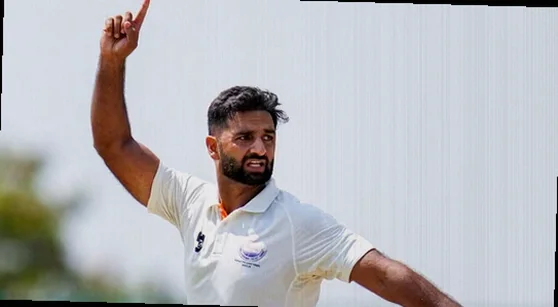
One of the most talked-about changes arrived in the bowling unit. Jasprit Bumrah’s absence stood out immediately, while Gurnoor Brar’s selection brought a new pace option into the fold. The move also signals India’s intent to lean on domestic form as the international calendar ramps up.
Brar’s entry was backed by a standout 2025–26 Ranji Trophy run. He helped Punjab reach the semi-finals, finishing with 33 wickets across 12 matches, highlighted by a memorable 5/14 spell against Bihar. Those performances put him firmly in the frame for national recognition, with his domestic work translating directly into a call-up.
At franchise level, Gujarat Titans—led by Shubman Gill—retained Brar for INR 1.3 crore ahead of the 2026 IPL season. Even so, he has not yet been used in a match, with GT’s bowling group remaining experienced and well-set for the moments that have come their way so far.
The controversy: Auqib Nabi’s omission
While Brar’s selection made logical sense on paper, the exclusion of Auqib Nabi drew sharper attention. The Jammu and Kashmir pacer had delivered historic red-ball performances in the same Ranji Trophy campaign, with his impact playing a decisive role in the team winning their first-ever Ranji Trophy title.
Jammu and Kashmir’s triumph came in the tournament’s 91st edition, and Nabi’s contributions were central to that breakthrough. His form also earned him the Player of the Tournament award, adding weight to the argument that he was among the most in-form red-ball bowlers in the season.
Former India cricketer and analyst Aakash Chopra admitted he was taken aback by Nabi’s omission. Chopra said that while Brar’s inclusion was understandable, he questioned what additional steps Nabi needed to take to secure a national spot, especially in the red-ball setup.
Chopra further suggested that Nabi might have been a more suitable option to test against a side like Afghanistan before any tougher away assignments. He also raised a concern that selection should not be driven only by physical attributes—such as extra pace and bounce—if a bowler’s domestic record is clearly superior.
In his remarks, Chopra pointed out that Brar’s record and workload in first-class cricket were strong enough to justify his place. He highlighted that Brar has taken 52 wickets and bowled close to 400 overs in first-class cricket, arguing that domestic production has been rewarded by the panel.
But Chopra’s focus remained on the missing name. He stressed that Nabi had taken more wickets than anyone else during the recent period, and asked what the selection committee was thinking, particularly whether Nabi would be brought in immediately for the New Zealand tour later.
Chopra also questioned whether the panel was prioritising extra pace and bounce—implying Nabi may not offer the same traits as Brar—even though Nabi’s numbers had been exceptional. The underlying theme was simple: if performance is the key metric, Nabi’s exclusion needed a clearer explanation.
Nabi’s case is supported by an extraordinary Ranji Trophy output. Across 10 matches, he finished with 60 wickets, including a decisive spell of 5/54 in the final against Karnataka, where he removed key batters such as KL Rahul. Those returns culminated in the Player of the Tournament award, making his omission even harder to reconcile with the values typically associated with Test selection.
Achieving 60-plus wickets in a single Ranji Trophy season is not common. Only two bowlers before Nabi had managed the 60-wicket milestone in a season, underscoring just how rare and demanding that feat is at that level.
Nabi’s red-ball success also fed directly into the IPL market. Delhi Capitals paid INR 8.40 crore to secure him, but the transition to the shorter format has still been a work in progress. So far, he has made only four IPL appearances and is still searching for his maiden wicket in the competition.
With Test selection closely tied to Ranji Trophy impact and red-ball credentials, the question raised by Chopra remains difficult to dismiss. If Brar’s selection reflects domestic form and first-class production, Nabi’s exclusion—despite similarly outstanding numbers—does not appear fully justified, at least based on the evidence that has already been made public.
