
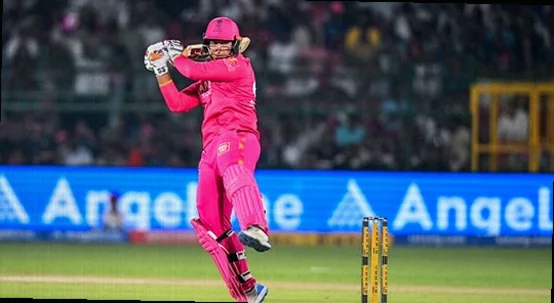
AB de Villiers has put Vaibhav Sooryavanshi’s next development question front and centre, warning that success in T20 will not automatically translate into the demands of red-ball cricket. The 15-year-old’s power game has already cut through the usual caution around young prospects, but de Villiers believes the longer format asks a different kind of completeness. Speaking on the “For The Love of Cricket” podcast with Stuart Broad and Jos Buttler, he framed it as a shift in focus rather than a verdict on ability.
De Villiers said that without someone stepping in, Vaibhav could end up “nibbling” at ODIs—and especially Test cricket—before fully understanding what those formats require. His message was blunt: if the youngster commits to being a T20 specialist for the rest of his career, then the path is clear, but if he starts mixing formats early, he will discover “a whole different area” in how he must think and play. The warning carries weight coming from one of cricket’s most accomplished all-format batters.
Quick facts
- Vaibhav Sooryavanshi is 15 years old and has drawn attention for his explosive T20 ability.
- He became the youngest player to reach 1,000 T20 runs, doing it in 473 balls.
- In the same run-scoring burst, he struck an IPL hundred off 36 balls, hitting 12 sixes and five fours.
The bigger unknown, de Villiers implied, is depth—whether the youngster can carry his intent into the rhythms of Test cricket. T20 can reward raw timing and fearless striking, but red-ball cricket tests how a batter rebuilds after pressure, how he survives spells, and how he manages risk when the ball swings. The debate is not about whether Vaibhav can hit; it is about what sits behind the hitting.
The real question: method
Test cricket has never been allergic to attacking batters. Over five days, the format tends to separate impulse from repeatable process. A batter can score quickly when aggression is supported by known scoring zones, defensive insurance, clear judgement outside off stump, and the ability to restart once the bowling pressure has been absorbed.
Sooryavanshi’s T20 evidence already shows the raw ingredients—bat speed, range, audacity, and direct access to sixes. But Test cricket will probe different layers of his game. The moving new ball will force him to consider whether his leave is right; long spells will test patience; defensive field settings will test whether he can take singles confidently; and a full series will reveal whether he has a second plan after bowlers learn his first one.
De Villiers’ doubt also echoes a broader cricketing history: there are examples of extreme attacking talent failing to evolve, and others thriving because their aggression was structured. That is why the conversation naturally turns to Indian predecessors who made high-tempo batting last in Tests.
Sehwag turned tempo into Test volume
Virender Sehwag stands out as one of India’s strongest counters to the idea that an ultra-attacking opener must eventually end up as a white-ball specialist. Across 104 Tests, Sehwag scored 8,586 runs at 49.34, striking at 82.23—placing both volume and violence inside the same career. His two triple centuries included India’s record Test score of 319 against South Africa in Chennai, turning an unconventional opening approach into long-format proof.
Sehwag’s relevance to Sooryavanshi is not the headline chaos; it is the structure underneath it. The offside punch through gaps, the flashy cuts, the lofted shots against spin, and the refusal to allow length bowling to settle all helped him make starts become massive totals. A Test strike rate above 80 across more than 8,500 runs, the argument goes, cannot be explained by mood alone.
At 15, Vaibhav does not need a Sehwag comparison, and it would be unfair to demand that kind of mould this early. The useful takeaway is narrower: Test opening has previously welcomed an Indian batter whose natural scoring speed was ahead of his era, and the format accepted that speed because method kept producing.
Gilchrist made acceleration a Test weapon
Adam Gilchrist also reshaped how cricket views wicketkeeper-batters in Tests. He scored 5,570 Test runs with 17 hundreds and finished his career with a strike rate above 80, changing the value of a specialist keeper who could also build—then accelerate—toward match-winning totals. Batting at No. 7 gave Australia a structural advantage: an elite keeper who could turn a stable situation into a decisive one with aggression.
Gilchrist’s case supports the central Vaibhav argument from another angle: Test aggression works best when it alters the match state, not merely the scoreboard. A fast 70 after a platform can shut the door on an opponent. A hundred at high speed can wipe away pressure from the batting side. Even a lower-order burst can shift declaration timing, adjust bowling plans, and force new field placements.
Ultimately, Sooryavanshi’s batting will be judged through the same lens. Boundaries alone will not decide his red-ball future. Runs that move sessions, protect partners, break spells, and compel tactical retreats will matter most in determining whether Test cricket truly opens for him.
AB’s own career is the evidence for range
De Villiers’ concern deserves attention because his own Test career was built on range. In 114 matches, he averaged above 50, and his success came from more than invention. His game included defence, endurance, judgement, power, and adaptability. The same player who became a defining white-ball figure also produced long-format innings where survival and control were central.
That context makes his warning sharper. AB understands the gap between shot-making and full completeness. A player can dominate in T20 and still require new layers to become a complete Test batter. A prodigy can arrive with the first weapon, but the full armoury needs building over time.
Sooryavanshi’s quote should be read as a development challenge rather than a final verdict. His talent has earned attention, but his method will determine durability.
De Villiers also flagged the same theme in the modern era through two prominent transitions: David Warner and Rishabh Pant. Warner, in particular, shows the clearest pathway from T20-first identity to a serious Test career. Introduced to the game as a short-format destroyer, he went on to score 8,786 Test runs with 26 hundreds in 112 matches, with the early public label eventually being rewritten by Test output.
Warner’s story underlines another warning for Sooryavanshi: attacking openers can succeed in Tests, but the examination never ends. Conditions, movement, angle, bounce, and patience keep presenting new versions of the same batter to be assessed. A long career requires constant adjustment and repairs.
Pant offers the most current Indian model in that debate. His Test impact has already moved beyond his T20I identity, with the longer format magnifying what his disruption brings. The unbeaten 89 at the Gabba in 2021 became a series-winning innings, sealing one of India’s greatest overseas wins and ending Australia’s long unbeaten run at that venue.
Pant’s role in the discussion is crucial because it shows that a player can look tailored for T20 and still grow into Tests. The longer format can intensify disruption when the risk is tied to reading the match. Pant attacks when captains seek control, he forces field changes, and he pulls bowlers away from their preferred lengths. His best Test innings are not cameo bursts stretched across only a few overs—they operate as tactical interventions.
Vaibhav’s challenge is completion
Still, Sooryavanshi’s future cannot be judged from a T20 sample alone, even one as eye-catching as his. Reaching 1,000 T20 runs in 473 balls and striking an IPL hundred off 36 deliveries confirm rare attacking talent, but they do not answer whether he can bat through the first hour of a seaming morning, whether he can leave the ball for 40 balls in a row, whether he can defend late against reverse swing, or whether he can score without relying on boundary access once the field spreads out.
Those questions will come if India and his coaches steer him toward longer formats, and they should be asked carefully. A 15-year-old with exceptional gifts needs development, not premature classification. De Villiers has opened the right debate: Test cricket will test Sooryavanshi in areas where T20 can conceal shortcomings.
History also refuses to treat attacking batting as a red-ball flaw. Sehwag, Gilchrist, Warner, Pant, and de Villiers himself have already shown that aggression can thrive in Tests when it is backed by method rather than instinct alone. Sooryavanshi does not need to become safer—he needs to become deeper.
